



 通过中商114认证
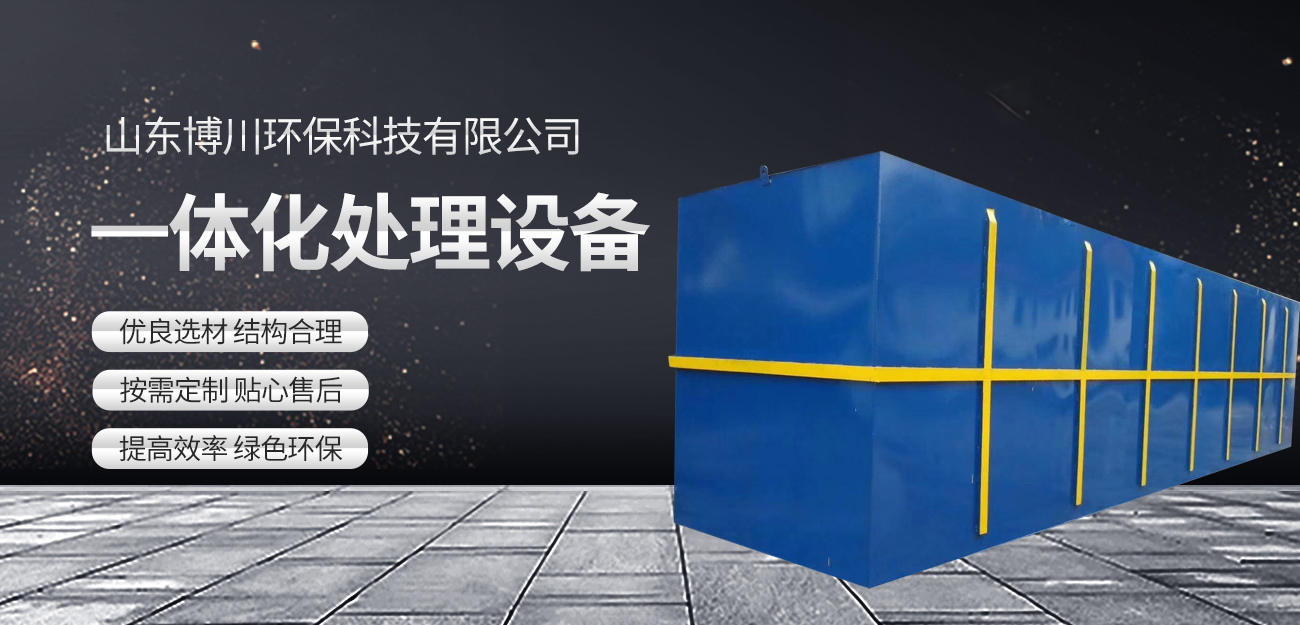
The integrated wastewater treatment facility's role in wastewater regulation: The wastewater regulation pond is used to adjust water volume and uniform water quality, ensuring that wastewater enters the subsequent treatment units of the enterprise more evenly. Integrated wastewater treatment equipment is designed to handle industrial or rural domestic wastewater. The regulation pond is equipped with a pre-aeration system, which enhances the shock resistance of the entire management system and reduces the foul odor of urban wastewater in anaerobic conditions. It also helps to reduce the design personnel required for the subsequent treatment units. Submersible pumps are installed in the wastewater pond to continuously lift and send wastewater to the subsequent treatment units. Domestic wastewater treatment equipment is used to process domestic wastewater. Wastewater flows into a solid-liquid separation chamber, where solid materials are separated and stored. The intermediate water between the floating scum at the top of the solid-liquid separation chamber and the bottom solids is overflowed to a filled anaerobic filter bed, where solid removal, organic decomposition, and denitrification of nitrate and nitrite occur. Afterward, it flows into a carrier flow chamber, where a large amount of biomass film attached to the surface of the carriers several millimeters to several centimeters thick further decomposes organic matter to nitrification. The nitrified liquid returns to the solid-liquid separation chamber. The treated water flows through a weir to prevent carrier loss and into the biological filter chamber, where it is filtered from top to bottom by the accumulated carriers to remove suspended solids (SS). The backwashing of the biological filter chamber is automatically completed twice a day by a small blower (2 combined or 1 with both aeration and backwashing outlets). The backwash water containing suspended solids is returned to the solid-liquid separation chamber through an aeration device. The effluent from the bottom of the biological filter chamber is sent to the disinfection room for disinfection and then discharged. The remaining treated water is returned to the carrier flow chamber through the side outlet of the metering box. The solid-liquid separation chamber, anaerobic filter bed, and the upper part of the carrier flow chamber are equipped with large-capacity incoming wastewater storage spaces, serving as flow adjustment sections to alleviate excessive flow during peak times. When there is no incoming water, the water level in the tank drops to the low water level, and the incoming water to the biological filter chamber is circulated back without discharge. When there is incoming water, the water level in the tank rises, the incoming water to the biological filter chamber is metered, disinfected, and discharged, with the remaining water circulated back to the carrier flow chamber. The entire system consists of nine components, controlled by PCL, enabling automated treatment and reducing the normal treatment during peak and low water flow periods. The features of the integrated wastewater treatment equipment include: the entire system can be buried underground without occupying land area; it can also be beautified. The high purification level results in minimal sludge generation; high automation with low energy consumption, easy management, and a small number of staff required. It produces low noise and odor, minimizing its impact on the surrounding environment. Domestic wastewater is a low-concentration organic wastewater containing nitrogen, phosphorus, oil, impurities, etc. It has good biodegradability and a full range of nutrients. It is also less likely to be contaminated by heavy metal ions. The pH is around 6-9, neutral in water. Therefore, the A/A/O technology can simultaneously achieve the removal of organic matter, denitrification by anaerobic digestion, excessive phosphorus removal, and the combined completion of phosphorus removal functions by the denitrification and aeration ponds.
Above is an introduction by Mr. Bian Xiao on the wastewater regulation pond function of the integrated wastewater treatment equipment.
