

During the rapid blow molding and cooling process, induced stresses occur within the bottle wall. For inflatable beverage bottles, this characteristic can withstand internal pressure, which is beneficial. However, for hot-filling bottles, it is crucial to ensure that they are fully released above the glass transition temperature. Currently, most blow molding machines still use a two-step process, which involves first forming the plastic material into a parison and then blowing it into shape. Today, PET material is commonly used for environmentally friendly plastic bottles.
Blow Molding Principles
The blowing process of blow molding machines is divided into two parts.
1. Warm-up
The bottle blanks are subjected to low-temperature infrared lamp tube illumination to harden the body section of the blanks. To maintain the shape of the bottle mouth, the mouth section does not require heating, thus necessitating a cooling system for cooling operations.
2. Blowing and Shaping Bottles
This phase involves placing pre-heated bottle blanks into the pre-formed blow molds, stopping the low-pressure inflation inside. The bottle blanks are then blown and stretched into the required bottle shape.
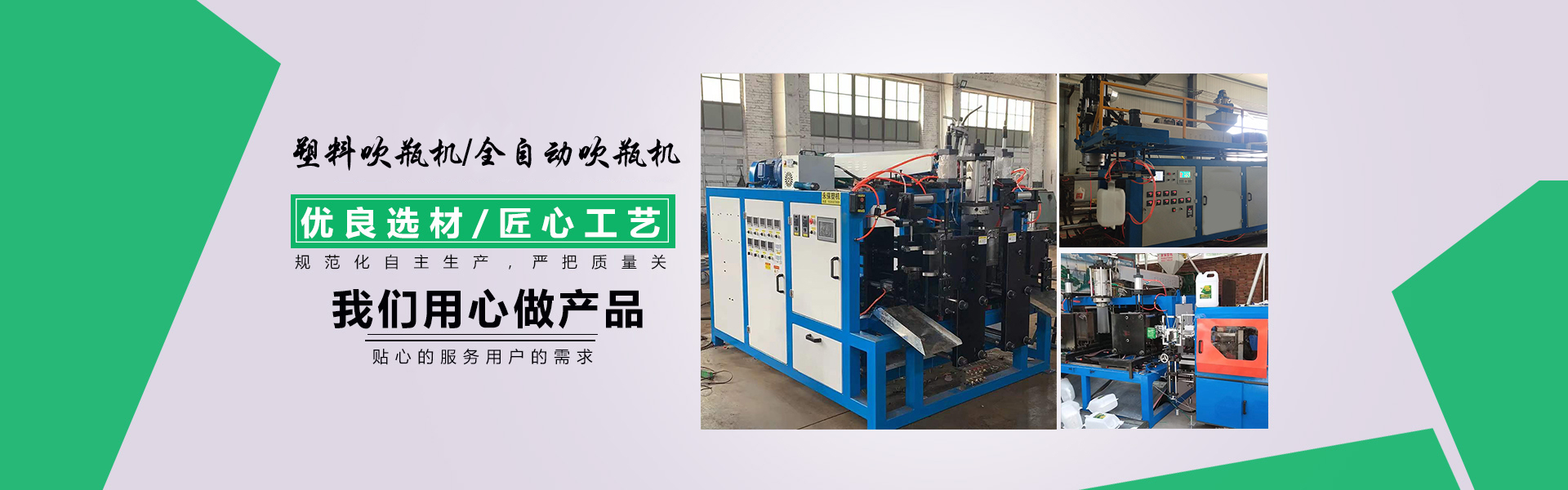
The fully automatic blowing machine integrates the two operations of blowing into one process through the manipulation of robotic arms, eliminating the need for manual placement of preheated parisons into the blowing mold. This significantly speeds up the production speed.
