
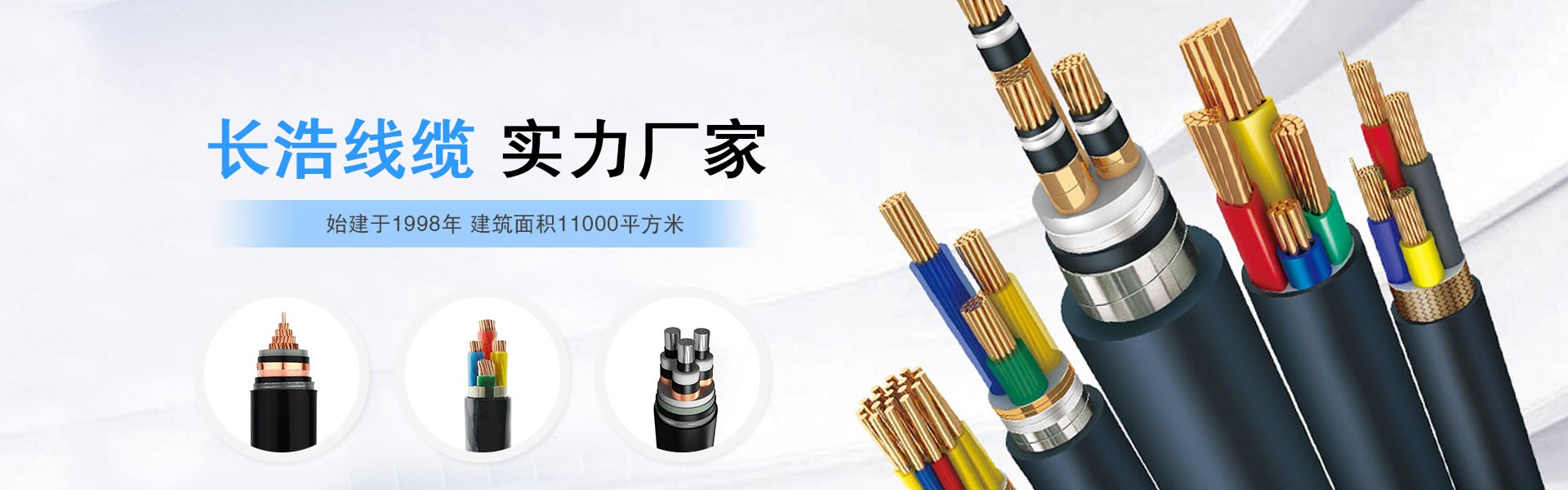


Structural Differences:
The insulation layer of cables is generally two layers or more, often featuring a multi-core structure, with lengths typically exceeding 100 meters. Wires usually have a single layer of insulation, are single-core, and come in 100-meter coils without a spool.
2. Material Differences:
Changhao Wires are typically conductive metal wires used to carry electricity, available in various forms such as solid, twisted, or woven foil. Depending on insulation conditions, they can be categorized as stranded wires or insulated wires.
Changhao Cable is an insulated conductor, composed of one or more insulated wires placed within a sealed sheath, with an external protective covering added for transmission and power distribution.
3. Various electrical wire and cable standards:
(1) Wire Standard Definition: Refer to Clause 3.3.47 of "Basic Terms of Electrical Engineering" (GB/T2900.1-2008), which is equivalent to Article 151-12-28 of the International Electrotechnical Commission Standard (IEC600-101:1998). Note: The cross-section of the wire may be of any shape, but the term "wire" is generally not used for strip or tape-like conductors.
(2) Standard Definition of Cable: Refer to Article 3.3.55 of "Basic Terms of Electrotechnology" (GB/T 2900.1-2008), which is equivalent to Article 151-12-38 of the International Electrotechnical Commission standard (IEC 600-101:1998).
4. Usage Distinctions:
The wire does not contain any insulation or protective wires. In addition to being used as wires for transmitting electrical power and information, it can also be used to manufacture components and connection wires for motors and electrical appliances. Generally, copper-aluminum-copper alloys and aluminum alloys are used. Moreover, there are various insulated wires suitable for special requirements, such as automotive low-voltage wires, automotive high-voltage ignition wires, motor electrical leads, compensation wires, and more. Cables are used for transmission. Distributing electrical power or transmitting electrical signals. Cables can be classified into power cables, communication cables, and control cables.
