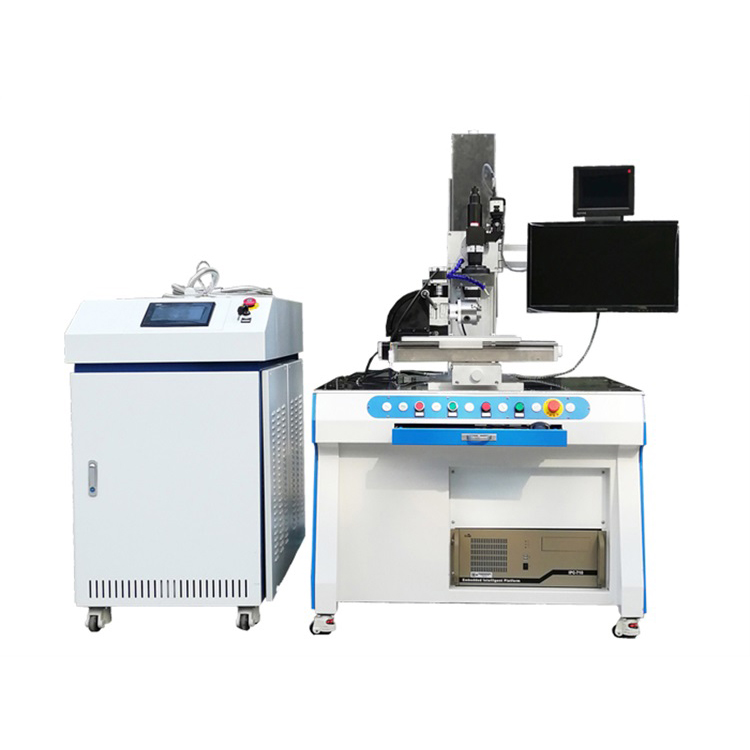
Laser welding primarily targets thin-walled materials and precision parts, boasting advantages such as high depth-to-width ratios, narrow weld widths, small heat-affected zones, and minimal deformation. However, due to the inexperience of novices, issues often arise.Laser WeldingAt the corner, there may be weld nodules or uneven welding shapes. How can these issues be resolved? Let's take a look together.
Under optimized parameters, when welding, it is crucial to maintain a constant distance and angle between the laser head and the workpiece, avoiding any pauses or acceleration at the corners.
Select the appropriate wire feeding speed based on laser power and weld bead shape to ensure good coupling between the wire and the molten pool. Generally, the faster the wire feeding speed, the higher the weld bead; conversely, the slower the speed, the lower the bead.
Ensure that the workpiece gaps are controlled within a reasonable range, typically between 0.1 to 8 mm.