

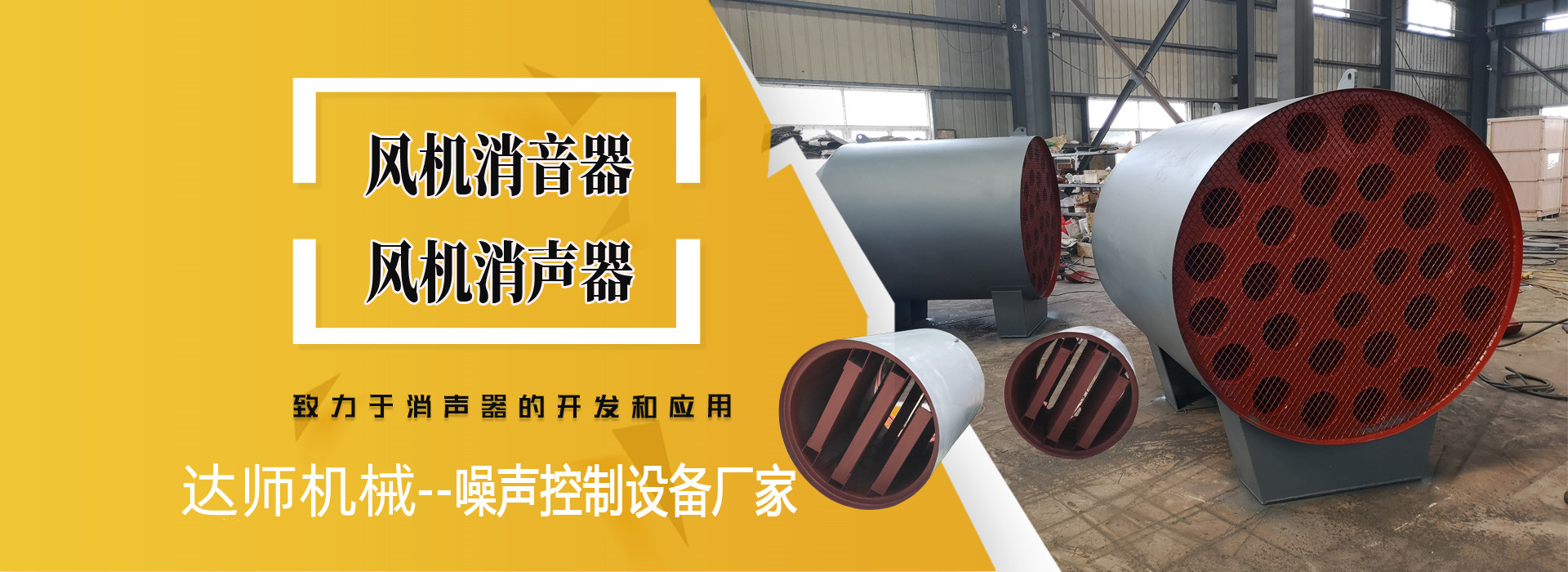

The function of the exhaust muffler is to reduce exhaust noise by gradually decreasing exhaust pressure and damping the pulsation of exhaust pressure.
Our produced exhaust silencers are primarily used for effective noise reduction in power, chemical, metallurgical, mining, and textile industry boiler steam and gas emissions. These silencers consist of multi-stage cylinders of varying diameters. The emitted gases are expanded and depressurized in the inner cylinder's first and second expansion bodies, then dispersed into the atmosphere independently through the acoustic shell with uniformly distributed small holes in the outer layer. Suitable for steam exhaust noise reduction in a variety of thermal systems, including boilers, steam turbines, steam generators, and steam pipelines.
Silencers are typically made from aluminum-coated steel plate or stainless steel plate. They usually consist of a resonance chamber, an expansion chamber, and a set of porous pipes. Some silencers are also filled with heat-resistant sound-absorbing materials, which are often glass fiber or asbestos. Exhaust gas flows through the porous pipes into the expansion and resonance chambers, where it continuously changes direction, gradually reducing and attenuating its pressure and pressure pulsations, dissipating its energy, thereby diminishing the exhaust noise.
Including the muffler housing, inner housing, inner and outer baffles, as well as the intake and outlet pipes. The muffler housing is constructed from double-layered steel plates, with an insulating space in between. The inner housing is corrugated and forms an exhaust passage with the inner wall of the housing. This structure aids in the attenuation of sound pressure and the diffraction of sound waves, enhancing the noise reduction effect. Sometimes, even with the muffler in place, the exhaust noise from vehicles may still not meet standards; in such cases, a resonator similar to a small muffler is installed in the exhaust system. The resonator, when connected in series with the muffler, further reduces the noise level. The muffler is typically installed between the catalytic converter and the exhaust tailpipe, near the center of the vehicle. However, due to space constraints, it is often mounted at the rear of the vehicle. Since the muffler is cooler in this position, more water vapor may condense inside, causing rust on the muffler.
