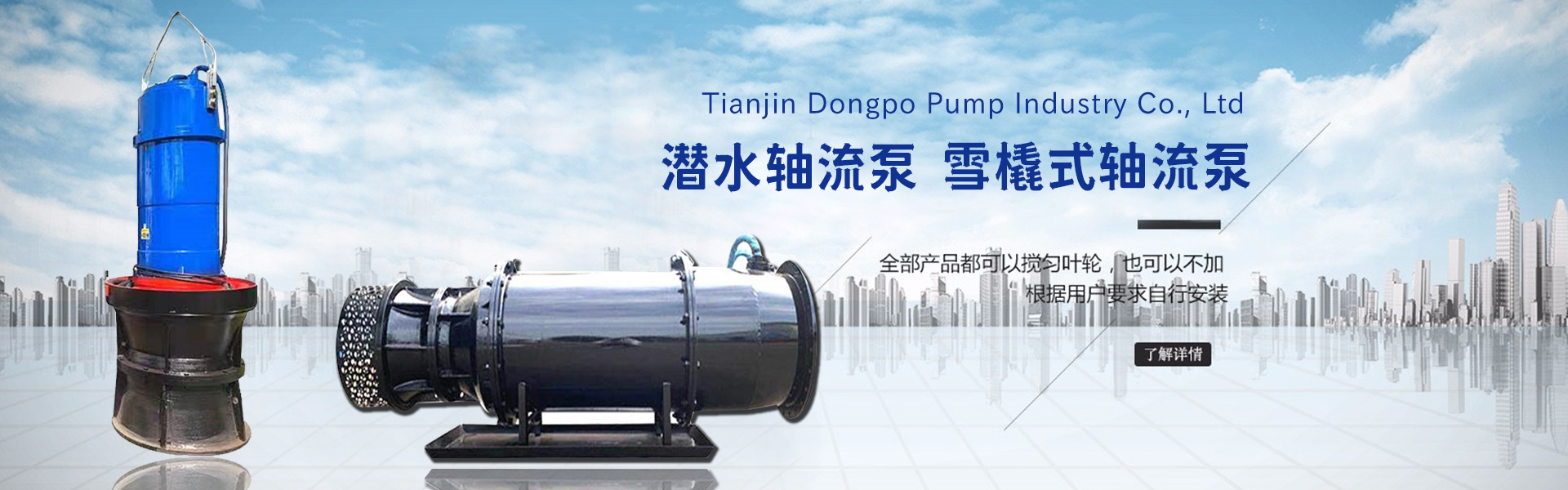
The application scope of submersible axial flow pumps encompasses various aspects of people's lives, from food to chemicals, oil, and more. Different working environments demand varying performance requirements for these pumps. Therefore, the issue of flow regulation for submersible axial flow pumps has become an indispensable task. Let's take a look at the measures for regulating the flow of submersible axial flow pumps.
When purchasing a pump, users typically inquire about the product's flow rate data. However, in actual operation, there can be deviations between the actual flow and the data. Therefore, to save costs and not delay the project timeline, it is advisable to make certain adjustments to the submersible axial flow pump's flow rate. This includes adjustments such as valve regulation and impeller adjustment.
The outlet valve is adjusted in conjunction with the pump and the outlet pipeline regulating valve, resulting in the actual effect of using a new submersible pump system. This maintains the higher output head of the submersible pump, yet the flow curve shows a slight decline.
2. Bypass Valve Adjustment: In the bypass valve adjustment, the submersible pump valve is connected in parallel with the submersible pump, effectively mimicking a new pump system. This results in a change in the maximum output head of the submersible pump, as well as a shift in the flow curve characteristics, making the flow curve more linear.