

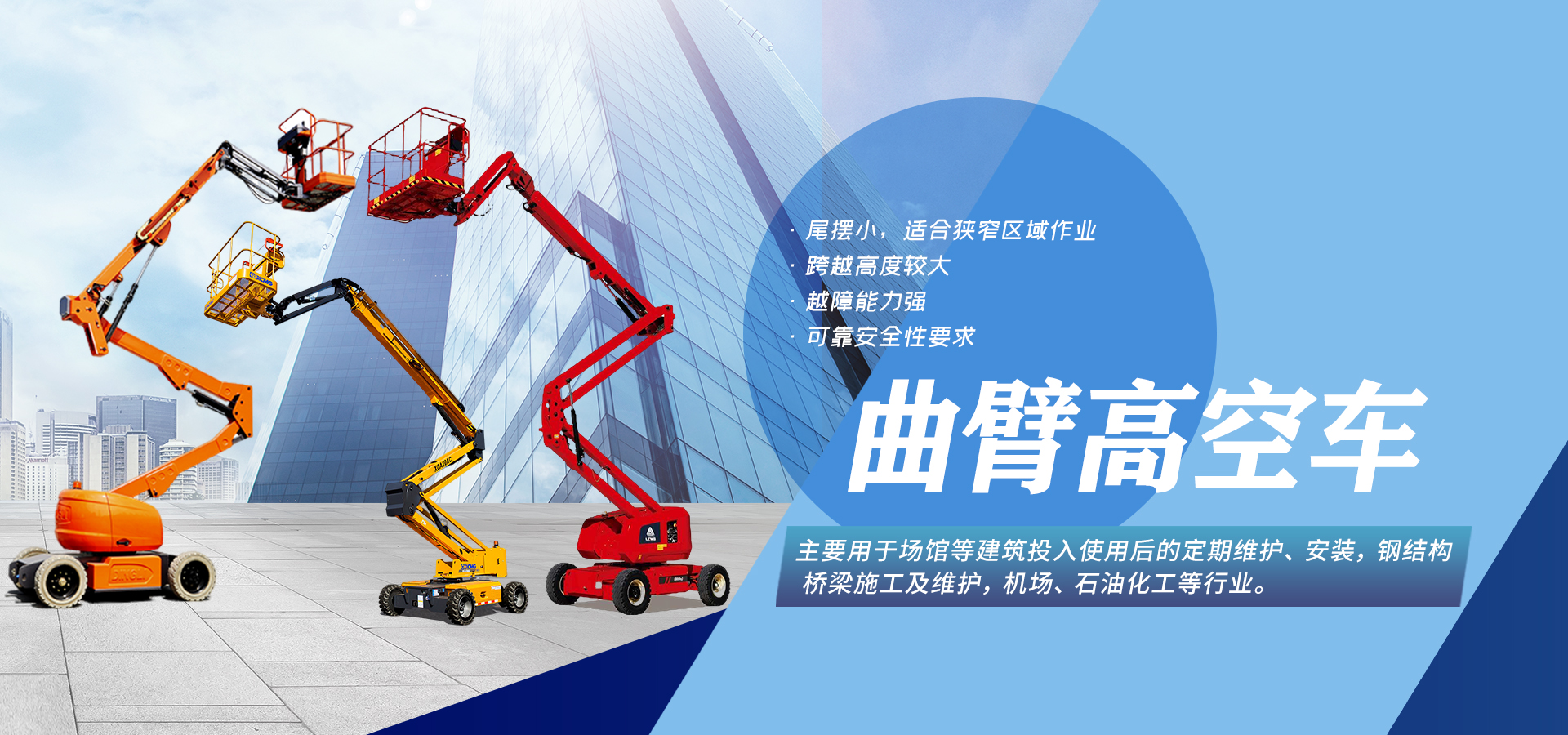





During高空operations, generallyHigh risk factor, high accident rate, and the introduction of aerial work vehicles has made up for the shortcomings of high-altitude operations.The presence of a dangerous vulnerability necessitates the use of elevated work platforms, the need for which is self-evident. However, since the work is conducted in the air, not on the ground, it's important to be aware of the precautions to take:
1、Proficiently master the technical skills and procedures of this trade.
2. Must be 18 years old and pass a physical examination before engaging in high-altitude work.Customers with hypertension, heart disease, mental illness, and other conditions unsuitable for heightsPersons with disabilities are prohibited from climbing to perform work.
3. At a height of three meters or above, if the working slope exceeds 45 degrees, or if the working surface lacks a stable standing place or is subject to vibration, it should be considered as high-altitude work.。
4. Protective gear must be worn properly, pants legs should be tucked in, and a hard hat must be worn. Smooth-bottomed shoes are not allowed. A safety belt of sufficient strength is required, and the rope should be securely fastened to a solid structural component of the building or a metal framework, not to anything movable.
5. Inspect all climbing equipment and safety gear (such as helmets, safety belts, ladders, planks, scaffolding, guardrails, safety nets, etc.) to ensure they are safe and reliable. Absolutely no risky operations are permitted.
6. Elevated Work AreaThe ground must be marked with restricted areas, enclosed by fences, and warning signs such as "No Trespassing" and "Prohibited Access" must be hung.
7. Prior to working near low-voltage power lines, contact for power outage. Work may only be conducted after confirmation of the outage, and insulating barriers should be set up. Workers must stay 2 meters away from the wires. Working under high-voltage lines is prohibited.
8. Elevated Work OperationsAll tools, parts, and materials must be placed in a tool bag. When ascending or descending, objects must not be held in hand, and one must use the designated pathways. Materials or tools must not be thrown from heights. Tools and materials that are easily roll or slide should not be stacked on scaffolding, and roughhousing is prohibited. After completing work, all items that may fall, including tools, small materials, and parts, should be cleaned up immediately to prevent injury. When handling large components, reliable lifting equipment should be used.
9. Always be vigilant of danger signs and hazardous areas. Adequate lighting must be provided during night shifts; otherwise, construction is prohibited.
Absolutely no simultaneous vertical work is permitted. In case of special circumstances that require vertical work, approval from relevant leaders is required, and a protective shed or other isolation facilities should be set up between the two levels.
11. Strictly prohibited from resting in high places without guardrails to prevent falls.
No personnel is allowed to be hoisted or lowered using winches and other lifting equipment.
When working on an asbestos (glass) shingle roof, use ladders and other items to support the shingles as you move to prevent breaking through and falling through the asbestos (glass) shingles.
14. Under no circumstances is work or passage allowed on the top of the wall.
The load capacity of scaffolding must not exceed 270 kilograms per square meter. If a higher load capacity is required, the scaffolding should be appropriately reinforced.
16. When performing high-altitude welding or oxygen cutting operations, flammable and explosive materials within the splash range must be cleared beforehand.
17. Scaffold plank walkways, ladders, and transportation paths should be swept regularly. In the presence of mud, water, ice, or snow, effective anti-slip measures must be taken, and approval from the safety officer is required before commencing work. In cases of severe icing and snowing where it is impossible to clear, cease high-altitude operations.。
When facing wind speeds of level 6 or above, outdoor高空作业 is prohibited.。
19. When using a ladder, ensure it is sturdy and meets safety standards first. The ideal angle for a ladder is 60 degrees. The base width should be no less than 50 centimeters, and it should have anti-slip devices. The top of the ladder should not have a hook, and if the legs do not secure properly, you must support the ladder. For A-frame ladders, the rope must be firmly attached.
