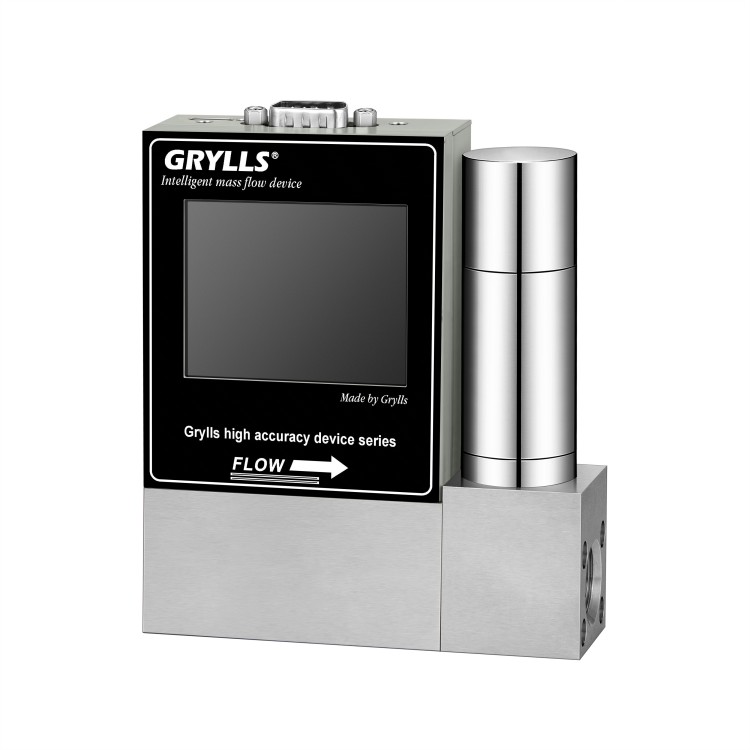
Quality flow controllers can be used to control various gases, including corrosive gases and special gases, but caution is advised. For the use of corrosive gases and special gases, it is necessary to properly select the model and sealing materials. When placing an order, users must make a special declaration to the supplier regarding the type of gas to avoid significant losses due to incorrect selection of the model or sealing materials.
Typically, gas quality flow controllers come into contact with wet materials of the working gas, such as 316L stainless steel, polytetrafluoroethylene, and sealing materials, which are further divided into metal seals and rubber seals. The materials for metal seals are generally stainless steel, gold, or nickel, which are resistant to corrosion. MFCs with metal seals can be used with any gas, including corrosive gases and specialty gases. For highly corrosive gases like boron trichloride, boron trichloride, and hydrogen fluoride, as well as metal oxide gases used in MOCVD, it is recommended to use MFCs with metal seals. Due to the higher cost of metal-sealed MFCs, rubber-sealed MFCs are generally used in applications with lower requirements. Unless otherwise specified, MFCs are typically sealed with fluororubber, suitable for most acidic and alkaline corrosive gases, such as dry chlorine gases of the halogen family. For other special corrosive gases, special rubber is required. For ammonia, use ammonia-resistant rubber like ethylene propylene rubber, chlorinated butyl rubber, or nitrile rubber; for organic solvent vapors (acetone, toluene, etc.), use silicone rubber; and for boron trichloride, boron trichloride, hydrogen fluoride, etc., use perfluororubber.