


 通过中商114认证
Are you familiar with stainless steel laser cutting? Follow the editor to take a look!
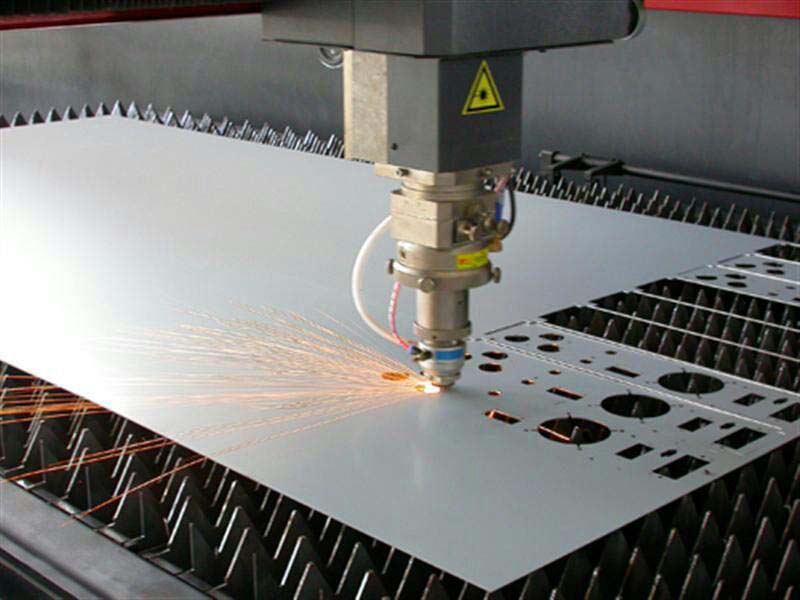
Over a century has passed since Einstein proposed his laser theory, and lasers have undergone more than a century of evolution and development. Now, they are hailed as "the fastest blade, the most accurate ruler, and the brightest light," rivaling nuclear energy, computers, and semiconductors. Laser processing, with its high efficiency, precision, non-limitation by materials, and flexibility, has gradually replaced traditional manufacturing processes, particularly in the field of metal sheet cutting, accounting for over 70% of the entire laser processing industry.
Laser equipment makes its debut on the sheet metal processing stage
Established in 1946, AMADA is a manufacturer that has been considering how to integrate laser technology into sheet metal processing equipment. As early as 1978, in response to customer demands for a non-contact processing method, AMADA embarked on the research and development of laser equipment. It successfully developed the first laser processing machine for sheet metal, the LC-644, which began official sales in 1981. At that time, the laser equipment could only process carbon steel plates up to 6 tons and had a processing speed of only 1M per minute, which was far from the capabilities of modern laser machines. However, it was a groundbreaking product that shook the sheet metal processing industry at the time.
Sheet metal processing industry sparks a technological revolution
Over decades of development, laser cutting has evolved from solid-state lasers to CO2 lasers and fiber lasers. With the technology becoming increasingly mature, China's vast potential market has provided ample space for the large-scale application of laser processing machines in the sheet metal industry. As competition intensifies, profit margins at all stages of the sheet metal supply chain are being compressed, with diminishing room for price cuts, making the transformation of processing technologies imperative. Meanwhile, China has gradually become a manufacturing hub, and with the increase in foreign investment, the demand for metal processing is on the rise. This has led to a growing need for sheet metal processing capabilities, promoting the development and prosperity of laser cutting.
Traditional sheet metal manufacturing processes involve a sequence of cutting, stamping, bending, and welding, or flame plasma cutting, bending, and welding. Facing orders with diverse products, small batch sizes, customization, high quality, and short delivery times, these traditional methods show clear inadaptability. Laser cutting technology, as an alternative to the "cutting-stamping" process, boasts flexibility and high adaptability, and is often used in the production of non-standard (or complex-shaped) workpieces and samples (single pieces or small batches), gradually replacing some traditional sheet metal processing techniques.
Disadvantages of Traditional Sheet Metal Fabrication
Traditional sheet metal cutting equipment holds a significant market share, though they each possess unique advantages, their disadvantages compared to modern processes like laser cutting are quite evident, impacting the competitiveness of enterprises.
The CNC shearing machine is primarily used for straight cuts and is only suitable for linear sheet metal cutting.
2. CNC/turret punch presses have limitations in cutting steel plates thicker than 1.5mm, and they suffer from poor surface quality, high costs, loud noise, and are not environmentally friendly.
3. Flame cutting, as an original traditional cutting method, is only suitable for rough processing due to its limitations in cutting thermal deformation, cutting width, waste material, and slow processing speed.
4. Plasma cutting and fine plasma cutting are similar to flame cutting, but they result in excessive thermal deformation and significant tilt when cutting thin steel plates. They are ineffective in achieving high precision, and the consumables are quite expensive.
5. High-pressure water cutting is slow in processing, leading to severe pollution and high cost consumption.
Advantages of Fiber Laser Cutting Machines
1. The laser cutting technology boasts high flexibility, rapid cutting speeds, and high production efficiency, leading to shorter product production cycles. Whether it's simple or complex parts, laser cutting can achieve one-time rapid forming and cutting.
2. Narrow seam, high cutting quality, high degree of automation, easy operation, low labor intensity, and environmentally friendly.
3. Achieves automatic nesting and material optimization for cutting, enhancing material utilization, with no tool wear and excellent material adaptability. Virtually capable of cutting all materials.
Laser Cutting-Combination Machine
Introducing the new trend in sheet metal fabrication techniques
Although laser cutting has advantages over CNC punch cutting in terms of cutting precision and medium-thick plate cutting, it can only be used for functions such as louvers, shallow stretching, countersunk holes, flanged holes, reinforcing ribs, and embossing. To address this limitation of laser cutting, the laser-punch composite machine has emerged.
German Trumpf is one of the companies manufacturing press brakes and laser combination machines. In 1979, it produced the first punching-laser combination machine, the TRUMATIC 180 LASERPRESS, with a laser power of 500-750W. In the 1990s, AMADA and Murata both launched their first-generation laser punching-combination machines. In China, Jinfangyuan introduced a CNC hydraulic press brake and CO2 laser cutting combination machine in 2002. Subsequently, the Casting and Forging Institute also released a PL31550 CNC punch press and laser cutting combination machine, both utilizing CO2 lasers. Due to the technical limitations and high costs of CO2 lasers, the promotion and widespread adoption of punching-cutting combination machines have been affected, resulting in limited application of such machines.
As technology advances, fiber laser generators are gradually replacing CO2 laser generators. The CNC punch press-fiber laser cutting composite processing technology overcomes all the drawbacks of the early composite processing equipment consisting of punch presses and CO2 laser cutting. It offers significant advantages over the original combined shearing and multiple positioning single-machine processing techniques, leading to rapid promotion and application.