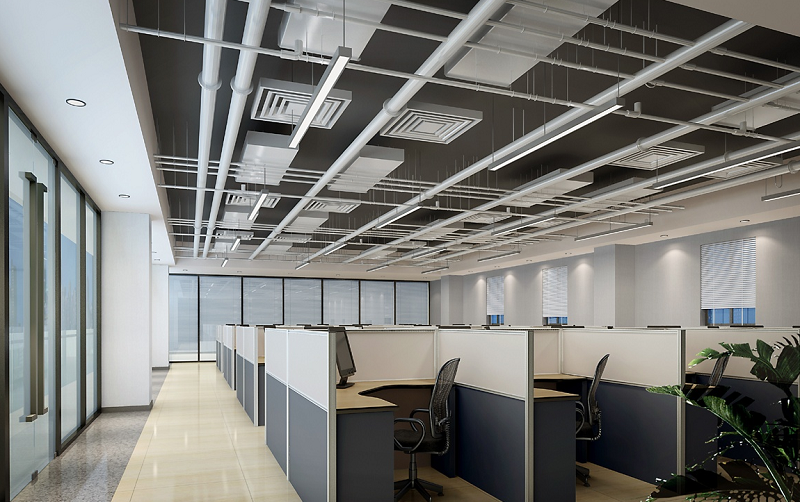

In modern buildings, the choice of HVAC systems directly impacts energy efficiency, operational costs, and user experience. As a professional HVAC system solutions provider, we understand that different scenarios require different HVAC system needs. To assist you in selecting the most suitable HVAC system, we have conducted a comprehensive comparison and analysis of multi-split, water-cooled, and air-cooled HVAC systems. Here is a detailed interpretation.

I. Performance Comparison: Who's More Efficient?
Multi-Link Air Conditioning System
Multi-split air conditioning systems utilize variable refrigerant flow (VRF) technology.Our VRF technology can automatically adjust refrigerant flow based on room load changes, achieving precise temperature control with fluctuations kept within ±0.5℃. This system is particularly suitable for locations with high temperature control requirements, such as office buildings and hotels.
Water-Cooled Air Conditioning System
The water-cooled air conditioning system uses water as the refrigerant, offering high energy efficiency and stable operation, particularly excelling during part-load operation. It is suitable for large buildings and locations with high energy efficiency requirements, such as shopping malls.
Air-cooled Refrigeration System
The air-cooled air conditioning system utilizes air as its heat and cold source, eliminating the need for cooling towers and other equipment, making it easy to install and featuring a simple system structure. However, its energy efficiency is relatively low and is significantly affected by outdoor temperatures, making it suitable for locations with limited installation space or lack of water sources, such as small office buildings and residential areas.
Analysis of Pros and Cons: Which System is More Suitable for Your Needs?
Multi-Unit Air Conditioning System
Advantages: Flexible installation, space-saving, on-demand cooling and heating, and high operating efficiency.
Drawbacks: Higher equipment costs, complex maintenance, and significant initial investment.
Water-cooled Air Conditioning System
Advantages: High energy efficiency ratio, stable operation, and low long-term running costs.
Drawbacks: Complex installation, requires auxiliary equipment like cooling towers, and occupies a large area.
Air-Cooled Refrigeration System
Advantages: Easy installation, no need for a cooling tower, and lower initial investment costs.
Shortcomings: Lower energy efficiency, relatively higher operating costs, and louder noise.
Scenario Applicability: Select the Best Solution Based on Requirements
Multi-split Air Conditioning System
Perfect for locations with high temperature control requirements, such as office buildings, hotels, and schools. Particularly in scenarios that demand zoned temperature control, multi-split systems offer flexible solutions.
Water-Cooled Air Conditioning System
Ideal for large-scale construction and high-energy efficiency requirements, such as shopping malls and data centers. Its high-efficiency energy-saving features can significantly reduce long-term operating costs.
Air-cooled Air Conditioning System
Ideal for spaces with limited installation areas or lack of water sources, such as small office buildings, residential complexes, and shops. Its user-friendly features make it the top choice for customers with budget constraints.
How to Balance Budgets and Efficiency: Investment Costs and Operating Expenses?
Multi-split Air Conditioning System
High initial investment costs are offset by high operational efficiency and low long-term running costs. Overall, it is suitable for locations with high demands for energy efficiency and comfort.
Water-Cooled Air Conditioning System
Installation and debugging are complex, with high initial investment costs, but offer the highest energy efficiency ratio and the lowest long-term operating costs. Ideal for large-scale buildings and long-term use scenarios.
Air-cooled Air Conditioning System
Low equipment investment cost, easy installation, but higher operation expenses. Suitable for locations with limited budgets and installation space.
NoneThe "best" solution lies in the "most suitable" choice.
Selecting an air conditioning system requires a comprehensive consideration of building scale, usage scenarios, climate conditions, budget, and operational capabilities. It is recommended that enterprises collaborate with design institutes and equipment suppliers to make scientific decisions through load simulation calculations and return on investment analysis.