

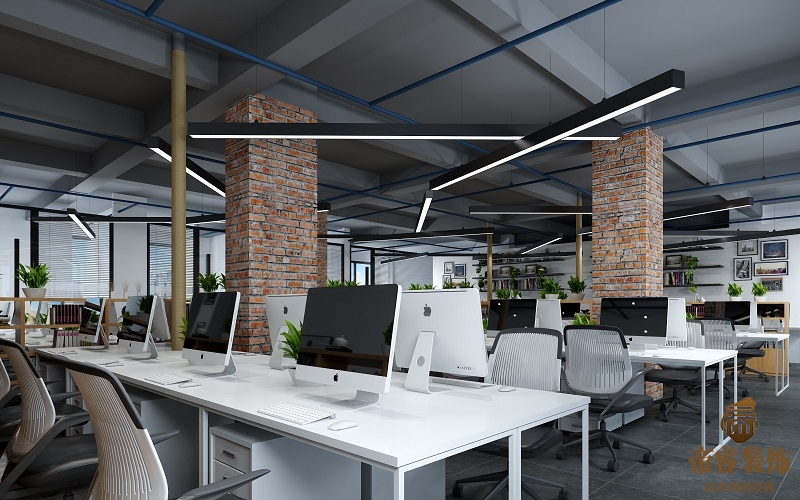
In modern office spaces, the central air conditioning system plays a crucial role. It not only provides comfort for office staff but also effectively enhances work efficiency and quality.
Common types of central air conditioning units used in office spaces include the following, each with its own characteristics and suitable applications:
One, Multi-Link System (VRV/VRF)
Feature: Utilizes variable frequency technology, one outdoor unit connects to multiple indoor units, automatically adjusts refrigerant flow based on indoor load changes to achieve precise temperature control.
Advantages: High flexibility, energy-efficient and cost-effective (high energy efficiency ratio during part-load operation), space-saving, and capable of independent zoning control.
Applicable to small and medium-sized office buildings, as well as frequently used areas such as business districts and hotels.
Please ensure adequate outdoor unit space is reserved, as there are limitations on the drop between indoor and outdoor units and piping length.
Central Air Conditioning for Water System
Category Subdivision:
Air-Cooled Heat Pump System: Utilizes air as a cooling and heating source, eliminates the need for a cooling tower, and offers flexible installation.
Water-Cooled System: Utilizing cooling towers and a refrigerant water circulation for cooling, offering high energy efficiency ratio, suitable for large-scale buildings.
Screw typeCentrifugal Chiller Units: High cooling capacity, high stability, suitable for ultra-large office buildings (such as over 10,000 square meters).
Advantages: High comfort level (low water temperature fluctuation), stable operation, suitable for large-scale heating and cooling.
Applicable scenarios: Large commercial complexes, office buildings, hospitals, and other locations with high comfort requirements.
Three: Ducted Air Conditioning System
Feature: One-to-one configuration, indoor unit concealed in the ceiling, uniformly distributing air through ducts.
Advantages: High cost-performance, attractive design, even airflow distribution.
Applicable scenarios: Budget-conscious small to medium-sized office buildings, or locations with numerous rooms requiring centralized air distribution.
Flaws: Low energy efficiency and higher long-term operational costs.
Four: Full Air Systems (e.g., Variable Air Volume Systems)VAV)
Features: Uniform air supply and return through ducts, with variable air volume temperature control.
Advantages: Even airflow, suitable for high-end office buildings.
Flaw: High risk of cross-contamination (full area recirculation), requires efficient filtration and strict maintenance.
Applicable to high-end office buildings with a strong emphasis on aesthetics and uniform control.
Five: Ground Source Heat Pump System
Feature: Utilizes the constant temperature of underground soil or water as a heat source or coolant, promoting environmental protection and energy efficiency.
Advantages: High energy efficiency ratio (higher than traditional systems)30%-50% efficiency, stable operation, and multi-functional (can simultaneously heat and cool).
Ideal for high-end office buildings or villas in geologically favorable locations with a strong emphasis on environmental protection.
Six: Fan Coil UnitNew Air System
Features: Independent air circulation in each area, complemented by a fresh air system to supply new air.
Advantages: Low cross-infection risk, suitable for routine management.
Applicable scenarios: office spaces that need to balance comfort with safety.
