As heatwaves or cold snaps hit, outdoor temperatures often soar beyondAt 40℃ or plummeting to below freezing, central air conditioning is no longer just a "turn on/off" issue; it's a comprehensive engineering system affecting equipment lifespan, energy consumption safety, and indoor comfort.

Under extreme temperatures, the operation of central air conditioning systems must be adjusted according to their design limits and the current environment to ensure equipment safety and operational efficiency.
Running Recommendations Under Extreme Heat Conditions
When the outdoor temperatures consistently exceed At 40℃ temperatures, the cooling efficiency of the central air conditioning system will significantly decrease, and may even trigger high-pressure protection and shut down. At this time, it is recommended to:
Properly Set the Temperature
Set the indoor unit temperature to Maintain temperatures of 26℃ or above to avoid setting too low (such as below 24℃), to alleviate the compressor load.
Reduce the number of simultaneous indoor units in use.
Suggest to enable only1 to 2 indoor units, prioritizing the cooling needs of the main activity areas.
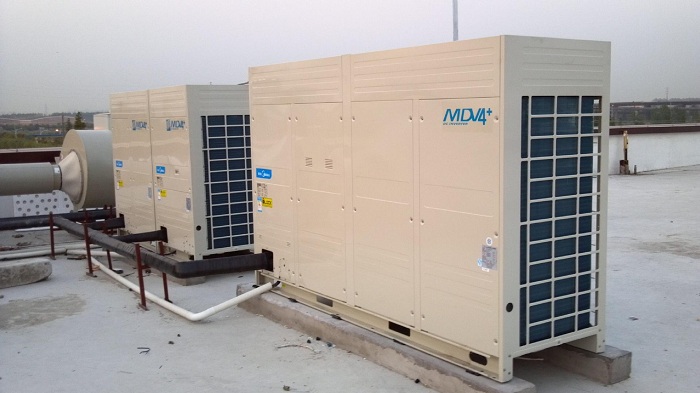
Ensure outdoor unit ventilation and heat dissipation
Clear debris around the outdoor unit to ensure unobstructed intake and exhaust air flow.
If the outdoor unit is installed inside a louver, it is recommended to remove or replace it with a high-transparency louver.
Avoid extended heavy-duty operation
The system can be set to an energy-saving mode or scheduled to turn on and off, reducing the continuous high-load operation time of the compressor.
5. Regular Cleaning and Maintenance
Clean the indoor air filter every two weeks.
Perform a thorough cleaning of the condenser and check refrigerant pressure by a professional before the start of each summer.
Running Recommendations Under Extreme Cold Weather Conditions
When the outdoor temperature falls below At -5°C, the heating efficiency of heat pumps significantly decreases. At this time, attention should be paid to:
Use Auxiliary Heat Function Appropriately
When the outdoor temperature BelowWhen the temperature is -5℃ or the air conditioner cannot reach the set temperature after prolonged operation, the auxiliary heating can be briefly activated to assist in warming up.
Once the indoor temperature is stabilized, auxiliary heating should be turned off immediately to reduce energy consumption (auxiliary heating consumes more electricity than normal heating).Increased by more than twice.
2. Set Appropriate Indoor Temperatures
Suggest setting the heating temperature to Maintain temperatures between 20-22°C to avoid significant differences from outdoor conditions.
Keep the equipment powered and interconnected
For central air conditioning systems with water-based systems (such as all-in-one air conditioning and ground heating machines), it is necessary to maintain...24/7 power supply ensures pump联动 with the main unit to activate the automatic anti-freezing function.
4. Drain the system when not in use for an extended period
If the unit is not to be used during the winter for an extended period, the water in the main unit, pump, and pipes should be drained to prevent freezing and cracking.
5. Beware of Chiller Unit Freezing
Chilled water units are prone to freezing damage in extreme cold weather. Ensure the water system's circulation is normal and the water temperature is appropriate before starting up.
Additional electric insulated air dampers can be installed at the fresh air inlet, linking with the unit to automatically close when the machine is turned off, preventing cold air backflow.