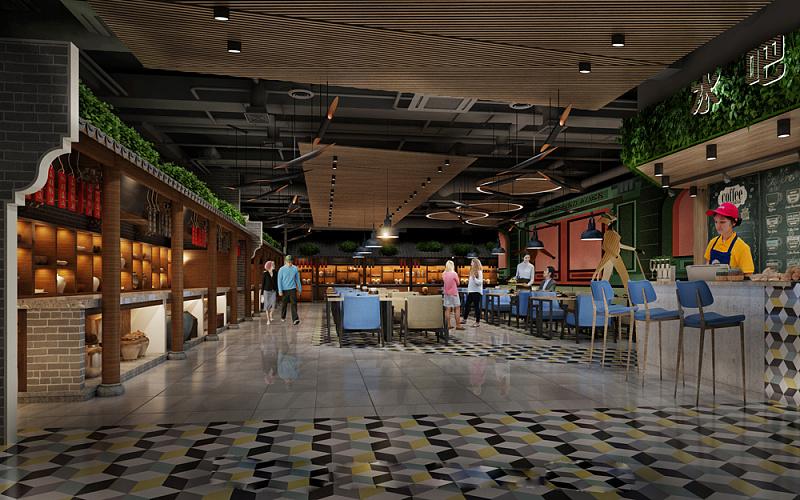
Central air conditioning is a crucial factor for the operation and customer experience in a shopping mall's restaurant. It's no small matter; improper handling can lead to poor performance, high costs, and even penalties from the property management.

Here are the four key points compiled by Tianxiang Electromechanical for you:
One, Initial contact with the property management.Get the Full Picture
This is a crucial step that must be completed before signing the contract and starting renovations.
Clarify Supply Timing: Confirm the seasonal on/off dates and daily switching times for the mall's central air conditioning. If your business hours do not align with these (such as the need for early inventory or night meals), negotiation is required."Exceeding the air conditioning time and fees may result in the inconvenience of not having air conditioning upon opening."
Calculate Cooling Load: Provide your business categories (especially high-heat businesses like hotpot and barbecue), expected customer flow, and kitchen equipment power to the property management, to confirm if the air conditioning cooling capacity in the area is sufficient. If not, the property management will need to expand, which will be time-consuming and costly.
Clearly identify ventilation locations: Utilize the property's new intake and exhaust ventilation points, and strictly prohibit unauthorized holes in the exterior walls.
Clarify the Cost Method: Is the air conditioning fee based on square footage or usage? It must be included in the cost budget in advance.
Two Design Core: Kitchen and Great Hall Must BeIsolation
In-store air conditioning design is crucial to success or failure, with the kitchen being the core.
Prohibit the use of the same air return for kitchen and dining areas! Otherwise, oil and smoke can contaminate the entire system and seep into other shops, leading to serious consequences.
Proper Practice: Design a separate, robust exhaust and makeup air system for the kitchen, ensuring the kitchen maintains a negative pressure state (lower air pressure than the lobby) to effectively contain smoke and odors. The makeup air system can cool and heat, enhancing the chef's working environment.
Dining Area: Avoid direct air flow from exhaust vents blowing onto customer seats (especially booth seats). Ensure adequate fresh air circulation to maintain a fresh atmosphere.
Condensate Water: Improper Drainage Installation"Hidden Bomb," once water leaks, it can soak the ceiling and interior decoration. Ensure proper slope and waterproof testing is conducted.
No Chinese content provided, please provide the news content to be translated. Equipment Installation: Detail-Oriented and Committed to Post-Maintenance
Select: Opt for a concealed ducted unit for its aesthetics and even air distribution. Be sure to choose low-noise equipment and install it above an area not primarily used for dining.
Materials: Recommend using galvanized steel sheets for ductwork, which are fire-resistant and durable, and avoid using composite materials prone to bacterial growth.
Inspection Ports: Sufficiently large inspection ports must be provided for each indoor unit; otherwise, the cost of cleaning and maintenance will be extremely high in the future.
Four Operations and Maintenance: Regular Cleaning is Key
It is essential to have the air conditioning filters, heat exchangers, and condensate trays professionally cleaned on a regular basis (recommended quarterly). This is crucial for air quality, cooling efficiency, and energy costs. Employees should conduct routine checks daily for any unusual noises or leaks.