

For industrial production environments, central air conditioning is not only a facility to ensure employee comfort but also a critical infrastructure for maintaining production process stability and guaranteeing product quality.
A well-designed, high-efficiency air conditioning system can significantly reduce a company's operational costs, while a poorly considered replacement project can lead to numerous subsequent issues.
I. Preliminary Assessment: Laying the Foundation for a Successful Replacement
Precise Load Calculation: Beyond Simple Formulas
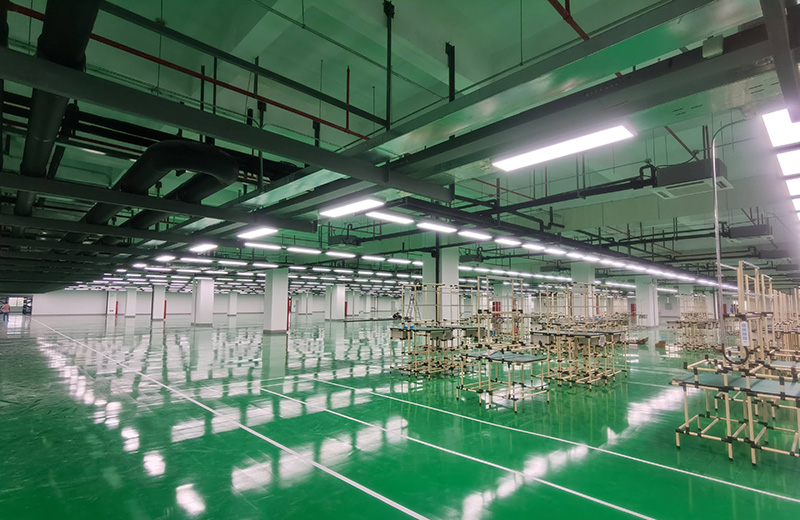
Industrial warehouse load calculations are far more complex than those for office or commercial spaces. Besides basic area parameters, it is essential to consider:
Height and Space Volume: The air flow organization and temperature stratification in tall spaces significantly affect load calculations.
The heat output of equipment: The power density of production equipment and the operational schedule have a decisive impact on the chilled load.
Personnel Density and Activity Intensity: Significant Differences in Heat Dissipation Among Workers of Different Work Intensities
Building Envelope: Wall Materials, Insulation Performance, Window Size and Orientation
Process Special Requirements: Electronic Workshop Requires Constant Temperature and Humidity (e.g.)±1°C), the coating workshop has specific requirements for temperature and humidity.
2. System Compatibility Analysis: The Key to New and Old Matching
Before deciding on the new host, a comprehensive compatibility assessment with the original system is required:
Terminal Equipment Compatibility: Verify if the operating parameters of existing fan coil units and air handling units can be matched with the new main unit.
Water System Compatibility: Confirm the pressure and flow capacity of the cooling tower, pump, and water piping system to meet the new main engine requirements.
Power System Evaluation: Verify the matching of distribution capacity, voltage grade, and control methods to avoid secondary reconstruction due to insufficient power supply.
3. Balancing Energy Efficiency and Costs: A Long-Term Perspective
When selecting equipment, it is crucial to weigh initial investment against long-term operational costs.
Energy Efficiency Takes Priority: Variable-speed units exhibit significant energy efficiency advantages under part-load conditions, making them suitable for long-duration operation in large factories.
Cost Considerations: Significant Variations in Parts Availability and Technical Support for Different Brands and Models
Incentive Policies: Understand local subsidies or tax incentives for high-efficiency equipment to lower the investment threshold.
Installation and Implementation: Professional Construction Ensures System Performance
1. Host positioning and installation
The installation location of outdoor units directly impacts system performance and lifespan.
Ventilation Conditions: Ensure there is sufficient space all around (with time intervals between multiple parallel units)≥1.5 meters), to avoid air flow short-circuit
Inspection Channels: Maintain ample maintenance space for daily upkeep and emergency repairs.
Vibration and Noise Reduction: Utilizing professional shock-absorbing pads and dampers to minimize vibration transmission and noise pollution
2. Pipeline Operation Standards
Pipe construction quality directly impacts system reliability:
Welding Process: Nitrogen gas shielded welding must be used to prevent oxidation and impurities from forming on the inner wall of copper pipes.
Pressure Test: System Pressure Holding Test Suggestion for Refueling4.0 MPa nitrogen, pressure held for over 24 hours, pressure drop does not exceed standard.
Dust Control during Construction: Preventive dust measures must be implemented throughout the construction process to ensure the cleanliness of the system's interior.
3. Drainage and Insulation Systems
Drain Slope: Condensate Drain Slope Ensured≥1%, and set an appropriate water seal to prevent backflow of air.
Insulation Continuity: The insulation must be continuous without any breaks, with a thickness appropriate for local climatic conditions (typically).≥30mm)
Electrical Safety Regulations
Wiring Separation: Power lines and signal lines are laid separately to prevent interference.
Grounding Reliability: Ensure reliable grounding of the main unit and control system; surge protectors should be installed in lightning strike risk areas.
Section III: Wind System and Water System Optimization
Air System Evaluation and Optimization
Replacing the main server is a great opportunity to optimize the entire ventilation system.
Duct Inspection: Check for leaks, dust accumulation, or insulation damage in existing ductwork
Airflow Organization Optimization: For large-scale factory buildings, it is advisable to install side supply outlets on the short sides of the room to optimize the air supply range.
Terminal Cleaning: Clean or replace the fan coil filter, inspect the fan's operational status
2. Water System Cleaning and Protection
In order to connect the new main unit to the existing water system, the following must be done:
System Cleaning: Utilizing professional chemical cleaning agents for a cyclic cleaning process, thoroughly removing scale and rust residues.
Water Treatment: According to the local water quality characteristics, corrosion inhibitors and scale inhibitors are added to the water treatment chemicals.
Install a water treatment system or an electronic descaling device throughout the installation process to prevent subsequent scaling.
Four: Commissioning, Acceptance Testing, and Long-term Operation and Maintenance
System debugging process
Pre-operational debugging steps required prior to official launch:
Vacuum Drying: Ensuring no moisture is present in the system, achieving and maintaining the required vacuum level.
Pilot Run Monitoring: Records key parameters such as return air temperature, supply air temperature, operating current, high and low pressure, etc.
Control Logic Verification: Inspect temperature and humidity control accuracy, sequential start/stop function, and alarm protection function
2. Standardized Acceptance Criteria
Upon inspection, the following documents should be obtained and reviewed:
As-built drawings: including system schematics, pipeline layouts, and control system diagrams
Debugging Report: Full Trial Run Data Records and Analysis
Warranty Documents: Clearly Define the Scope and Duration of Warranty for the Main Unit and Installation Project
User Manual: Comprehensive Guide to System Operation, Maintenance, and Troubleshooting
3. Long-term Operations Maintenance Plan
To ensure the continuous and efficient operation of the system, a regular maintenance schedule should be established.
Routine Maintenance: Clean or replace air filters monthly, check condensate drain is clear and unobstructed.
Quarterly Maintenance: Clean heat exchanger surfaces, inspect fan belt tension, and ensure electrical connection tightness.
Annual Maintenance: Full cleaning of the condenser, checking refrigerant pressure and compressor oil level/color, calibrating sensors
