

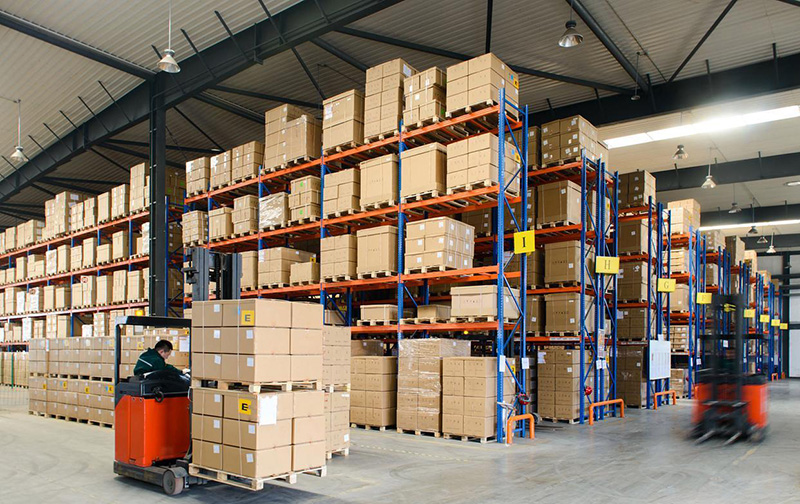
ForA 2,000-square-meter warehouse space faces the challenge of summer heat not only affecting operational efficiency but also potentially compromising product quality. Traditional ventilation and cooling methods struggle to achieve significant temperature drops in a short time, making air conditioning systems the ideal choice for rapid cooling due to their powerful refrigeration capabilities and precise temperature control.
Warehouse Cooling MeasuresMainNo Chinese content provided.
1. Warehouse ceilings are typically quite high, providing ample space, which presents two primary issues:
2. Heat Stratification: Warm air naturally rises and accumulates near the roof, making it difficult for the cool air from standard air conditioners to effectively reach the ground-level work area.
3. Uneven Temperature Distribution: Improper selection or arrangement of refrigeration equipment can easily lead to significant temperature differences across different areas of the warehouse.
Professional Warehouse Air Conditioning Solutions Selection
For high-ceiling spaces, industrial air conditioners with long air delivery and the ability to break through air stratification should be chosen. Here is a comparison of several main solutions:
1、High-Altitude Space Jet UnitCustom-designed for large spaces, this innovative system achieves ultra-long-distance air delivery (up to dozens of meters) through spherical jet nozzles, effectively sending cool air to the ground without the need for ducts. Easy to install and space-saving, it is perfectly suited for high-ceiling environments such as...Over 6 meters in height and spacious, the warehouses effectively address the challenge of cold air not reaching the lower levels.
2、Industrial Multi-split SystemHigh cooling capacity and air volume, with various air supply methods (louvered, jet, and ducted). Equipped with full variable frequency technology, it can adjust to the load, saving energy by approximately 20% compared to conventional solutions.30%. It is suitable for warehouses with high temperature control requirements and potentially different functional zones. Pipe-style air distribution can reach up to 100 meters.
3、Split-Type Industrial Air ConditioningHigh cooling capacity per unit, with relatively flexible installation. It is suitable for local area cooling or as a supplement to large-scale cooling. For extensive use, multiple units need to be combined, and attention must be paid to the wind distribution coverage.
Note: Although evaporative coolers (water-cooled air conditioners) have a lower initial investment and energy consumption, their cooling capacity is significantly affected by environmental humidity, resulting in diminished performance in humid southern regions. Additionally, the temperature and stability of the air they deliver are typically not as effective as those of traditional refrigerant air conditioners.
Three: Achieve"Rapid" and "Energy-Efficient" Operation Strategies
Choosing the right equipment is fundamental, and scientific operation methods can further enhance cooling speed while saving electricity costs. A study on air conditioning for large silos (similar to tall spaces) reveals:
1. Optimal Operation Mode: Utilizing the "Low Temperature Low Frequency, High Temperature High Frequency" control method (i.e., setting a reasonable temperature range for the air conditioner to intelligently adjust its operating frequency), it can maintain temperature (such as stabilizing at 23°C) and humidity while reducing energy consumption by 6%-8%.
2. Optimized Startup Time: Studies confirm that during summer, operating only during the day's peak heat hours is more energy-efficient than running 24/7, and also maintains temperature stability better than operating only at night [citation-7]. For warehouses, it's advisable to schedule concentrated operation during employee work hours or when specific goods require protection.
Step Four: Key Steps for Customized Warehouse Air Conditioning Solutions
Due to the specific circumstances of each warehouse, it is strongly recommended to follow the following steps:
1. Clearly define specific requirements: confirm the precise length and width dimensions, net height, building structure (steel sheeting/concrete), insulation, main product types, fixed work areas for personnel, and the target temperature to be maintained.
2. Obtain Professional Solutions: Contact professional industrial air conditioning brands (such as EK, Haier, etc.) or engineering firms, provide the above information, and request them to perform load calculations and air flow organization design, along with detailed equipment selection and layout plans.
3. Consider auxiliary measures:
Strengthen Sealing and Insulation: Inspect and seal unnecessary gaps in the warehouse, particularly around doors and windows. Consider adding an insulating layer to the roof or applying a heat-reflective coating to reduce heat entry from the source.
Auxiliary Ventilation: During non-air-conditioned hours or transitional seasons, use large industrial fans to promote air circulation and help balance temperatures.
