

In the fields of modern precision manufacturing and biotechnology, cleanrooms have become the core infrastructure for ensuring product quality. However, different cleanliness grades (fromInvestment and operating costs can vary by multiples, even dozens of times, between ISO 9 and ISO 1 ratings—the unit cost of a 100-level workshop can be 5-10 times that of a ten-thousand-level one, with annual energy consumption differing by 3-5 times.
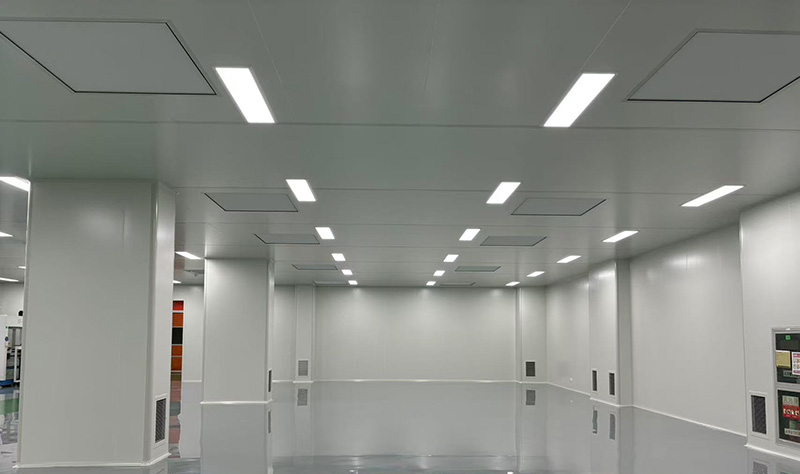
Cost differences among different grades of cleanrooms are primarily reflected in construction investment and operational maintenance. Moreover, as the cleanliness grade increases, costs escalate exponentially. Below is a detailed analysis of these differences:
Construction Cost Variance (Unit Area Investment)
Construction costs significantly increase with the improvement of cleanliness grades, primarily influenced by purification systems, construction materials, and construction accuracy.
Cleanliness Grade:ISO 8-9, domestic commonly used grades: 100,000 to 1,000,000, unit area cost (RMB/㎡): 800-1,400 (standard), 1,800-2,600 (high-end), 3,000-5,000 (industrial standard), main configuration features: pre-effect + mid-effect filtration, air exchange rate 10-20 times/hour, ordinary color steel sandwich panel structure.
Cleanliness Grade:ISO 6-7, domestic common grades: 1,000-10,000, unit area cost (RMB/㎡): 1,000-2,000 (standard), 8,000-12,000 (industrial standard), main configuration features: three-stage filtration (with HEPA), air exchange 40-60 times/hour, antibacterial color steel plate + epoxy flooring.
Cleanliness Grade:ISO 4-5 Class, Common Domestic Grades: 100 to 1,000 Class, Unit Area Cost (CNY/㎡) approximately 5,000 (1,000 Class), 15,000-25,000 (100 Class), Main Configuration Features: Additional FFU system, air exchange rate of 80-120 times/hour, stainless steel panels/professional cleanroom materials, conductive flooring.
Cleanliness Grade:ISO 1-3 grades, domestic common grades: 10th to 1st, unit area cost (RMB/㎡) 8,000-10,000 (hundred grades) 30,000-50,000+ (10th/1st grade), main configuration features: ULPA ultra-high-efficiency filtration, air exchange >200 times/hour, vertical unidirectional airflow, micro-vibration control.
2. Core Cost Composition Variations:
Air Purification Systems: Account for 40%-60% of total cost. For each grade increase, investment rises by 30%-50%. A 10,000-class system requires HEPA/ULPA filters and FFUs, with air exchange rates of 50-60 times per hour, where equipment costs account for 40%-50%; a 100,000-class system has air exchange rates of 20-30 times per hour, with equipment costs at 30%-40%.
2. Enclosure Material: High-grade workshops require special materials such as antimicrobial color steel plates, stainless steel plates, and epoxy self-leveling, which cost 3-5 times more than standard materials. The cost of a 10,000-class building is 15%-20% higher than that of a 100,000-class building.
3. Smart Control Systems: For systems above 10,000, require IoT sensors and central monitoring systems, with an investment ratio exceeding 10%; for systems above 100,000, semi-automated systems can be used, saving costs by 20%-30%.
Operational Cost Variance (Annual Expenses)
Operating cost differences are primarily evident in energy consumption, maintenance, and inspection areas:
Specific comparison examples1,000-square-meter workshop)
- Ten-thousand-level: Total construction cost ranges from 1.5 to 2.3 million yuan, with annual operating costs of 400,000 to 700,000 yuan.
- For the ten-thousand-level project: Total construction cost ranges from 2.7 to 4 million yuan (increased by 80% to 100%), annual operation cost is 800,000 to 1.3 million yuan (increased by 100% to 150%).
III. Key Influencing Factors
1. Ventilation frequency: The higher the grade, the ventilation frequency increases exponentially (from 20-30 times/h at the ten-thousand level to 50-60 times/h at the ten level to 80-120 times/h at the hundred level), directly leading to a significant surge in fan power and energy consumption.
Filter Grade: For ten-thousand-class, use H13 grade HEPA; for ten-thousand-class, require H14 grade or ULPA. Higher in price and shorter replacement cycle.
3. Airtightness Requirements: High-grade workshops demand extremely tight seals on doors and windows, seams, resulting in a 15%-20% increase in construction costs.
Personnel and Material Management: Higher-grade workshops require stricter dressing procedures, dedicated cleanroom attire, and logistics corridors, which increase operational costs.
Section 4: Cost Optimization Recommendations
1. Rational Grading: Determine the minimum necessary grade based on production processes to avoid overdesign. Micro-environment solutions can be employed for local high cleanliness requirements.
2. Energy-saving Design: Featuring variable frequency control, heat recovery systems, and optimized air flow organization, this design can reduce energy consumption by 20%-30%.
3. Smart Operations: Introducing IoT predictive maintenance to reduce unexpected failure losses.
4. Life Cycle Assessment: Considering the costs of construction and operation over 10-15 years, high initial investments can sometimes be recouped through long-term energy savings.
