
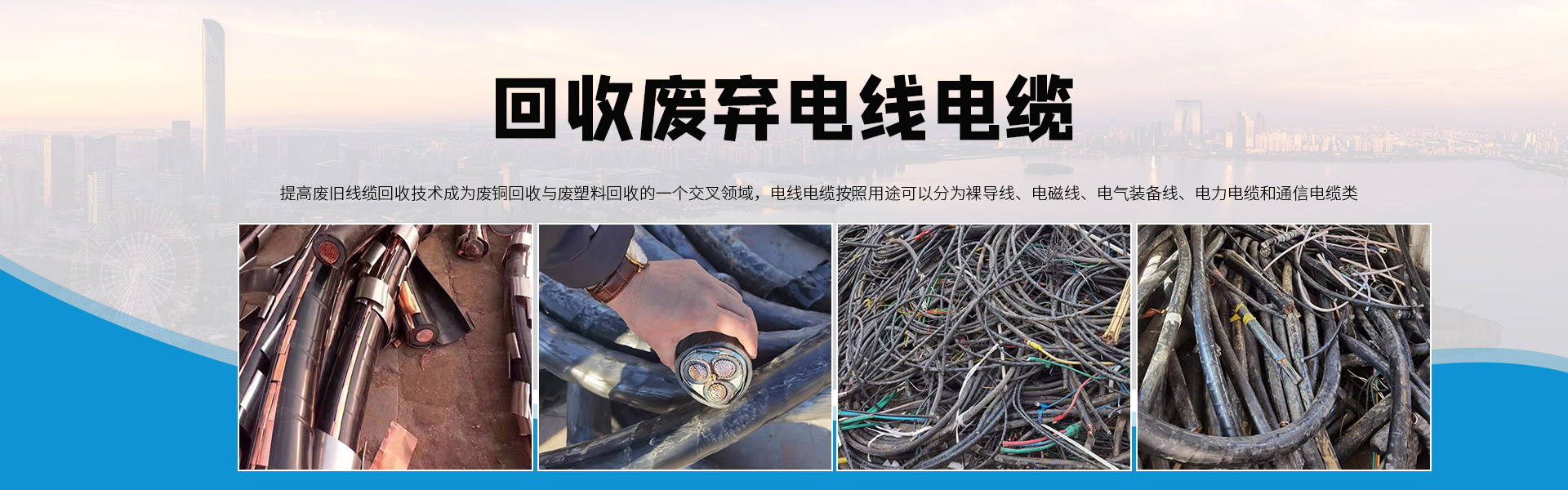
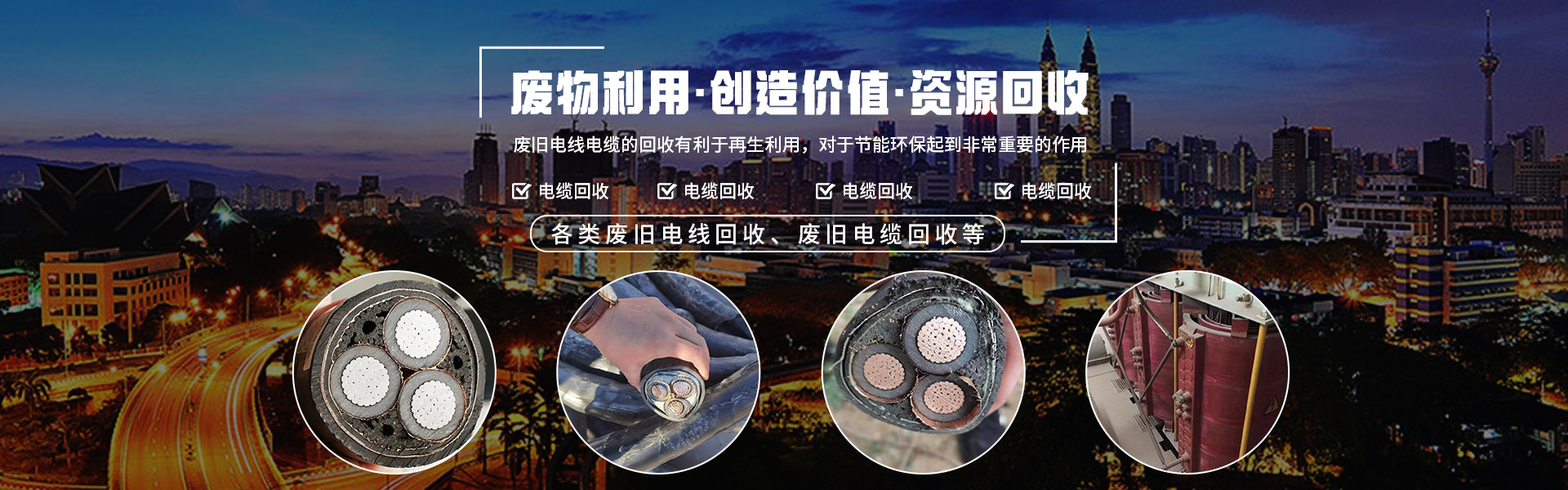
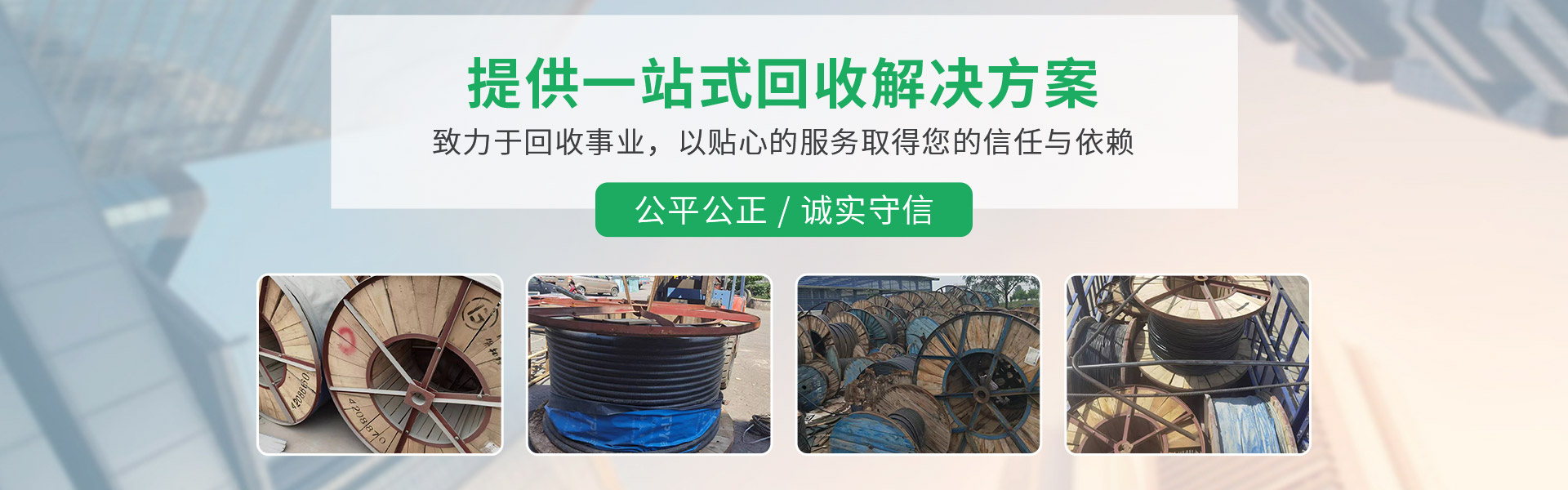


What are the requirements for wire and cable recycling?
1. Look at the packaging, the cables and wires recycled to meet national standards are often well-made, neat, and give a sense of quality when held in hand.
2. Make sure to open the packaging and inspect the wires inside. The national standard for wires with a cross-sectional area of 1.5-6 square requires a skin thickness (insulation thickness) of 0.7mm, which is quite thick. Anything thicker than this is non-standard and would definitely have an insufficient core. You can give the wire jacket a good pull; if it doesn't tear easily, it's typically in compliance with the national standard.
3. Burn for a moment, and if it extinguishes within 5 seconds after removal, it meets the national standard for flame retardancy.
4. Inspect the core: The higher the brightness of the core material (copper), the better the quality of the copper, and it should be even in light distribution with no sense of layers. The national standard requires that the core must be made of oxygen-free copper. Non-standard wire and cable cores like black rod copper may pose hidden safety hazards.
5. The core diameter has certain national requirements, but they are not very strict. However, it won't be off by much; just a very small, generally imperceptible error that can't be seen with the naked eye.
6. Length is not mandatory to be marked in meters by the country, but many manufacturers do so. Those marked in meters are not necessarily in accordance with national standards, while it's generally the case that national standards are not marked in meters. Marking in meters for non-standard wire and cable recycling is merely a method.
7. National regulations stipulate that electrical wires must have certain markings. These markings will be repeated at intervals not exceeding 500mm. Typically, they include the product logo, the manufacturer's name, and the execution standards.
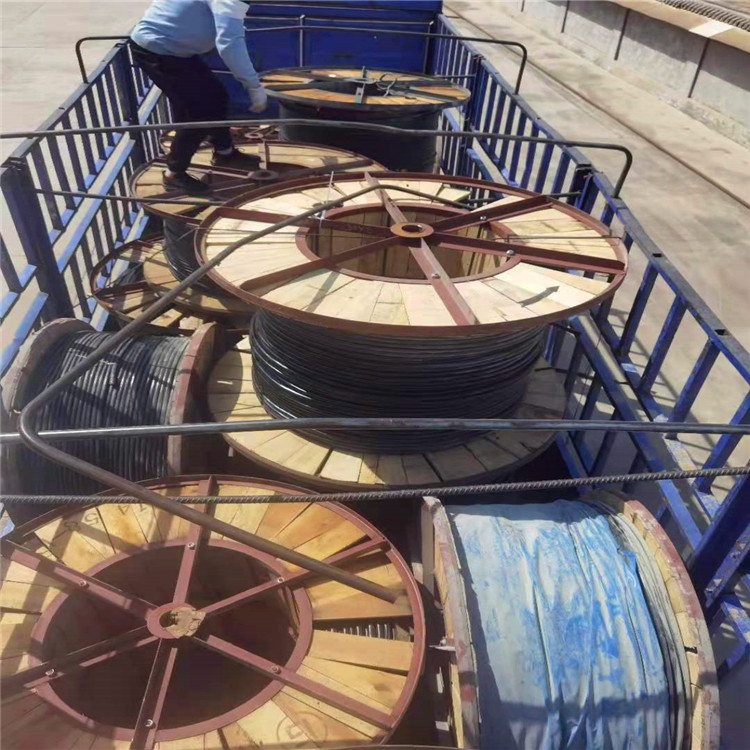
Worn-out cables and wires must be processed upon collection, which involves separating aluminum and copper cores, stripping off the steel sheath or wire, then using a special wire stripping machine to peel off the outer sheath to separate metal from plastic. Subsequently, a static separator is employed to break down the mixture, utilizing the different electrical properties of metal and plastic to separate out copper, aluminum, and other metals.

Waste Wire and Cable Recycling Equipment: Primarily used for processing old communication wires, automotive wires, computer cables, telephone lines, and home appliance wires, which are oil-free. Due to the copper granules resembling rice grains after separation, it is also known as a "copper rice machine." It is currently a superior equipment for recycling waste cables and wires.
After recycling cables and wires, the applications of the composite materials are extremely widespread, playing a significant role in various industries. They greatly facilitate the production of many machines and electrical appliances, particularly reducing investment costs in the electrical industry, and their practical applications are incredibly versatile.
