
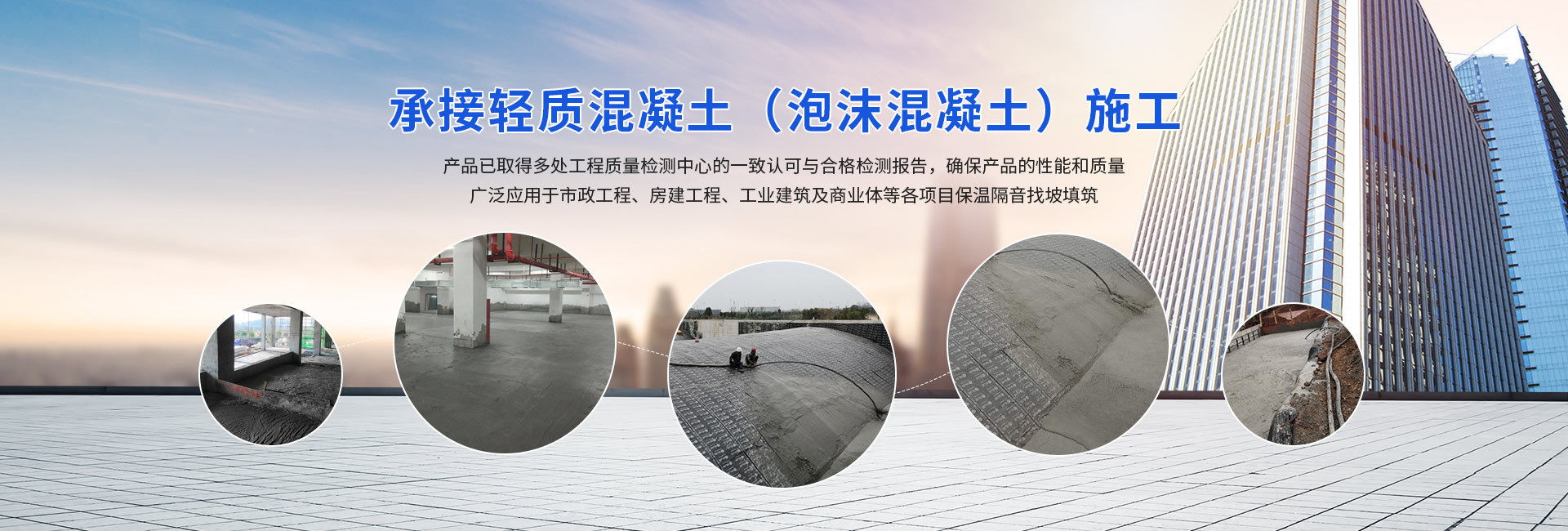
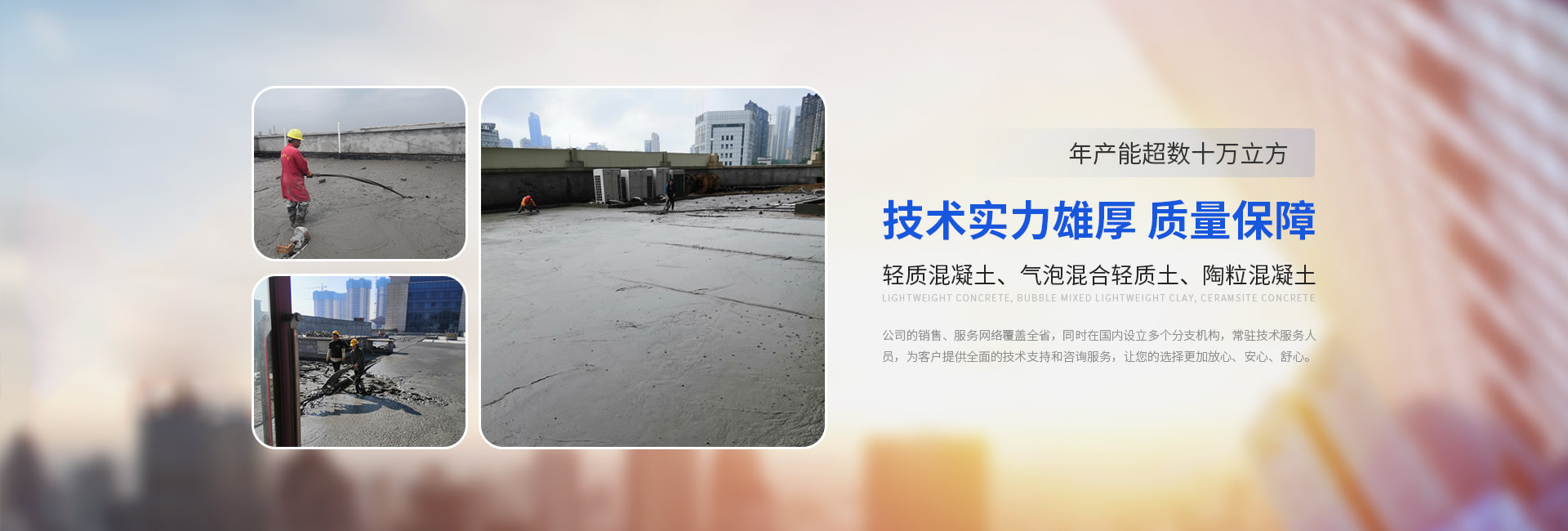
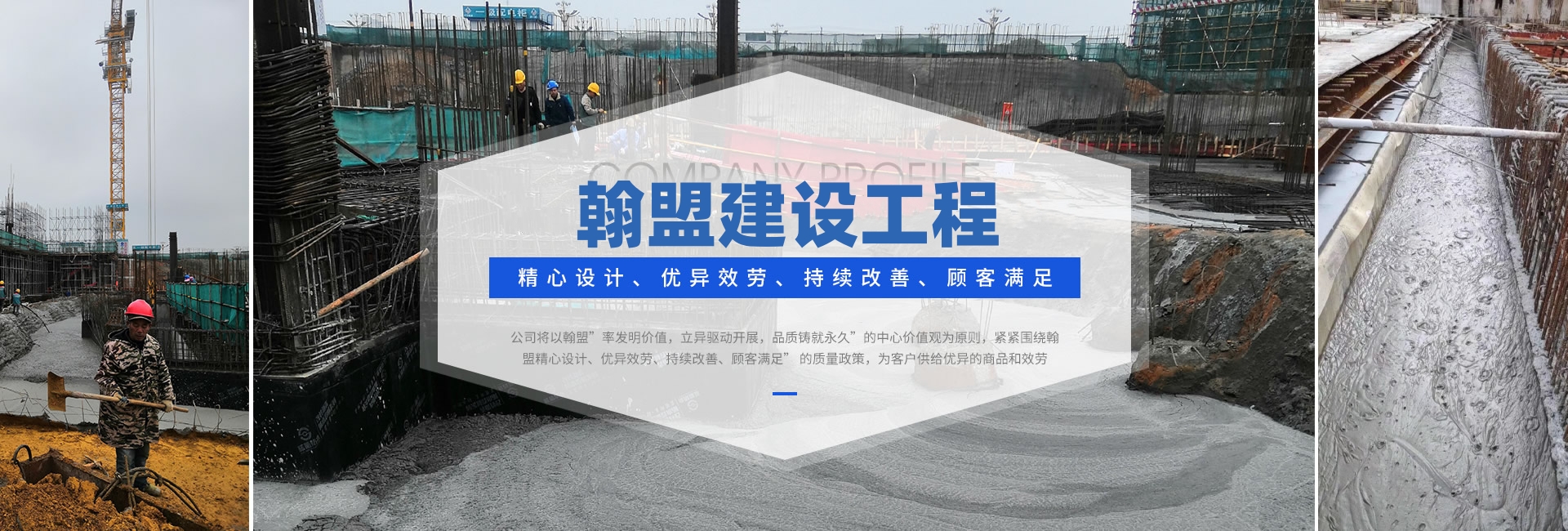

Lightweight concrete is typically produced by mechanically preparing a foaming agent solution into foam, which is then added to a slurry composed of siliceous materials, calcareous materials, water, and various additives. This mixture is then mixed, poured into molds, and cured to form a porous material. Due to the presence of a large number of sealed pores in foam concrete, it exhibits the following excellent physical and mechanical properties.
1. Lightweight
Lightweight concrete has a low density, typically ranging from 300 to 1800 kg/m3. The density of commonly used foamed concrete usually falls between 300 and 1200 kg/m3. In recent years, ultra-light foamed concrete with a density of 160 kg/m3 has also been applied in construction projects. Due to the low density of lightweight concrete, using it in building structures like interior and exterior walls, roofs, floors, and columns can generally reduce the building's weight by about 25%, with some reaching 30% to 40% of the total weight of the structure. Moreover, replacing conventional concrete with foamed concrete can enhance the load-bearing capacity of structural components. Consequently, the use of foamed concrete in construction offers significant economic benefits.
2. Excellent thermal insulation properties
Due to the presence of numerous sealed tiny pores in lightweight concrete, it boasts excellent thermal properties, specifically good thermal insulation capabilities, which are not found in conventional concrete. Lightweight concrete, typically with a density range of 300-1200 kg/m3, has a thermal conductivity of 0.08-0.3 W/(m·K) and a thermal resistance approximately 10-20 times that of regular concrete. Utilizing lightweight concrete as building wall and roof materials offers significant energy-saving benefits.
3. Excellent sound insulation and fire resistance properties
Lightweight concrete is a porous material, making it an excellent sound insulation material. It can be used as an insulation layer in building floors, soundproof panels for highways, and the upper levels of underground structures. Lightweight concrete is an inorganic material that does not burn, thus offering excellent fire resistance. Its use in construction can enhance the fire safety performance of buildings.
4. Excellent overall performance
The product can be cast on-site and integrates closely with the main construction project.
5. Low rebound with good shock absorption properties
The porosity of lightweight concrete results in a low elastic modulus, thereby providing excellent absorption and dispersion of impact loads.
