

The advantages of pre-fabricated buried thermal insulation steel pipes over traditional steel pipe insulation methods:
1. Pre-fabricated buried thermal insulation steel pipes require no large excavation trenches; simply bury the insulation pipes underground, significantly reducing the land area required for the project and benefiting environmental conservation. This cuts the earthwork excavation by over 50% and reduces the amount of construction masonry and concrete by 90%. Additionally, the installation of the insulation pipes and on-site trenching can be carried out concurrently, requiring only on-site connections, thus shortening the construction period by over 50%.
2. Excellent thermal insulation, with only 25% heat loss compared to traditional piping materials, which can save a significant amount of energy over long-term operation, thereby significantly reducing energy costs.
3. Possesses strong waterproof and corrosion-resistant capabilities, requiring no additional trenching. It can be directly buried underground or in water, with simple and rapid construction, and offers a low overall cost.
4. Exhibits corrosion and impact resistance even under low temperatures, allowing for direct burial in frozen soil.
5. With a service life of up to 30-50 years, proper installation and operation can significantly reduce pipeline maintenance costs.
6. The system can be configured to detect pipeline leakage issues proactively, accurately indicate the location of the problem, and trigger an alarm.
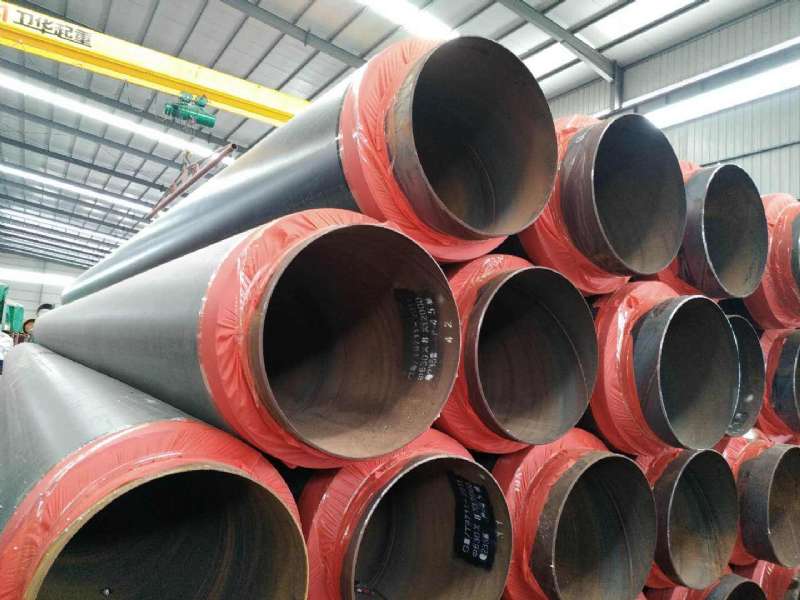
Structural Mechanism
External Steel Pipe: It maintains the insulation layer against groundwater corrosion, supports the operating pipe, and can bear certain external loads, ensuring the normal operation of the operating pipe.
2. Anti-corrosion Coating: Protects the outer steel pipes from corrosion, thereby extending the service life of the steel pipes.
3. Friction-reducing layer: Ensures free movement of thermal expansion and contraction in the working steel pipes.
4. Polyurethane Foam Layer: Ensures medium temperature and maintains the surface of the outer sheath at room temperature.
5. Insulation and Reflective Layers: Ensure that organic foam materials do not enter the inorganic hard, high-temperature-resistant layer; reflect part of the heat from the high-temperature-resistant layer.
Ensure the smooth operation of the transported medium in the work钢管.
7. Inorganic rigid thermal insulation: withstanding high temperatures, ensuring the interface temperature between the inorganic and organic thermal insulation layers, and preventing the foam from carbonization.
Features:
Reduce construction costs.
2. Low thermal loss, saving on power consumption.
3. Excellent corrosion and insulation properties, with a long service life.
4. Low land requirement, quick construction, and beneficial for environmental conservation.
5. Safety.
