
Formation and Classification of Hot Springs? Hot Spring Equipment_News Center Co., Ltd._Shandong Hengyiyuan Environmental Technology Co., Ltd._Zhongshang 114 Industry Resources Network 
在线客服 在线客服邀请中...
关闭

您好,现在客服正邀请与您通话,请留下您的联系方式,客服将尽快与您取得联系。

 点击提交代表您同意《服务条款》《隐私政策》
Shandong Hengyiyuan Environmental Technology Co., Ltd.

The company specializes in hot spring equipment, hot spri...

24-hour Service Hotline
15621858088
0531-58050676
Current Location:Home>News Center Co., Ltd.>Formation and Classification of Hot Springs? Hot Spring Equipment

    Formation and Classification of Hot Springs? Hot Spring Equipment

    2026-01-19

    Formation of Hot Springs

    The formation of hot springs generally falls into two categories:

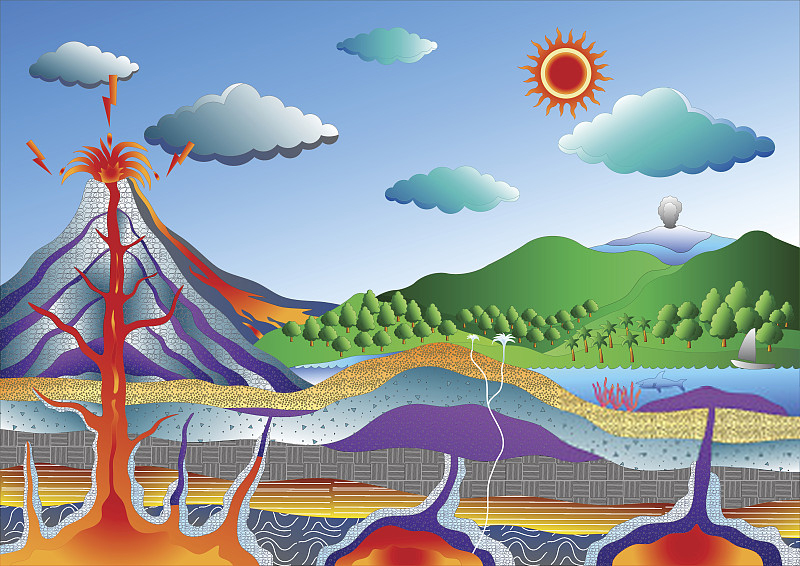
    Thermal Spa Equipment, formed from magma activity within the earth's crust or as a result of volcanic eruptions, can be found in areas with extinct volcanoes that have undergone volcanic activity. These regions, where the earth's tectonic plates have uplifted the land, still contain uncooled magma beneath the surface, continually releasing vast amounts of heat. Due to the concentrated heat source, any nearby porous aquifers will not only heat up to become hot water but will also largely boil into steam, often forming sulfate springs. Main Business: Thermal spa equipment, thermal water treatment equipment, thermal water therapy equipment, thermal heating equipment, water play equipment. Design and construction of projects such as thermal spa resorts, thermal hotels, thermal resort towns, comprehensive tourism resorts, thermal inns, water amusement projects, theme parks, etc.


    The hot spring water treatment equipment is processed from two sources: first, the water that has been filtered and purified through the natural water treatment process; second, water that has been formed by the infiltration and circulation of surface water. This means that when rain falls to the surface and infiltrates downward, it reaches the aquifers deep within the earth's crust (such as sandstone, volcanic rock, and other good aquifers). The groundwater is heated by geothermal energy below and becomes hot water. Most of the deep hot water contains gases, primarily carbon dioxide. As the hot water temperature rises, if there is a dense, impermeable rock layer blocking the way, the pressure will build up until the hot water vapor is under high pressure. When a crack appears, the hot water vapor rises. As the hot water ascends closer to the surface, the pressure decreases, causing the gases within it to expand, reducing the density of the hot water. This expansion of the vapor facilitates the upward movement of the hot water. The rising hot water then creates convection by repeatedly cycling with the denser, cooler water that has descended later and been heated less, due to the pressure difference (hydrostatic pressure difference) caused by the difference in density. In open fractures where the resistance is less than that of water, the hot water rises through the cracks and gushes to the surface, flowing continuously and eventually emerging as hot springs.

    Categories of Hot Springs

    As early as the Ming Dynasty, Li Shizhen categorized China's mineral springs into hot springs, cold springs, sweet springs, sour springs, and bitter springs in his "Compendium of Materia Medica." This is the earliest recorded classification of hot springs in China. Hot Spring Therapy Equipment.


    The method of emergence of hot spring water

    The springs are categorized into "spontaneous fountains" and "geyser." Those hot springs stored deep underground, propelled to the surface through channels due to the force of groundwater pressure, are referred to as "spontaneous fountains." Hot spring water pauses briefly during its eruption, accumulating pressure before erupting again onto the surface. Such springs that erupt at regular intervals are known as "geysers." For instance, the famous geysers at Yellowstone National Park in the United States.


    Chemical composition of hot spring water

    The泉水 can generally be categorized based on pH levels as follows: Strongly acidic springs (pH < 2), acidic springs (pH 2-4), weakly acidic springs (pH 4-6), neutral springs (pH 6-7.5), weakly alkaline springs (pH 7.5-8.5), alkaline springs (pH 8.5-10), and strongly alkaline springs (pH > 10).


        Categorized by the minerals contained in hot spring water

    Radiological radon springs, carbonic springs, iron springs, iodine springs, arsenic springs, silica springs, bicarbonate springs, sulfate springs, chloride springs, and freshwater springs are among the general categories.


Contact us

Shandong Hengyiyuan Environmental Technology Co., Ltd.
Service Hotline 15621858088
Company Phone 0531-58050676
Company Address 48-15 Wuyingshan Middle Road, Tianqiao District, Jinan, Room 1108, Meilin Building

Message Consultation

 Click OK to indicate that you agree to《Service terms》《Privacy policy》

www.114global.com © Zhongshang 114 Hebei Network Technology Co., Ltd.Address: Room 6009, Oriental New World Center, No.118 East Zhongshan Road, Qiaoxi District, Shijiazhuang City, Hebei ProvincePlatform Service Hotline: 4006299930

 Click OK to indicate that you agree to《Service terms》《Privacy policy》