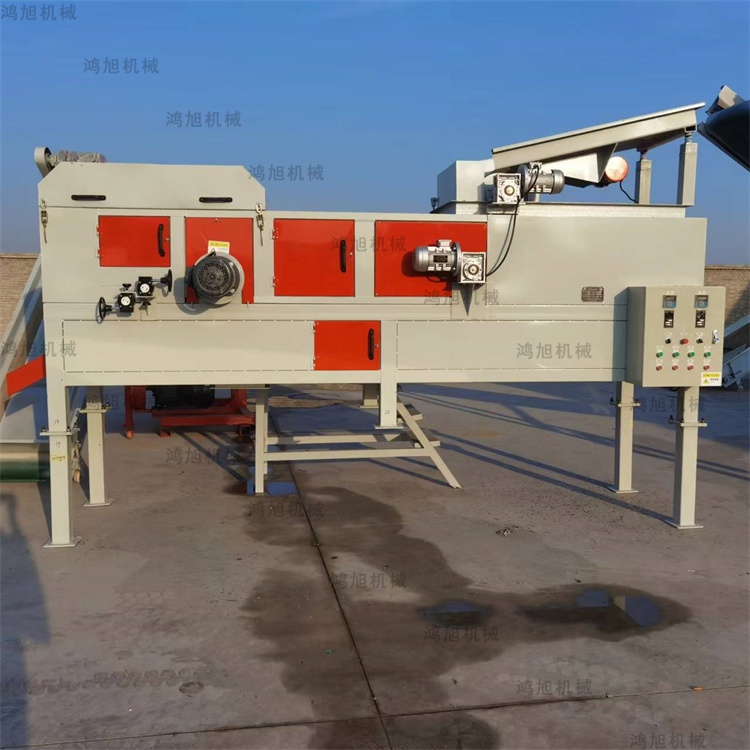






Eddy current separation is an effective method for the recovery of non-ferrous metals. It boasts excellent separation effects, strong adaptability, reliable mechanical structure, lightweight and strong repulsion (adjustable), high separation efficiency, and large processing capacity. It can separate certain non-ferrous metals from electronic waste, primarily used in the recycling and processing production line of electronic waste for separating non-ferrous metals like copper and aluminum from materials. It can also be widely applied in the field of environmental protection, especially in the non-ferrous metal recycling industry. Eddy current separation is a separation technology that utilizes the different electrical conductivities of materials, with its principle based on two important physical phenomena: a time-varying alternating magnetic field always generates an alternating electric field (Faraday's law of electromagnetic induction); and a current-carrying conductor produces a magnetic field (Biot-Savart law), known as a non-ferrous metal separator or copper-aluminum separator. Its main separation effect is determined by the material's conductivity and density ratio values. This equipment is designed for separating materials over 2mm in solid waste non-ferrous metal materials, serving as a powerful assistant in the metal recycling industry. It not only replaces the difficulties of manual sorting but also improves production efficiency. The eddy current separation system can automatically separate non-ferrous metals and non-metallic materials from the material, achieving a separation rate of over 90%, allowing the energy of solid waste materials to be reused.
The eddy current metal separator is named after its operation principle, which utilizes the principle of eddy currents to separate non-ferrous metals, a pure physical solid waste separation method. Its working principle is based on the design principle that conductors can generate induced currents. When the machine is in operation, as the metal enters the separation zone, it induces an electric current within the metal. This current generates a magnetic field that is opposite in direction to the original magnetic field, exerting a repulsive force. This repulsive force propels the non-ferrous metal body forward, achieving the goal of automatic separation. Features of the eddy current metal separator: automated operation for the automatic separation of metals from non-metals; capable of separating a wide range of metal particles, typically from 2mm to 100mm; easy installation, customized to meet customer requirements and can be effectively connected with new and existing production lines; utilizes rare earth permanent magnet systems, with low energy consumption and easy maintenance; can separate materials of different particle sizes based on the different rotation directions of the rotor; multiple models are available for selection.