
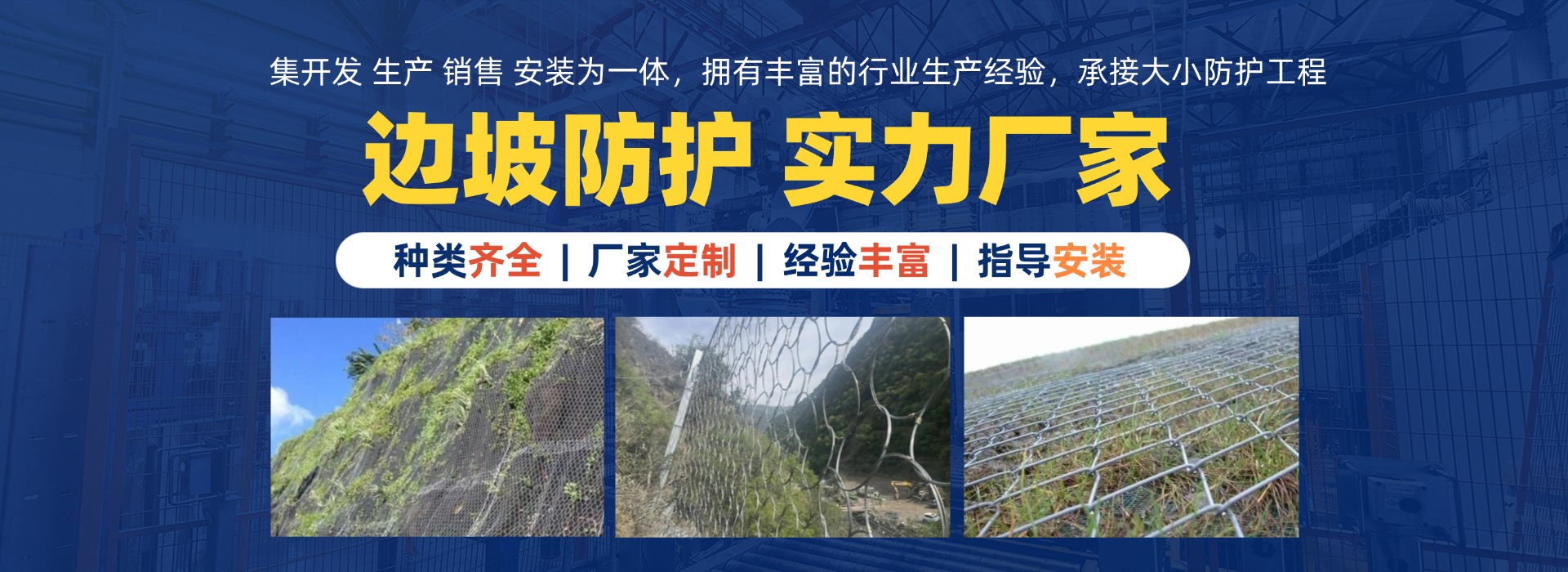
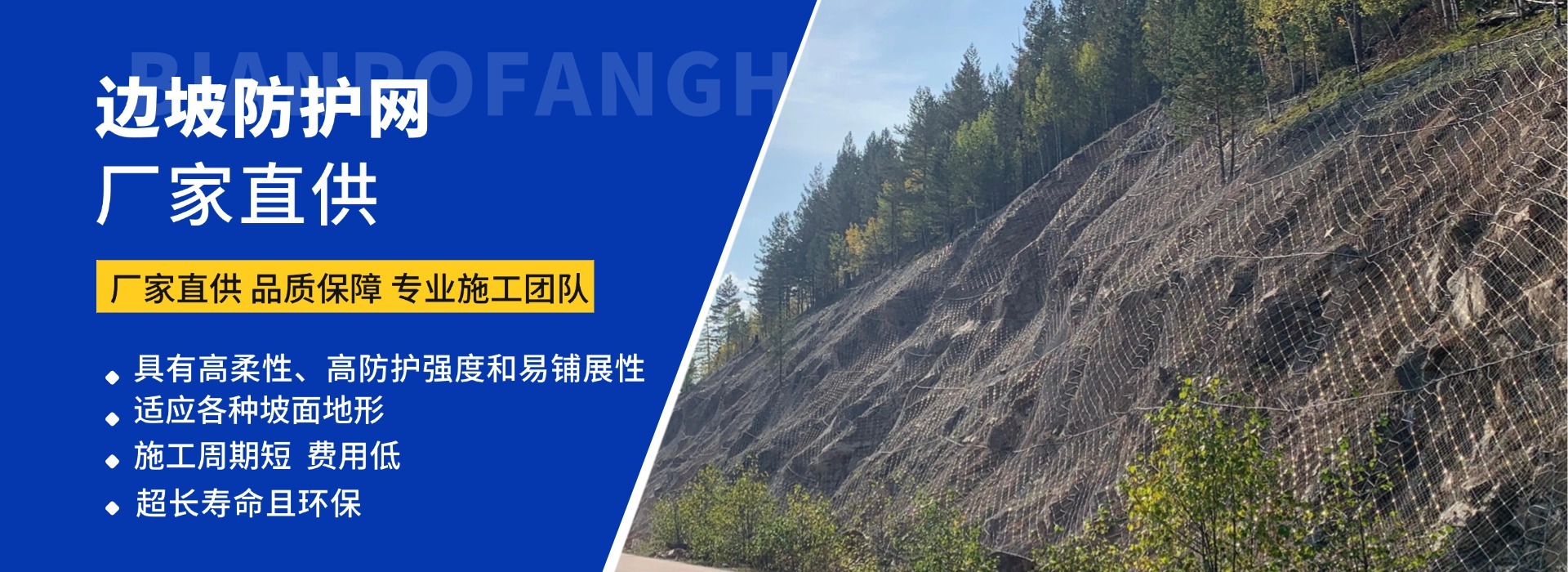

The slope protection net provides surface protection for the protected area, preventing the descent of collapsing rocks and serving as a slope protection measure. The components of the protective net, manufactured to high standards, can remain in original condition for long-term use without aging, ensuring safe and reliable operation.
On-site during the installation of protective nets, corresponding measures must be taken for different types of nets. Quantitative acceptance is required. For equipment that poses a relatively higher installation risk, after the construction work is completed, it should be handed over to the construction department for self-inspection. During high-altitude operations, timely inspections should be conducted to eliminate various hazards and enhance awareness.
The two most common types of damage are caused by rain erosion, which typically occurs on relatively gentle slopes. After rainfall, numerous small channels form along the slope. If left unchecked, these channels can grow larger over time, ultimately affecting the stability of the slope.
The slopes alongside highways are typically excavated by hand, with the strength of hand-excavated slopes generally ensuring stability. Over time, due to the erosion by rain, freeze-thaw effects in winter and summer, or other unforeseen circumstances, the slopes may be affected to varying degrees. To prevent occurrences such as falling rocks, rolling stones, mudslides, etc., the requirements for slope protection nets are quite high.
