
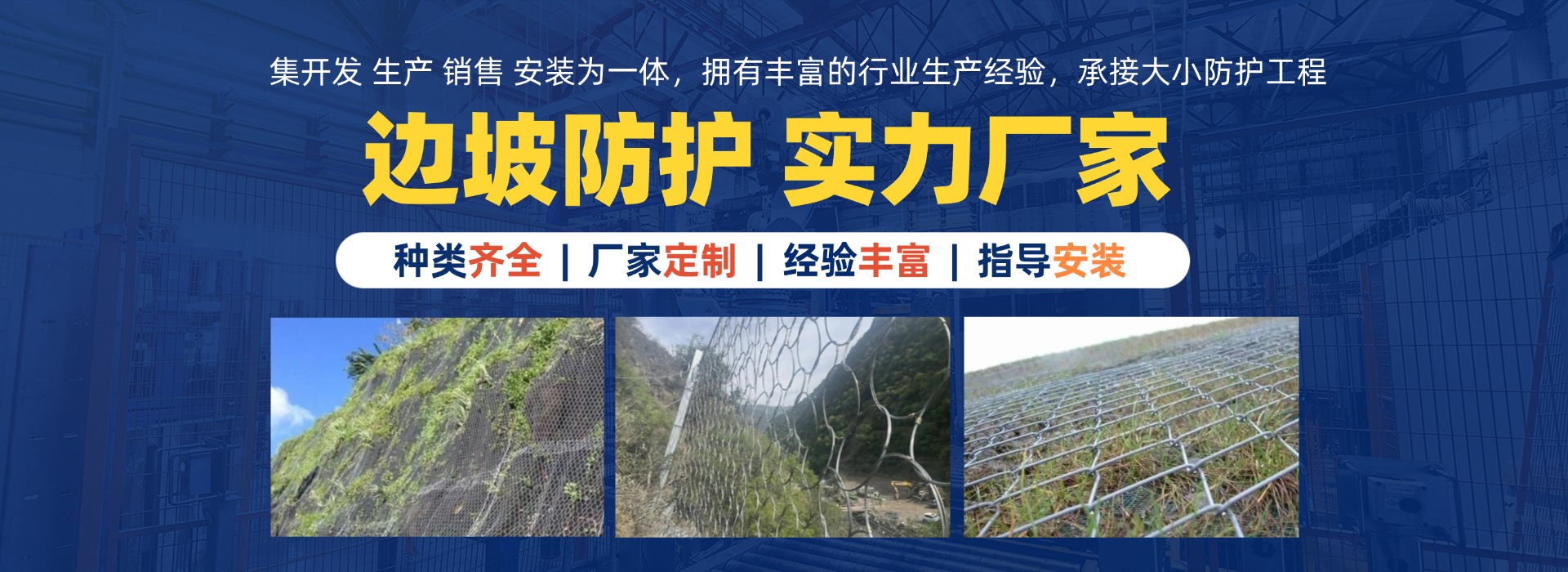
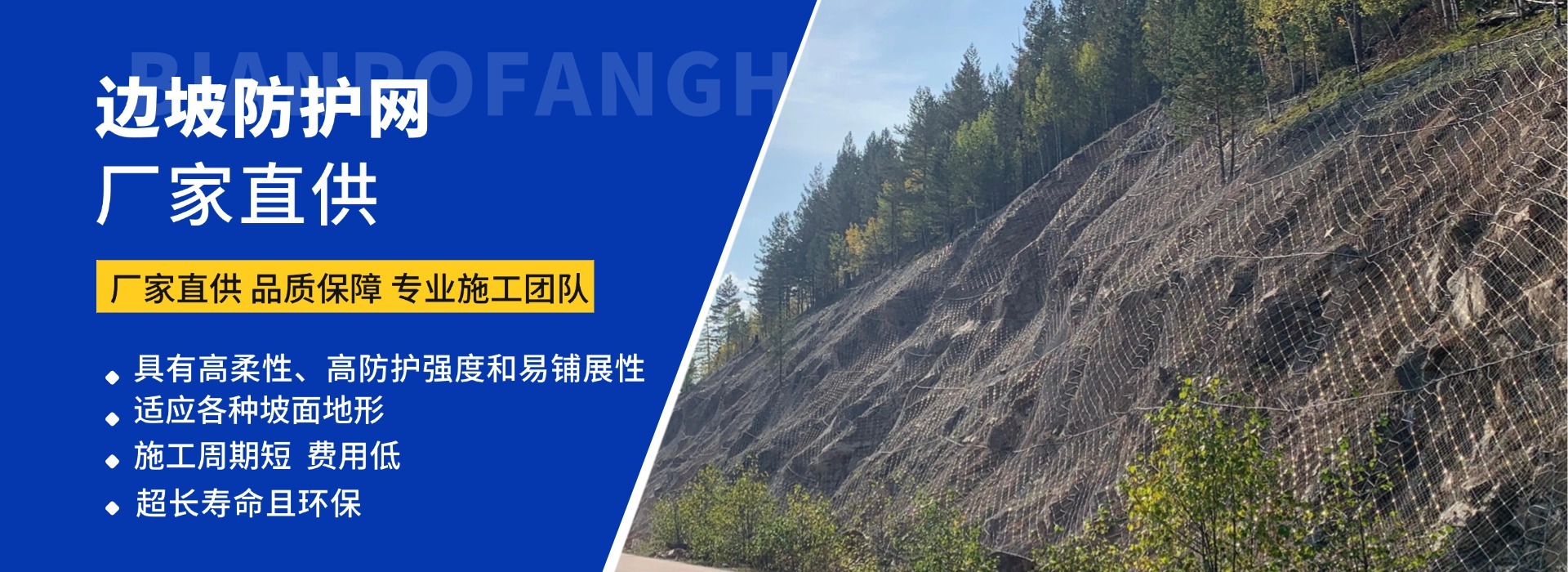

The slope protection net has a wide range of applications, visible alongside highways, in areas prone to mudslides, or where slope collapses occur. However, many people question whether it can truly provide effective protection. Can it safely mitigate the hazards brought by natural disasters? To alleviate such concerns, relevant personnel conducted a series of tests. The process involved dropping an eight-ton iron block from a height of thirty meters, allowing it to be intercepted by the slope protection net made of steel wire rope. This demonstrated the net's ability to offer effective protection against occasional natural disasters.
The test results show that while the protective net did undergo some deformation, it still effectively obstructed the falling iron blocks from high altitudes. The successful test has alleviated many concerns and also provides valuable data for some engineering projects. The results are in: this experiment proves that our slope protection equipment performs as expected. So, what should we pay attention to when installing slope protection equipment to achieve such results?
When shutting down the equipment, the following points are required: The distance between support ropes is generally 4.5 meters, resulting in the standard length of the steel wire ropes being a 4-meter square. During installation, a certain distance must be left between the steel wire rope mesh and the support ropes for sewing. The longitudinal support ropes and the transverse support ropes need to be fixed with anchor rods.
