What are the controls for insulating materials such as car-bottom kiln tunnel kiln heating furnace and glass furnace?_News Center Co., Ltd._Zibo Huanao High-Temperature Energy-Saving Materials Co., Ltd. 
在线客服 在线客服邀请中...
关闭

您好,现在客服正邀请与您通话,请留下您的联系方式,客服将尽快与您取得联系。

 点击提交代表您同意《服务条款》《隐私政策》
Zibo Huanao High-Temperature Energy-Saving Materials Co., Ltd.

Insulation material production and sales; refractory materials, ceramic fiber...

18766958936
 
Product Classification Co., Ltd.

Contact Information
  • Contact person:郭经理
  • Telephone:18766958936
  • Mobile:18766958936
Home > News Center Co., Ltd. > What are the controls for insulating materials such as car-bottom kiln tunnel kiln heating furnace and glass furnace?
News Center Co., Ltd.
What are the controls for insulating materials such as car-bottom kiln tunnel kiln heating furnace and glass furnace?
Publish Time:2024-12-25        View Count:68         Return to List

Alumina silicate thermal insulation material is a crucial auxiliary material for ensuring kilns improve the efficiency of ceramic firing. As refractory materials are closely related to energy saving and economic benefits in the firing process of enterprises, in the design and construction of modern ceramic kilns, the standards for refractory material products have been considered as important as those for product manufacturing, with higher and stricter technical standards. In recent years, domestic ceramic enterprises have been committed to adopting high-tech improvements and developing high-tech refractory material products, thereby effectively promoting the development of the entire ceramic industry. We have seen that every significant advancement in ceramic kilns is accompanied by an enhancement in the energy-saving effect of refractory materials, and various new types of refractory materials have always played a leading role.


Process Technology & Quality Control

The refractory materials used in ceramic kilns exhibit a smooth and orderly appearance with high regularity, showcasing excellent manufacturing capabilities. Additionally, these refractory products boast superior physical and chemical properties, ensuring a long service life. The use of fiber refractory materials in intermittent kilns significantly enhances their firing efficiency. Moreover, the application of refractory fibers in kiln cars reduces their weight, improves insulation, increases the utilization of the kiln, saves a substantial amount of energy, and greatly reduces environmental pollution. As early as a decade and a half ago, intermittent kilns extensively employed ceramic fibers as kiln linings, achieving energy-saving effects of approximately 30%-35%. In tunnel kilns, rigid materials are used as insulation layers, while the rest are constructed from lightweight bricks of the same material but different densities. The expansion coefficients are generally similar, and prefabricated lightweight kiln cars, composed of vermiculite particles and fibers, are expected to achieve energy-saving effects of over 10%, making them a relatively ideal choice. Currently, ceramic kiln equipment (including kiln shelves) used in the UK and Germany are made from two types of materials: one suitable for temperatures below 1320°C, a cordierite-based material; and another suitable for high-temperature use (1400°C-1650°C), a mullite-based material. The cordierite-based material can be used at temperatures below 1240°C under oxidizing conditions, with a service life of up to 400-500 uses; mullite shelves (approximately 300×450×25mm) are used in high-temperature reducing flames, and continuous use at 1420°C does not pose any issues. Both types of refractory materials produce kiln shelves that demonstrate effective performance under any conditions.


Products used in refractory materials for building and sanitary ceramics kilns require stringent production processes, particularly strict control over key ingredients like iron and other harmful impurities in the incoming raw materials. With a supply chain that employs specialized and standardized production methods, consistency in the refractory raw material composition is always maintained. Due to the enhanced precision of processing, the raw material particle size is finer, resulting in high dimensional accuracy in the products formed by dry or semi-dry pressing with hydraulic presses. For board-like refractory materials, such as shed boards, the allowable central bending is around 0.2% to 0.4%. Each board must undergo rigorous specialized inspections before shipment; if deformation reaches 10%, timely correction of the mold is required. Semi-finished products are dried on flat frames after passing through a vacuum degassing unit. The adoption of a rotating drying method results in low drying deformation rates for ceramic refractory products. The well-burned refractory materials exhibit good consistency internally and externally with minimal deformation. This is attributed to the strict production process control and quality management system, leading to high product performance, energy-saving effects, multiple reuse, and resistance to damage.


New refractory materials for kiln walls

Currently, refractory materials products commonly used in roller kilns and shuttle kilns consist of lightweight and hard materials. The hard refractory materials include clay bricks, high-alumina bricks, silica bricks, semi-silica bricks, and others. Clay bricks contain 35% alumina, high-alumina bricks have an alumina content of 43%-96%, with mullite containing 75.65% alumina; and andalusite contains 60% alumina. Silica bricks primarily consist of silicon dioxide, with a content reaching 95.6%. A tunnel kiln for firing sanitary ceramics, designed and constructed by a European kiln company, operates at a temperature of 1250°C. The thermal face of the kiln wall uses alumina bricks with a content of 54-60%. The back features 114mm high-grade insulating bricks, followed by 230mm lower-grade insulating bricks, then 315mm insulating powder, and finally 114mm red bricks. The arch also uses silica bricks, followed by two layers of 75mm thick insulating bricks of different grades, topped with insulating powder and a layer of cement slurry to level the kiln roof. Morgan and Dalton companies in the UK specialize in producing assembled high-temperature lightweight tunnel kilns. Morgan's kilns fire at 1420°C with a reducing flame atmosphere. The preheating zone uses refractory bricks with a content of 42-44%. The firing face employs andalusite bricks. The rest is generally similar. Dalton's tunnel kiln thermal face uses high-alumina lightweight bricks, while other sections use lightweight bricks of the same material but different densities with the same expansion coefficient. The temperature range of the thermal face can reach 1100-1500°C, with a volume density of 0.42-0.77g/cm³ and varying thermal conductivity.


The new intermittent kiln, due to the extensive use of ceramic fiber as the kiln wall material, has undergone a significant change in technology content and status. Currently, there is an increasing number of intermittent kilns using alumina-silicate ceramic fiber, with the inner lining composed of 98% alumina ceramic fiber from HuanAo Company, capable of reaching temperatures up to 1400°C. With excellent heat preservation, the external wall's heat dissipation temperature can be below 60°C. The kiln walls of Zibo HuanAo Company's intermittent kilns consist of six layers: the outer layer is 3mm thick low-carbon steel plate, followed by a 50mm thick alumina-silicate fiber board, a 25mm thick HuanAo ceramic fiber (density of 96kg/m3), a 25mm thick fiber with a density of 98kg/m3, a fiber with a density of 128kg/m3, and the inner layer is a 25mm thick ceramic fiber with a density of 128kg/m3, or a vacuum-depleted fiber board. For more details, please visit www.zbtcxw.com.


Due to the maturity of the refractory lining technology in pure fiber kilns, the use of kiln types that combine fibers with some other refractory materials has decreased. One major advantage of ceramic fibers in kiln construction is their low density, less than 0.2g/cm3. Consequently, kilns using ceramic fibers can achieve significant energy savings of up to 30-35%, while also enabling rapid firing and achieving very high thermal efficiency. This is a clear indicator of the recent advancements in architectural and sanitary ceramic technology and product innovation.


Additionally, ceramic fiber boasts excellent thermal shock resistance and superior high-temperature chemical properties, which have led to the enhancement of intermittent kiln technology's status. A wide variety of ceramic fiber products, including fiber cotton, fiber felt, fiber mats, fiber blocks, and fiber components, have been developed, providing technical convenience for the large-scale application of building and sanitary ceramics. In recent years, there have been revolutionary changes and advancements in emerging ceramic kilns, much of which can be attributed to the application of ceramic fiber materials.


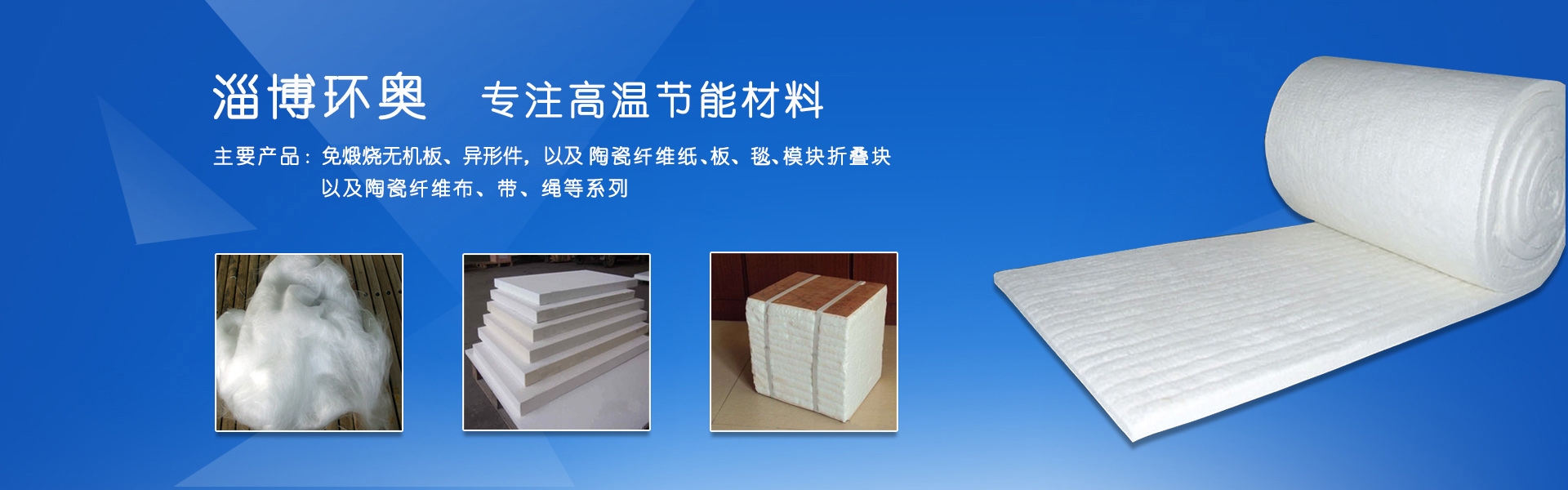
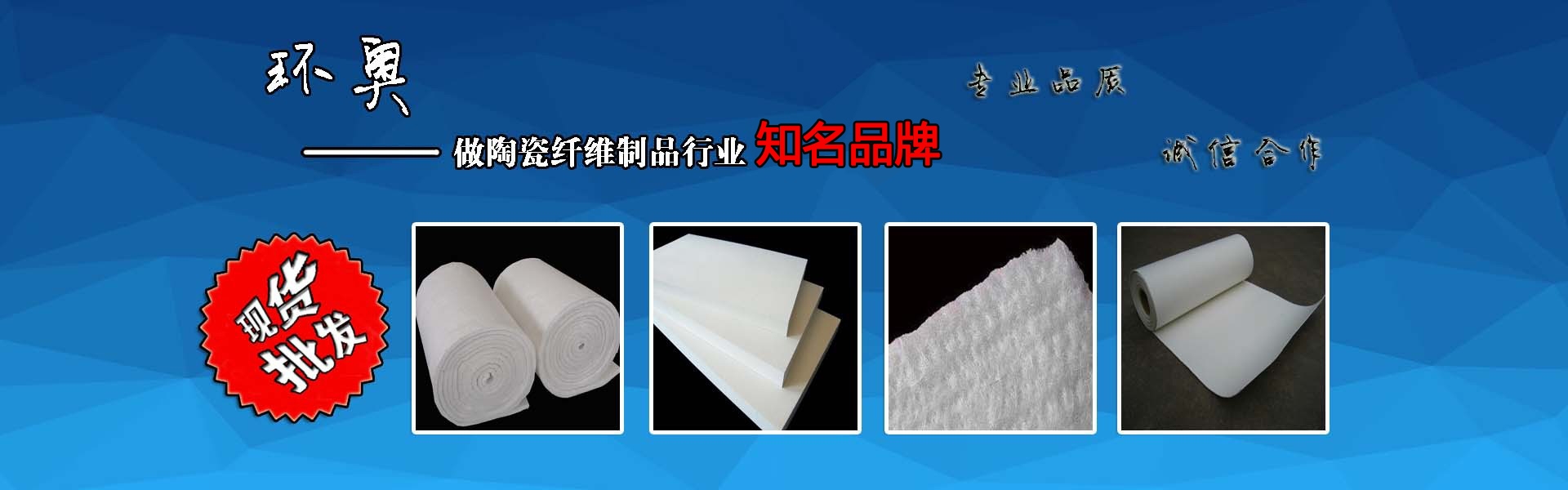
Shandong Zhoucang Huanao Refractory Insulation Material Factory is nestled in the hometown of the world-renowned short story master Pu Songling, with a picturesque view of the Silk Road town in the west. Boasting an advantageous location, abundant resources, convenient access to National Highway 309, and being at the heart of Zibo's economic center, the company specializes in the production of refractory insulation fiber materials. Our product range includes: alumina silicate wool, ceramic fiber blanket, ceramic fiber paper, ceramic fiber module folding blocks, alumina boards, belts, ropes, removable insulation suits, refractory fiber sewn products, high-temperature thermal insulation pads, heavy-duty refractory bricks, light-duty insulation bricks, refractory mortar,不定形耐火材料, and heavy-duty refractory materials.


 Click submit means you agree to《Service terms》《Privacy policy》

Phone Consultation

Consultation Phone:
18766958936

Back to Top