
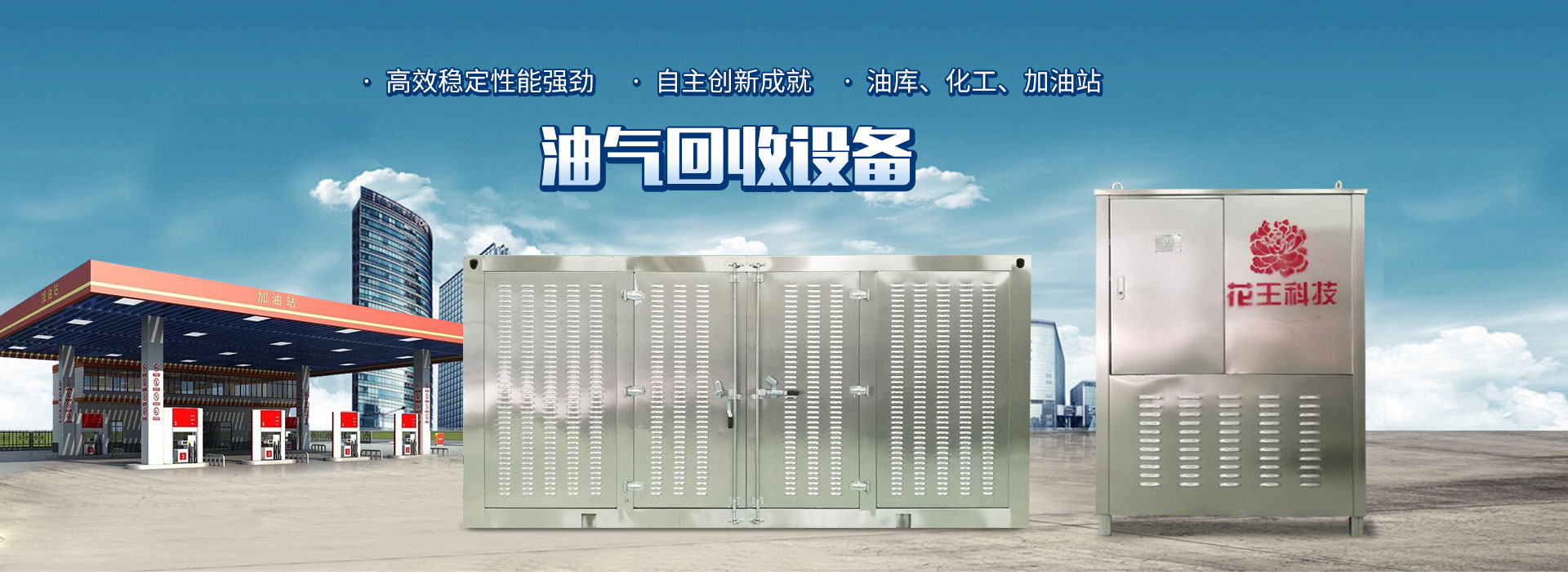

Condensation is the process of utilizing refrigeration technology to transfer heat from oil and gas, achieving a direct conversion of oil and gas components from the gaseous phase to the liquid phase. By taking advantage of the differences in vapor pressure of hydrocarbon substances at different temperatures, cooling is applied to reach supersaturated vapor pressure in some hydrocarbons within the oil and gas mixture. The supersaturated vapor condenses into a liquid, thereby recovering oil and gas. Generally, a multi-stage continuous cooling method is employed to lower the temperature of oil and gas, allowing it to condense into a liquid for recovery. The low temperature of the condensation unit is determined based on the composition of the volatile gases, the required recovery rate, and the concentration limits of organic compounds in the exhaust gases released into the atmosphere. The condensation process is typically achieved through steps such as pre-cooling and mechanical refrigeration. The pre-cooling stage is designed to reduce the operating energy consumption of the recovery unit by lowering the temperature of the incoming gas from ambient to approximately 5°C, allowing most of the water vapor in the gas to condense into water and remove moisture. After pre-cooling, the oil and gas enter the shallow cooling stage, where the gas temperature can be cooled to around -35°C, with 70-80% of the hydrocarbon components in the oil and gas mixture liquefying. Exiting the shallow cooling stage, the oil and gas move into the deep cooling stage, where they can be cooled to around -70°C, enabling the recovery of over 95% of the oil and gas.
- After condensation at -70°C, the residual gas still contains a small amount of hydrocarbon components, which does not meet the national standard's emission limits. To achieve standard emissions by solely using condensation for oil and gas treatment, the temperature must be reduced to approximately -110°C, resulting in only a 3-4% increase in recovery, but a roughly 30% increase in energy consumption, making it highly cost-ineffective. Therefore, for the residual gas after -70°C condensation, the process of pressure swing adsorption is employed, introducing it into an activated carbon adsorption unit for adsorption. After enrichment and concentration, the gas is then condensed for further recovery. When the adsorber becomes saturated, a vacuum pump is used to evacuate the adsorber, reducing the internal pressure and disrupting the adsorption equilibrium, releasing the oil and gas adsorbed in the adsorber. These are then sent through the vacuum pump to the front of the condensation process for additional condensation and recovery.
In reality, VOCs emissions occur in two states: one is low flow with high concentration (flow below 2000 m³/h, concentration above 500 g/m³), and the other is high flow with low concentration (flow between 2000 and tens of thousands of m³/h, concentration several grams/m³ or lower). For the first type of emission, the "condensation + adsorption combination process" is used, where the gas is first condensed and liquefied for recovery. For the second type, the "adsorption + condensation combination process" is applied, first enriching hydrocarbon components with an adsorbent to allow for large air emissions, then desorbing the enriched hydrocarbons to obtain concentrated organic gas, followed by condensation and liquefaction recovery. Since the oil storage and transportation process generally falls under the first type of emission and treatment method, commonly referred to as oil vapor recovery, we primarily introduce the "condensation + adsorption combination process" here. As the adsorption process utilizes pressure swing adsorption, it is also known as the "condensation + pressure swing adsorption process."
This is the knowledge about oil vapor recovery treatment process compiled by the editor of Heze Wangwang Technology and Trade Co., Ltd., hoping it will be helpful to you.
