


 通过中商114认证

China's output of construction waste has reached an unimaginable level. With the advancement of technology, it has become a new trend to utilize construction waste rationally and convert it into new building materials.
"The term 'environmental threat' refers to the current落后的 situation of building waste management in our country. With our rapid development, the rapid increase in building waste has also drawn public attention, and various cities have successively introduced policies and regulations for the rectification of building waste. However, the only way to fundamentally solve the building waste problem is to make the waste a resource through recycling."
Research indicates that the recycling and utilization of construction waste is technically feasible and mature. Both domestically and internationally, there has been extensive research on the treatment and application of construction waste, resulting in mature technologies and complete supporting equipment. Japan regards construction waste as "construction by-products" and established construction waste processing plants in various regions after the 1970s, producing recycled aggregates and recycled cement; Beijing also began using construction waste for mortar, floor slabs, and concrete bedding in 1992. The Chengdu City Construction Research Institute achieved research results on using construction waste to produce recycled concrete in 2005; currently, domestic enterprises are also utilizing construction waste to produce concrete hollow blocks for construction projects.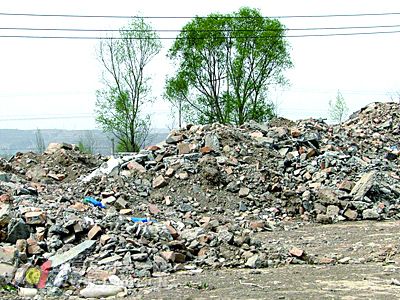
A domestic machinery company has developed and manufactured construction waste treatment equipment and its auxiliary equipment, which converts construction waste into aggregate for producing recycled bricks, blocks, wall panels, tiles, and other building materials. This process achieves a circular model of "construction waste - building materials - buildings - construction waste - recycled materials." The production process and equipment are relatively simple and mature, with stable product performance and high market demand. They can be widely used in construction projects, municipal engineering, water conservancy projects, environmental protection projects, and road and square paving, as well as river embankment slope paving.
