Intrinsically Safe Telephones | Waterproof Telephones | F...

The evolution of telephones has gone through several stages:
Magnetic Telephone (HC)
This was an early manual exchange telephone. Before the 1970s, this model was widely used in our country, classified as the 1st generation of telephones. The phone consists of three parts: communication, signal transmission, and signal reception. Its internal communication circuit is composed of a transmitter/receiver, inductive coil (used for eliminating side noise), and dry batteries (3V); the signal transmission function is achieved by a hand-cranked generator; and the signal reception is realized by an AC bell.
2. Coin-Operated Telephone (HG)
The term "common battery" refers to a system where the power supply for making calls is centrally provided by the exchange, and these phones are manually operated, still classified as 1st-generation products. The difference from magneto phones lies in the fact that common battery phones do away with the internal hand-crank generator and external battery, while their internal circuitry is essentially the same as that of magneto phones. These phones have gradually been phased out with the advancement of telephone automation.
3. Rotary Dial Telephone (HB)
This is an older-style telephone, which is an improved version of the public telephone by adding a dial and a set of pulse contacts, categorizing it as the second-generation product. This telephone uses a mechanical rotary dial to send signals, featuring a pair of pulse contacts connected to the telephone's power circuit. As the dial is rotated during dialing, pulse signals are formed through the pulse contacts, creating a series of pulses. The number of pulses in the pulse train corresponds to the dialed number. The mechanical rotary dial controls three pulse parameters: pulse rate, pulse time interval, and pulse on/off ratio. Due to the frequent dialing action, the pulse contacts are prone to burning out, leading to changes in the pulse parameters. This model has now been replaced by key telephone sets.
4. Pulse Button Telephone (HA-P)
This is an automatic telephone that replaces the mechanical rotary dial with an electronic circuit and conductive rubber keypad, categorizing it as a third-generation phone. It features both discrete components and integrated circuits in its ringer circuit, dialing circuit, and conversation circuit; the ringer signal output includes polarized electromagnetic bells and musical electronic bells. Its key features include a more convenient pulse dialing from the keypad, along with a redial key "#" and a pause key "*". It uses electronic switches to replace mechanical pulse contacts for dialing, with a rate of 10 pulses per second (10PPS). The pulse keypad dialing also has three pulse parameters, which are fixed in the dialing integrated circuit, making errors less likely. This telephone has specific requirements for communication voltage and may experience misdialing in severe radio interference environments. It is suitable for step-by-step and crossbar-type exchanges.
Audio Keypad Telephone (HA-P)
It replaced the traditional pulse dialing with dual-tone multi-frequency (DTMF) signaling. Each number key (0-9) and symbol key (#, *) is represented by a single audio signal, which is either a high or low sine wave. The high-frequency signal has four frequencies above 1000Hz, while the low-frequency signal has four frequencies below 1000Hz. With a 4x4 matrix coding, there are 16 combinations, known as "8 choose 2"; however, typically only a 3x4 arrangement is used, resulting in 12 combinations, known as "7 choose 2."
This model of phone features a significant reduction in dialing time. For instance, dialing "0796 8390234" with pulse dialing, where each pulse is 100ms and the inter-digit interval is 800ms, the total time taken is 100 × (10+7+9+6+8+3+9+10+2+3+4) + 800 × 10 = 15,100ms = 15.1 seconds; whereas using audio dialing, each digit has the same duration of 120ms, with an inter-digit interval of 108ms, the total time is 120 × 11 + 108 × 10 = 2,400ms = 2.4 seconds. It is evident that audio dialing is much faster than pulse dialing.
6. Pulse/Audio Compatible Pushbutton Telephone (HA-P/T)
This push-button telephone not only uses pulse dialing but also offers Dual Tone Multi-Frequency (DTMF) dialing. It features a switch on the side (P/T) for selection. Once the phone is set up, users should avoid tampering with this switch to prevent errors.
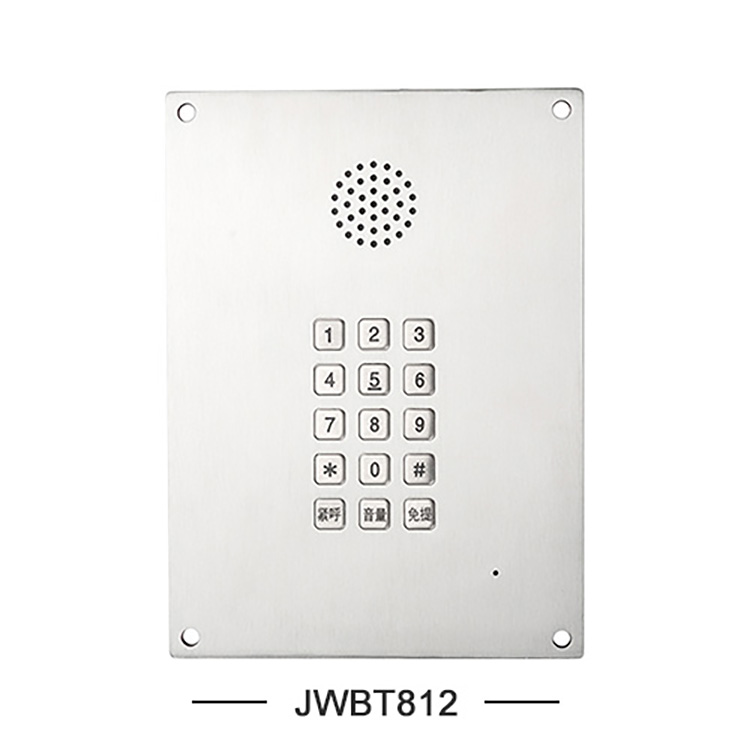
7. Loudspeaker Telephone (HA-d)
According to the definition of this type of telephone by CCITT (International Telegraph and Telephone Consultative Committee), it amplifies incoming signals and emits them through a speaker; however, speaking still requires the use of the handset transmitter. As it allows users to hear the dial tone and complete the dialing process without lifting the handset, it is referred to as an "hands-free" or "semi-hands-free" telephone domestically.
The loudspeaker telephone can be used as a listening-only conference endpoint. It simply adds a receiver power amplifier to the standard普通话 phone, with the speaker operating in simplex mode and capable of producing a high volume. In situations where call connection rates are low, using the loudspeaker telephone for hands-free dialing is extremely convenient, enhancing office efficiency.
Loudspeaker Telephone Key Technology
Several key technologies need to be addressed for the loudspeaker telephone:
Preventing Sound Feedback
The sound emitted by the speaker of the hands-free telephone is also picked up by the microphone of the hands-free telephone itself. Clearly, if certain amplitude and phase conditions are met at a specific frequency, self-oscillation will occur, resulting in a ring. Typically, the amplitude of such oscillations is large, which could potentially affect the normal operation of the entire telephone network. Therefore, self-oscillation in hands-free telephones is not permissible. The feedback paths, from a theoretical standpoint, can be categorized into three types: acoustic, electrical, and mechanical. Acoustic feedback includes:
The sound emitted from the speaker, passing through the air in the room, and directly reaching the microphone, is known as the "直达声" in acoustics.
The sound emitted by the speaker, after multiple reflections off the walls, floors, and ceilings of the room and various indoor objects, reaches the microphone, which is known acoustically as "reverberation sound."
Sound generated within the shell of a hands-free telephone is transmitted to the microphone through abnormal routes (such as the microphone being able to pick up sound from within the shell through gaps).
Electrical feedback primarily occurs within the telephone circuit, where the microphone receives sound, amplifies it, and transmits it to the line. However, the sound emitted from the speaker of a hands-free telephone also originates from the same line, thus inevitably producing the amplified sound sent by the microphone at the local end. To suppress electrical feedback, the method is fundamentally the same as that discussed in previous lectures on noise cancellation. As mentioned earlier, sidetone can only be completely eliminated when the impedance of the outside line equals a certain value. Under actual operating conditions, the impedance of the outside line is highly variable and is not controllable by the telephone designer. Therefore, without the use of special technology (which, as of now, may still introduce some adverse side effects), sidetone cannot be completely eliminated.
Mechanical feedback primarily occurs when the speaker causes the phone's casing to vibrate during sound emission. If the microphone is capable of not only "picking up" sound but also "picking up" vibrations, there will also be acoustic coupling between the two.
Shandu, Extreme User Line, and Direct Current Resistance
Some users expect hands-free telephones to be at least as loud as the sound from semiconductor radios. However, the power supply for hands-free telephones differs from that of semiconductor radios; the former is supplied through the telephone lines by the telephone exchange, while the latter is powered by its own battery or regulated power supply. Therefore, even if all other factors are excluded, hands-free telephones cannot achieve the same volume as semiconductor radios in all situations due to the limited power supply. Of course, it is not entirely impossible to appropriately increase the volume of hands-free telephones under restricted conditions.
Here's a simple calculation. Under a 60-volt, Zx500 ohm power supply bridge, with a user line of 5 kilometers (circuit resistance of 940 ohms), and a telephone with a DC resistance of 30 ohms, the voltage across the telephone is 1.4V. After accounting for the voltage drop across two diodes, the terminal voltage is approximately 0.66V. The current through the telephone is 26.8mA, resulting in a DC power consumption of only 178mW by the telephone. This power, in addition to powering the speaker to produce sound, must also account for efficiency and the operation of other parts of the hands-free telephone. Therefore, it is not possible to output the 30mW of power that a typical semiconductor radio can easily produce.
Through the same calculation, we know that at an 18mA supply current, the direct current power input of the telephone is only about 72mW. This current is almost only sufficient to maintain the normal operation of the telephone, leaving no extra power to drive the speaker. Therefore, hands-free telephones find it difficult to operate normally under an 18mA supply current. In other words, the maximum user line that hands-free telephones can accommodate is definitely shorter than that of regular telephones. Another conclusion is that the greater the direct current resistance of the telephone, the more direct current power it consumes.
Return Loss
In principle, the return loss specification for hands-free telephones should be set at the same level or higher than that for standard telephones. Given the increasing proportion of hands-free telephones in the domestic market, it is only reasonable to establish their return loss specification in line with that of standard telephones; otherwise, people may question the rationale behind the return loss specification for standard telephones. The requirement for hands-free telephones to have a higher return loss specification is based on the actual usage conditions of hands-free telephones, as the reflected signals are not limited to impedance mismatches occurring at the electrical interface but also occur at both acoustic and mechanical feedback points.
Due to the necessity of providing direct current (DC) feed to the hands-free component, and since this feed must be obtained from the line, the method of extracting the feed is also quite important in the circuit design of hands-free telephones. Common methods include parallel and series configurations. In the parallel feed, to prevent interference with the line signal, a choke is required. This choke needs to have a certain inductance (when a higher DC current passes through) and should also have low DC resistance and a small size. Otherwise, insufficient inductance can lead to extremely poor return loss in the telephone. There have been attempts to replace the transformer-type choke with an "electronic choke." Although the return loss issue was resolved, the electronic choke requires a certain voltage drop to function properly, which makes the hands-free telephone infeasible to operate on longer lines. Using the series feed method allows for easier optimization of return loss, but it also results in a higher DC resistance for the hands-free telephone.
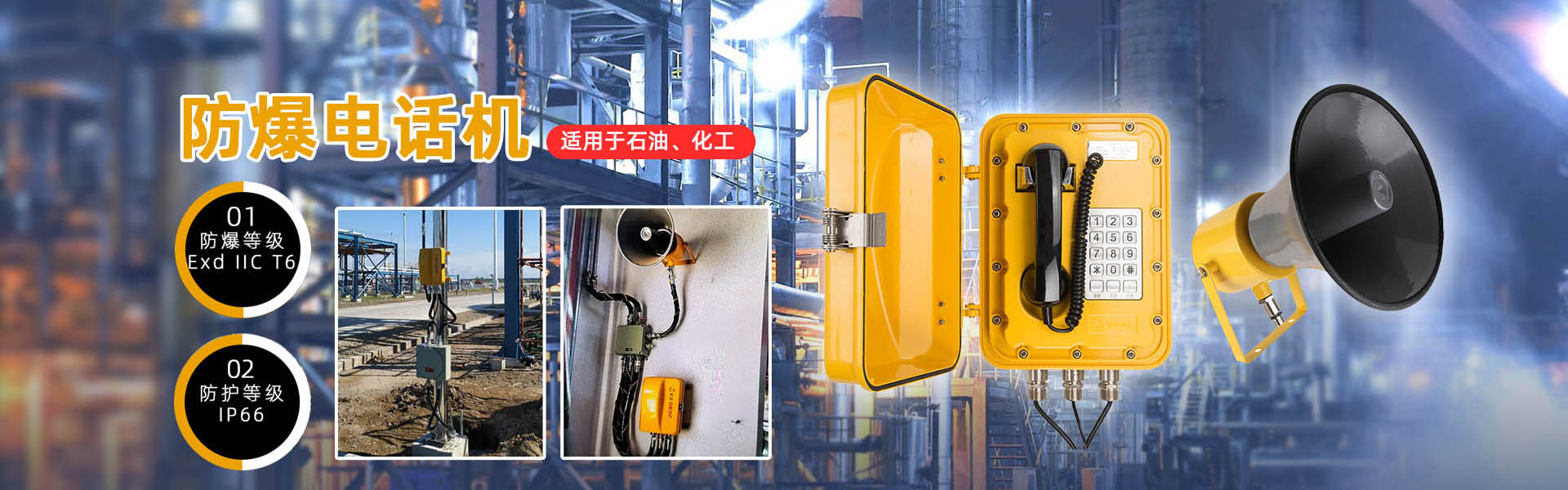
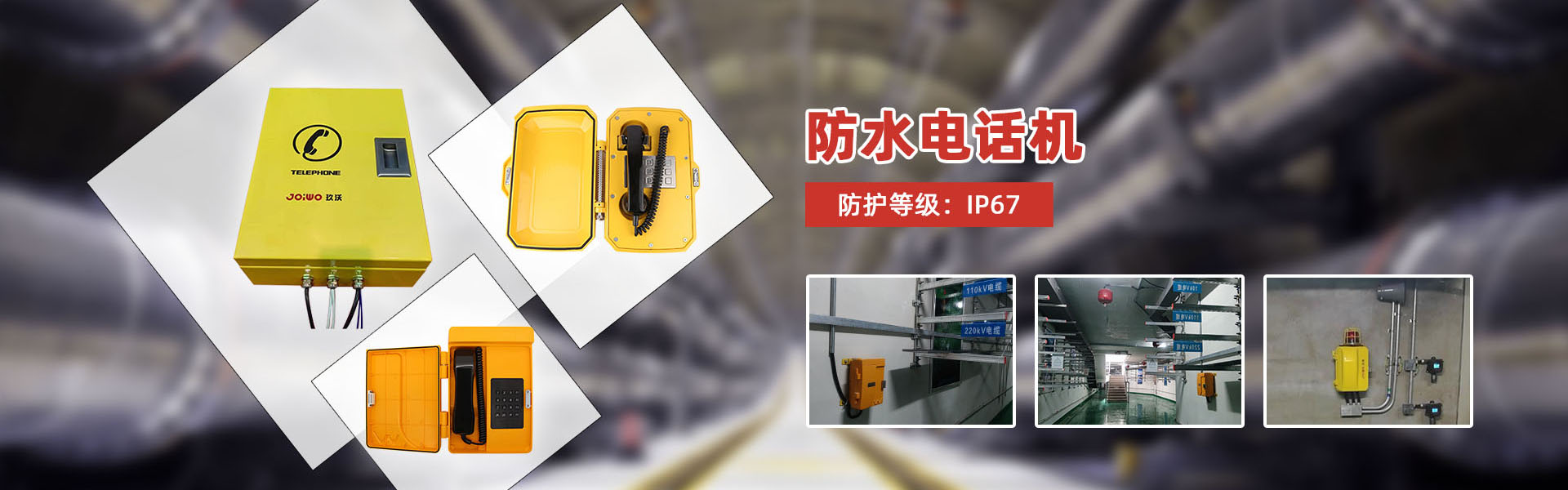
Ningbo Jiwo Explosion-proof Technology Co., Ltd. established the "Jiwo" brand operation team in its early stages. With high-quality products and services, Jiwo has become a network supplier for many enterprises at home and abroad. Our products are widely used in industries such as pipeline corridors, highways, tunnels, oil, chemicals, coal, electricity, railways, metallurgy, shipping, and fire protection. They are popular in all provinces and municipalities across China, as well as in over 20 countries, and have received high praise from customers.


www.114global.com © Zhongshang 114 Hebei Network Technology Co., Ltd.Address: Room 6009, Oriental New World Center, No.118 East Zhongshan Road, Qiaoxi District, Shijiazhuang City, Hebei ProvincePlatform Service Hotline: 4006299930