

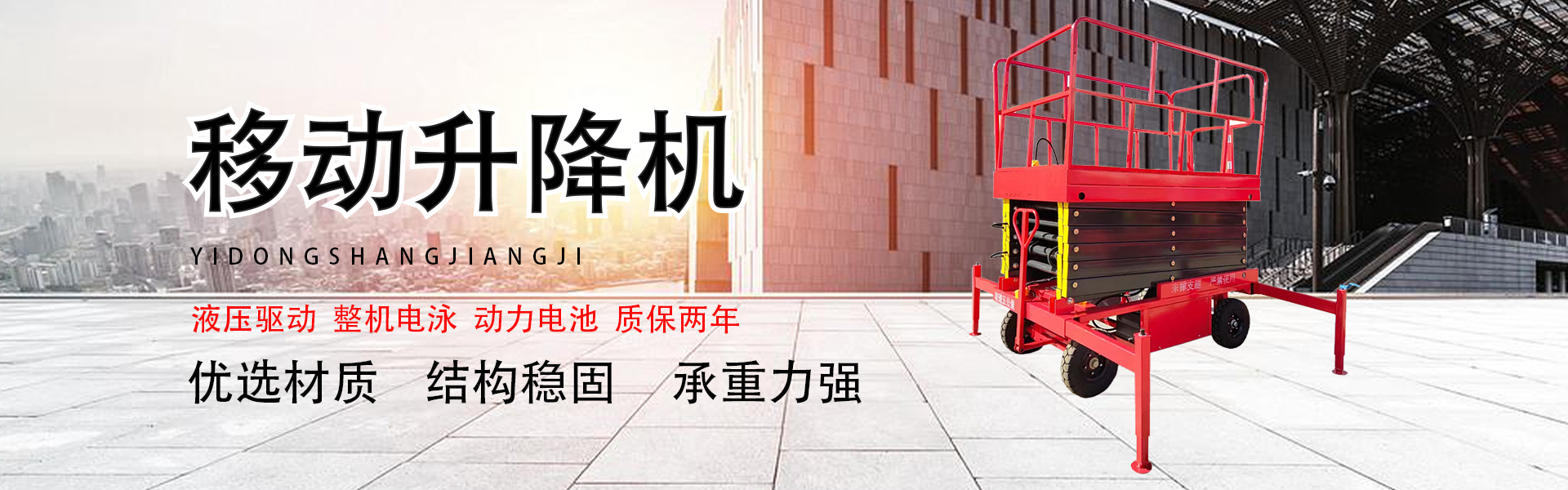






Hydraulic lift platforms primarily operate through the transmission of pressure from hydraulic oil, enabling lifting and lowering functions. Their scissor mechanical structure ensures high stability during lifting, along with a spacious working platform and high load-bearing capacity. This allows for a wider range of high-altitude operations and is suitable for simultaneous work by multiple personnel. It enhances the efficiency of high-altitude work and provides greater safety assurance.
1. Operators should position themselves in the center of the workbench as much as possible, and minimize movement at high altitudes to reduce vibrations.
The vibration of the hydraulic lift is proportional to the lifting height. When operating, if an 8-meter height is required, do not lift to the 9-meter position. Always operate within the safe working range. Lift within the equipment's rated load capacity; overloading can cause the equipment to sway.
3. Optional safety measures, such as wind ropes, can be employed. When the equipment is used outdoors, factors like weather can cause increased vibration. Using wind ropes for protection can reduce vibration and enhance the stability of high-altitude operations.
