
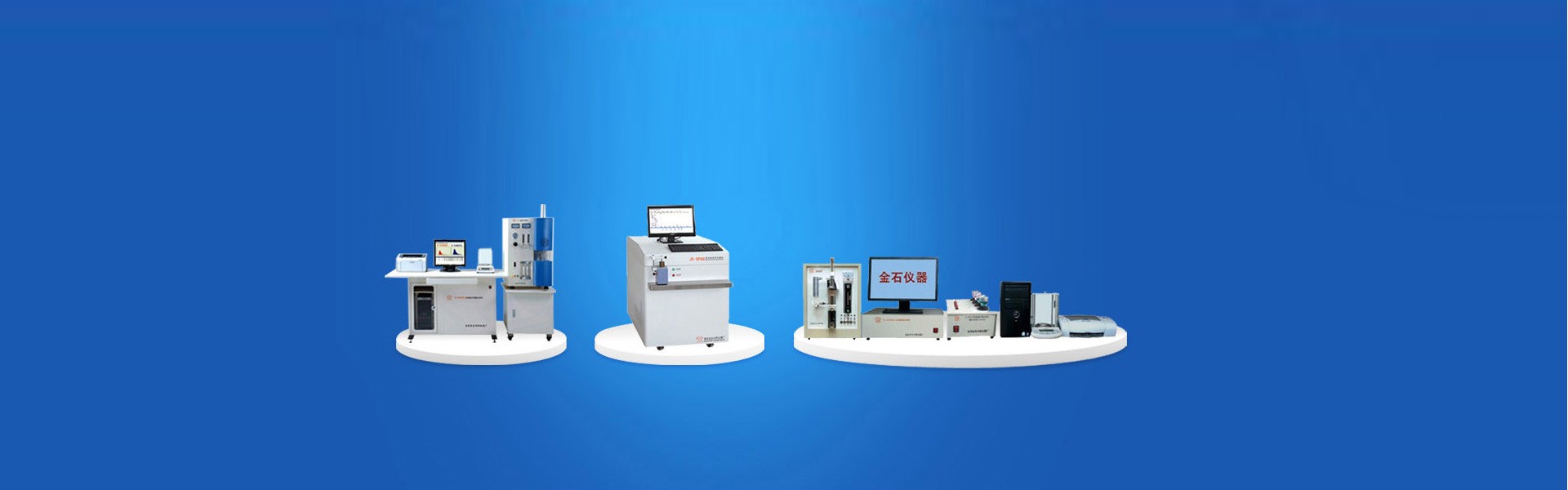
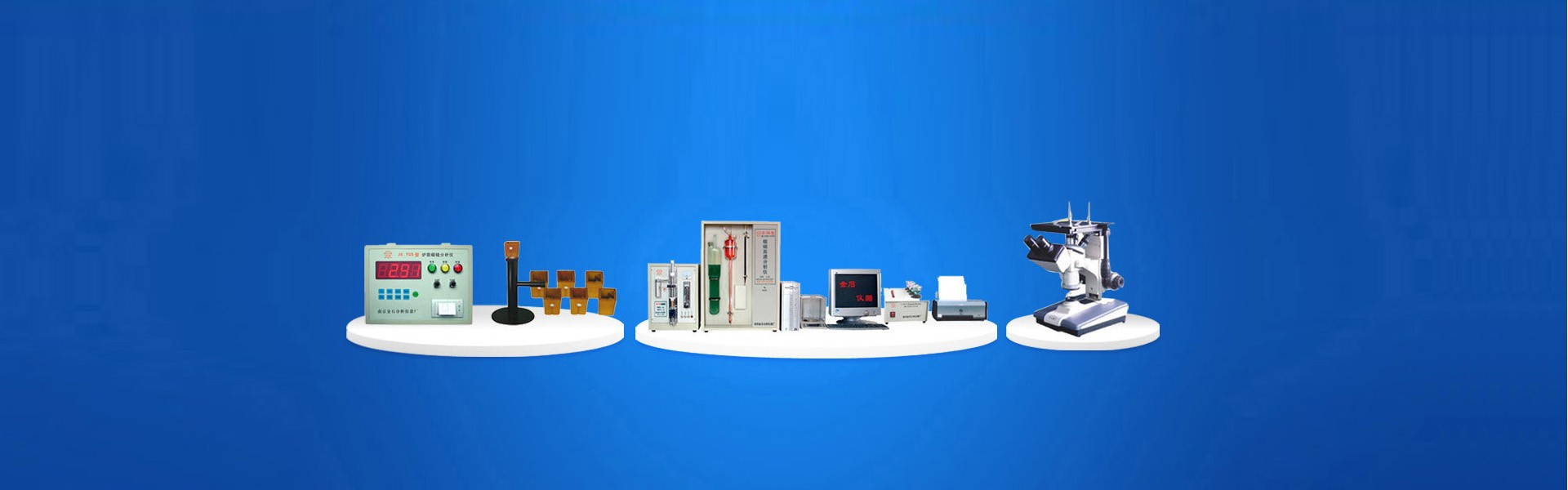
In addition to the aforementioned multiple carbon-sulfur analyzers, two other methods are currently more popular due to their faster detection speed, absence of the aforementioned chemical solvents, and simpler detection steps.
The CO2 absorption wavelength is at 4.26 μm in infrared light, while the SO2 absorption wavelength is at 7.4 μm in infrared light. Based on the relationship between the energy change of the infrared light before and after passing through the gas to be measured and the concentration of the gas, Lambert-Beer's law can be approximately applied.
The metal sample is placed in a ceramic crucible, then a certain amount of tungsten, iron shavings, and tin solvent are added. In an oxygen atmosphere, the mixture is melted by a high-frequency induction furnace, with carbon or sulfur in the sample forming CO2 or SO2.
Prior to the measurement gas being passed through the infrared gas analyzer's measurement chamber, the infrared light energy on both sides of the measurement chamber and reference chamber is equal, with the measurement instrument reading zero. When CO2 or SO2 passes through the measurement chamber, the CO2 absorbs infrared light energy, causing the infrared light energy on both sides of the measurement chamber and reference chamber to become unequal. The infrared detector receives less radiant energy from the infrared light source, the degree of reduction being correlated with the concentration of CO2 or SO2. Consequently, the change in the output of the infrared detector is also indicative of the carbon or sulfur content in the metal sample. The instrument features a microprocessor for data processing, with the percentage of carbon or sulfur in the sample directly displayed on the screen.
Infrared analysis boasts fast analysis speed, high sensitivity, wide measurement range, and broad applications, making it the fastest and most accurate carbon-sulfur analysis method available today.
Operation Steps for Infrared Carbon-Sulfur Analyzer
Spectral measurement of carbon and sulfur
Spectroscopy, with ICP, has been used recently for quantitative analysis of carbon and sulfur in metals. There have been continuous reports both domestically and internationally. To achieve a good discharge atmosphere, 95% argon (Ar) and 5% hydrogen (H2) pre-sparks are used as carrier gases, extended to 40 seconds, and a strong attenuation discharge method is employed to measure the sulfur content in the samples. Metal samples are placed between tungsten and molybdenum electrodes. In an oxygen atmosphere, carbon in the metal is converted to CO and CO2 by an arc, and the gas mixture emitted from the emission spectrum is then analyzed to detect 0.001%.
In the carbon-iron-oxygen system, the equilibrium concentrations of CO, CO2, and ferric oxide are functions of the arc temperature. Certain operational conditions optimized for the emission spectrum can be used to detect high and trace elements in metals. For instance, when analyzing non-alloy and alloy steels with emission spectroscopy, optimizing the pre-sparking time and integration time to a standard deviation function allows for the simultaneous detection of multiple elements, expanding the scope of detection. Another example is the use of a developed ultra-fine particle generation system (UEP), which, with the assistance of a spark arc, produces fine particles in the sample, accelerating their entry into inductively coupled plasma emission spectroscopy, enabling direct analysis of the sample, and further developing the application of spectroscopy in analyzing metal carbon and sulfur.
