




 通过中商114认证

Bending Machine Fault: Asymmetric Heating. At temperatures below the phase transition point of steel, asymmetric heating can lead to urgent nucleation and the generation of thermal stress. Therefore, the faster the heating rate, the greater the temperature difference between the outer and inner parts of the heavy-duty bending machine mold, and the greater the stress.
The deformation resulting from the heat treatment of the bending machine mold is greater after the penalty, and the filter of the heavy-duty bending machine is used to remove impurities from the medium, ensuring the normal operation of the valves and accessories.
Before performing maintenance or cleaning on a bending machine, align the upper die with the lower die and then turn off the machine until the task is completed. Any metal expands when heated, and since steel has uneven temperatures in different sections of the same heavy-duty bending machine die when heated (i.e., uneven heating).
Inconsistencies in the expansion of various sections within the mold steel will inevitably occur, leading to internal stresses due to uneven heating. For operations such as startup or other uses, the mode should be set to manual, and ensure silence.
Exceeding the phase transition temperature for heating can lead to asymmetric expansion and the emergence of timing irregularities in structural changes, which in turn generates structural stress. The standardization of bending machine molds production lies in the specification of precision and angles.
Imagine a scenario where the precision and angle of the bending machine cannot be guaranteed; this could lead the entire production process down an irregular path, affecting the entire production.
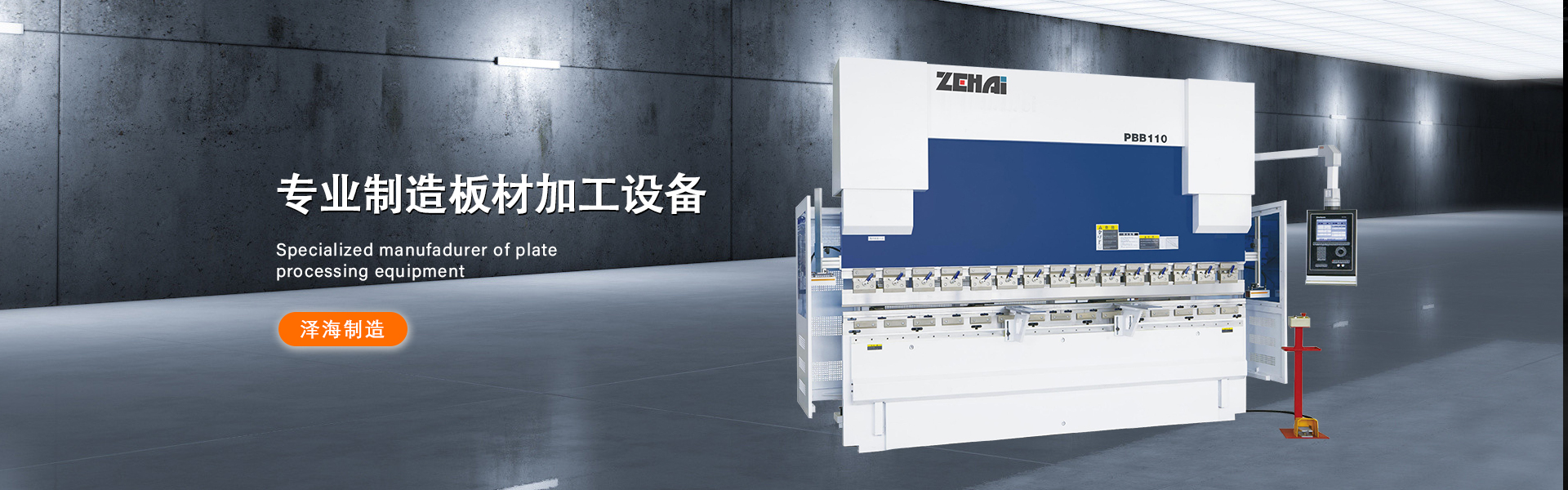
The so-called heavy-duty bending machine, simply put, is a large-scale bending machine. Heavy-duty bending machines are categorized into manual bending machines, hydraulic bending machines, and CNC bending machines. Hydraulic bending machines, according to the principle of synchronization, can be further divided into: shaft torsion synchronization, mechanical-hydraulic synchronization, and electrical-hydraulic synchronization. Additionally, hydraulic bending machines can also be classified according to the principle of movement: upper movement type and lower movement type.
