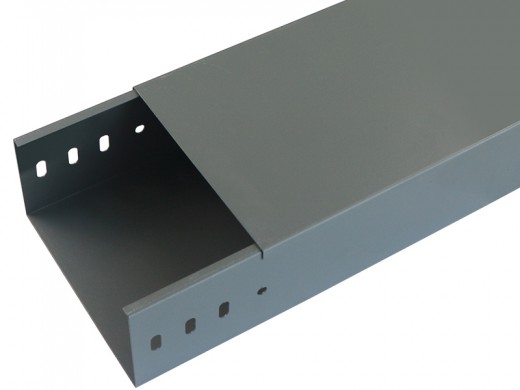

Channel cable bridge supports and their hangers should be made of corrosion-resistant materials or treated with anti-corrosion methods when used in corrosive environments, ensuring that the treatment meets the engineering environment and durability requirements. In sections where fire prevention is required, flame-retardant or flame-resistant boards, meshes, and other materials can be added within cable ladders or trays to form or semi-form a fire-resistant structure.
Measures such as applying fire-retardant coatings to the surface of bridge structures and their support hangers should be taken, ensuring the overall fire resistance meets the requirements of national standards or regulations. In locations with high fire safety requirements for projects, the use of aluminum alloy cable bridge structures is not recommended. The selection of width and height for槽式 cable bridge structures should be in line with the requirements of the filling rate.
Under normal conditions, the filling rate within cable ladder racks and trays should be 40% to 50% for power cables, 50% to 70% for control cables, and it is advisable to reserve 10% to 25% for project implementation flexibility. When selecting the load class of cable trays, the working uniform load of the cable tray should not exceed the rated uniform load of the selected cable tray load class.
If the practical span of the support hangers for cable trays does not equal 2 meters, the uniformly distributed working load must meet the requirements. The specifications and dimensions of various components and support hangers should match the tray, straight section of ladder racks, and bend series, under the condition of meeting the respective load requirements.