
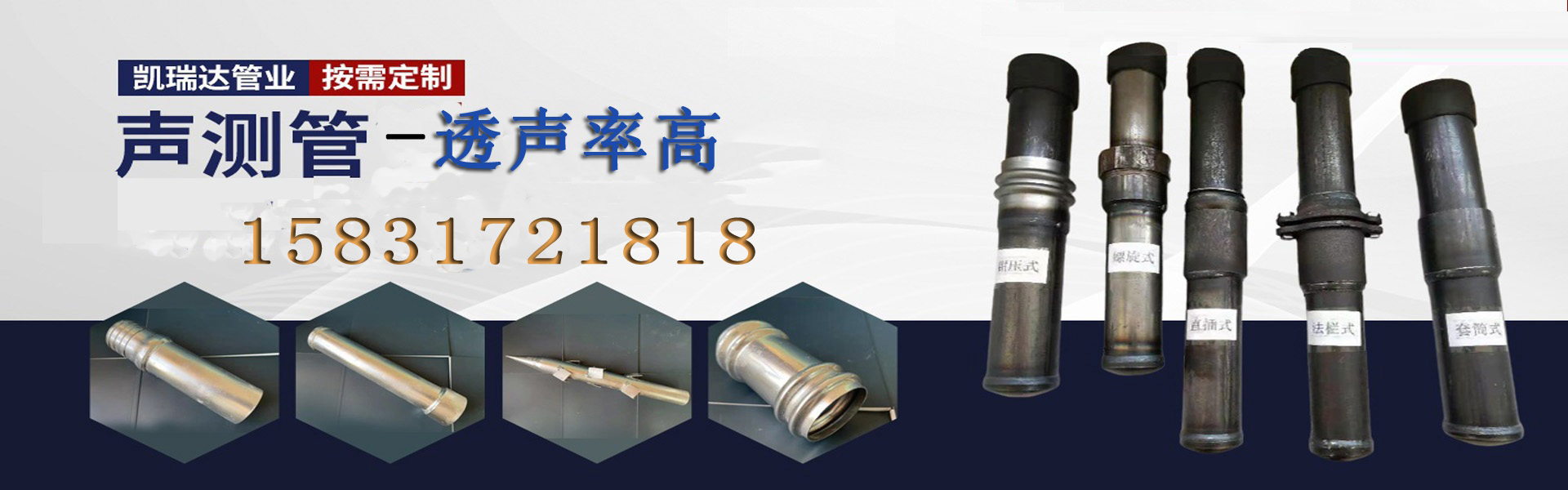
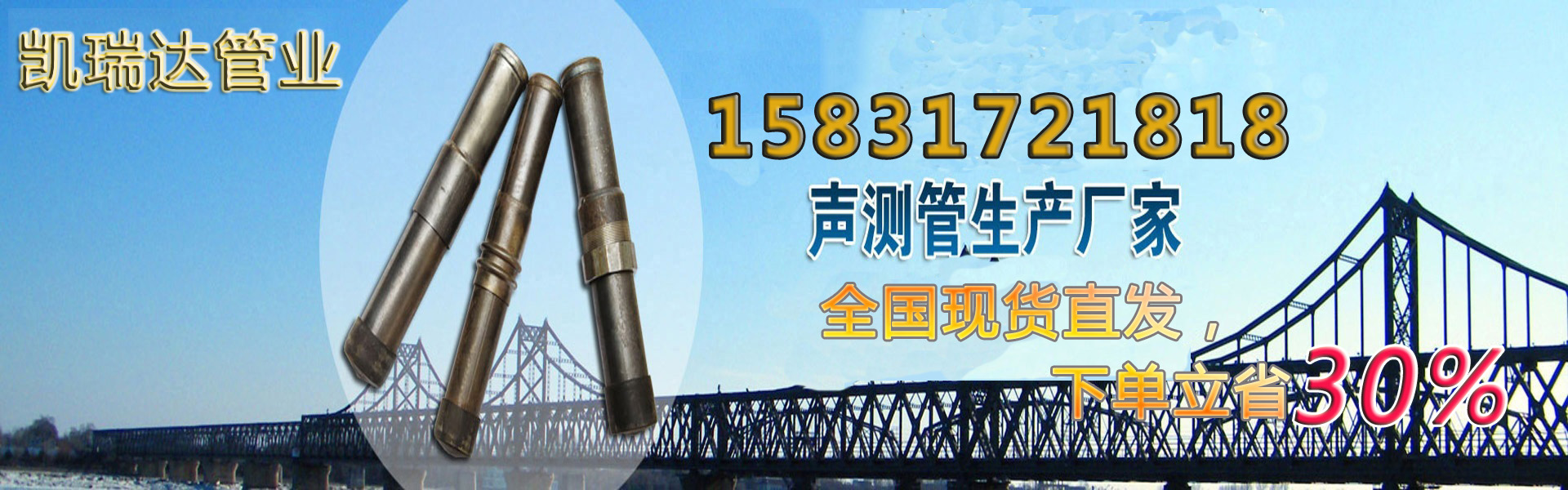

The acoustic testing tube can be directly mounted on the inside of the reinforcing cage: the mounting method can be welding or tying, and the tubes should generally remain parallel – if the test results require assessing the strength of the concrete at each testing point, the non-parallelism should be controlled below 1‰. When placing the reinforcing cage into the pile hole, it should be prevented from twisting.
Pipe sections are typically installed in segments with steel cages, and the joints between segments can be made using reverse-thread sleeve connections or sleeve welding methods. If using bellows, a larger diameter bellows can be used for the sleeve connection, and the ends of the sleeve should be sealed with tape. Regardless of the jointing method, it must ensure no leakage under high hydrostatic pressure, with the inner wall of the joint kept smooth and free of protrusions such as slag or burrs to prevent interference with the probe's movement. The bottom of the acoustic tube should also be sealed, and the top should be plugged with a wooden塞 after installation to prevent foreign objects from falling in during concrete pouring, which could block the hole.

