Separator Fault Analysis and Maintenance_News Center Co., Ltd._Kunshan Dongzhao Machinery Co., Ltd. 
在线客服 在线客服邀请中...
关闭

您好,现在客服正邀请与您通话,请留下您的联系方式,客服将尽快与您取得联系。

 点击提交代表您同意《服务条款》《隐私政策》

企业资质

Kunshan Dongzhao Machinery Co., Ltd.

Business Model:
Location: Jiangsu/Suzhou
联系人:蔡晓东 (先生)
手机号码:15895651313
Company Address:568 Xin Nan Middle Road, Kunshan High-Tech Industrial Development Zone, Suzhou

Separator Fault Analysis and Maintenance

Separator Fault Analysis and Maintenance

Separator Fault Analysis and Maintenance

2024-06-07

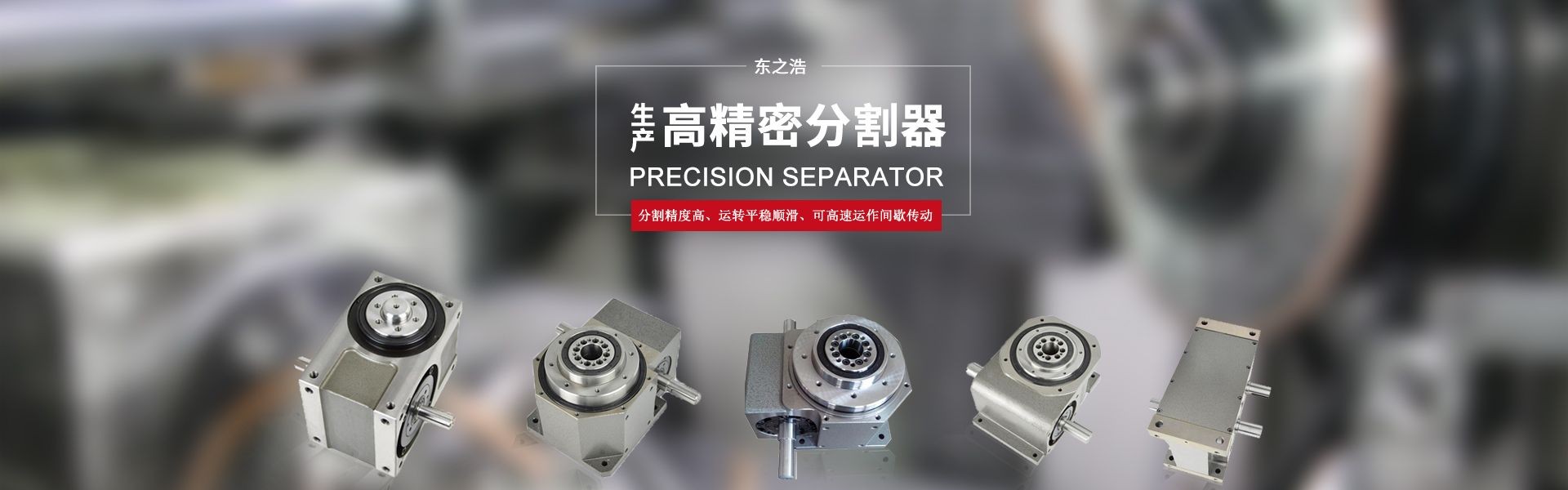
The cam divider is a high-precision rotary indexing intermittent conveying device, a core component of automatic machinery specifically designed and developed to meet the requirements of highly automated, high-precision, and high-speed production and assembly. When assembled with a turntable, various assembly actuators, loading and unloading equipment, and a control system, it becomes a highly efficient and precise automated unit. It is widely used in the automated production and assembly of industries such as semiconductor chips, electronics, electrical components, hardware, light industry, and food and beverage. Currently, the usage of cam dividers is becoming more and more widespread, making the maintenance and regular inspection and repair of the dividers increasingly important. Kaimings Dividers Company's technology experts discuss several aspects: the causes of cam divider malfunctions, the usage, maintenance, inspection, and repair of the dividers.

   Reasons for Separator Failure and Solutions

Dirt and offcuts around the transmission system impede movement; they should be cleared regularly.

2. The input and output shaft directions of the base and separator do not align with the required input and output directions of the equipment. There is an inclination or eccentricity. This affects output accuracy and severely damages the separator. This is because the separator is in an abnormal stress state at this point. Solution: Adjust the direction of the base and separator's input and output shafts.

3. Improper adjustments can affect the cutting precision, leading to shocks, noise, and damage to the cutter, preventing it from reaching the expected rotational speed and load-bearing capacity. This consequently shortens the cutter's lifespan. Adjustments consist of two parts: the adjustment of the spacing between shafts and the adjustment of the input and output shaft positions.

Adjustment of Axle Spacing

If the separator develops gaps in the positioning work area due to prolonged use and wear, this gap can be eliminated by adjusting the spacing between the shafts. This can be achieved by synchronously adjusting the eccentric sleeves at both ends of the input shaft.

2. Adjustment of Input and Output Axial Positions:

Adjust the cam separator's axial position by either adjusting the lock nuts on either side of the cam or the bearing covers on either side of the input shaft. The axial position of the separator wheel may also be adjusted by modifying the bearing covers at the ends of the output shaft or the lock nuts at the rear.

Please note: The separator is factory-calibrated and not to be adjusted by users to prevent misadjustments. If an adjustment is necessary, please contact the manufacturer.
    3When the clearance between the camshaft bearing and the journal of the separator exceeds 0.15mm, a new bearing should be replaced to restore the normal fit between the journal and the bearing.
(1) Select bearings with repair dimensions of the same grade as the camshaft journal size.
The fit between the camshaft bearing and the bearing bore should have a certain interference.

(3) Insert the camshaft into the bearing hole and rotate it several times. Adjust it appropriately based on the tightness and contact area. To inspect the fit tightness, apply oil inside the bearing, rotate the camshaft a few times, and when the timing gear is moved with a finger by the separator, it should rotate smoothly without any jamming. There should be no noticeable gap when the camshaft is moved up and down.

(4) To grind the bearing according to the shaft collar size, the method is as follows: Place the bearing on the corresponding shaft collar, rotate it a few times, then remove it. Modify the bearing alloy based on the contact situation, then reattach the bearing to the shaft collar and rotate again. After removing the bearing, re-grind based on the contact situation, and repeat this process. The grinding should continue until the thickness gauge inserted between the bearing and shaft collar equals the clearance between the bearing and the bearing hole plus the fit gap between the bearing and the shaft collar. There should be slight resistance when pulling the thickness gauge. This way, when the cam splitter pushes the bearing into the bearing hole, the reduction in the bearing's inner diameter is close to the fitting excess, allowing for the desired fit gap. During grinding, strive for uniform wall thickness of the bearing to ensure concentricity across all bearing tracks.
(5) Remove the old bearings from the rear cover of the cylinder block. When installing the new bearings, pay attention to aligning the oil holes. Ensure that the camshaft bearings are not installed incorrectly to avoid affecting the lubrication of the rocker arm mechanism.
   5. The cam has been damaged, causing the separator to malfunction and no longer be usable. The cam can be replaced, and the equipment can still be used with minor or no damage. Regularly clean the scrap and debris around the transmission system to prevent obstruction of the input and output shaft connections and transmission components. Regular maintenance is required. Pay attention to the tightness of the sprockets, couplings, belt pulleys, gears, and output transmission bodies. Ensure they are in good condition. If any of the following conditions are detected, immediately stop operation: abnormal sounds, reverse impact on the cam separator in the stationary area, abnormal vibration, no or unstable separator output during the corresponding intermittent cycles, or complete lack of separator output at a specific position.

      6. A failure in the separator due to worn needle roller bearings can be addressed by removing the output shaft and replacing the bearings. There are two methods: First, loosen the output sleeve, remove the output shaft without loosening the rear cover, ensuring the axial position remains unchanged upon reassembly. Second, loosen the locknut at the rear of the output shaft and the output sleeve at the front, allowing the output shaft and sleeve to be removed as a unit. Upon reassembly, simply tighten the locknut to restore the output shaft to its original position.


Kunshan Dongzhao Machinery Co., Ltd.

Inquiry Message
 Click submit means you agree to《Service terms》《Privacy policy》
Contact us
  • 蔡晓东 (Mr.)

  • 15895651313

  • 15895651313

  • szdongzhihao@126.com

  • 568 Xin Nan Middle Road, Kunshan High-Tech Industrial Development Zone, Suzhou

www.114global.com © Zhongshang 114 Hebei Network Technology Co., Ltd.Address: Room 6009, Oriental New World Center, No.118 East Zhongshan Road, Qiaoxi District, Shijiazhuang City, Hebei ProvincePlatform Service Hotline: 4006299930

 Click submit means you agree to《Service terms》《Privacy policy》