
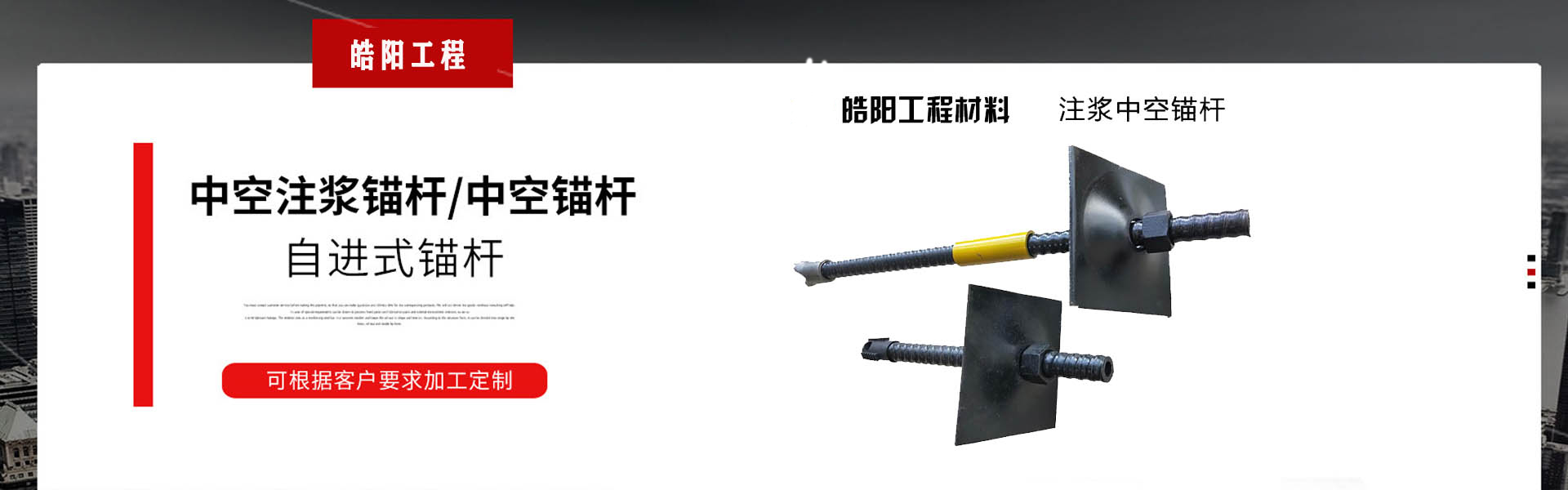
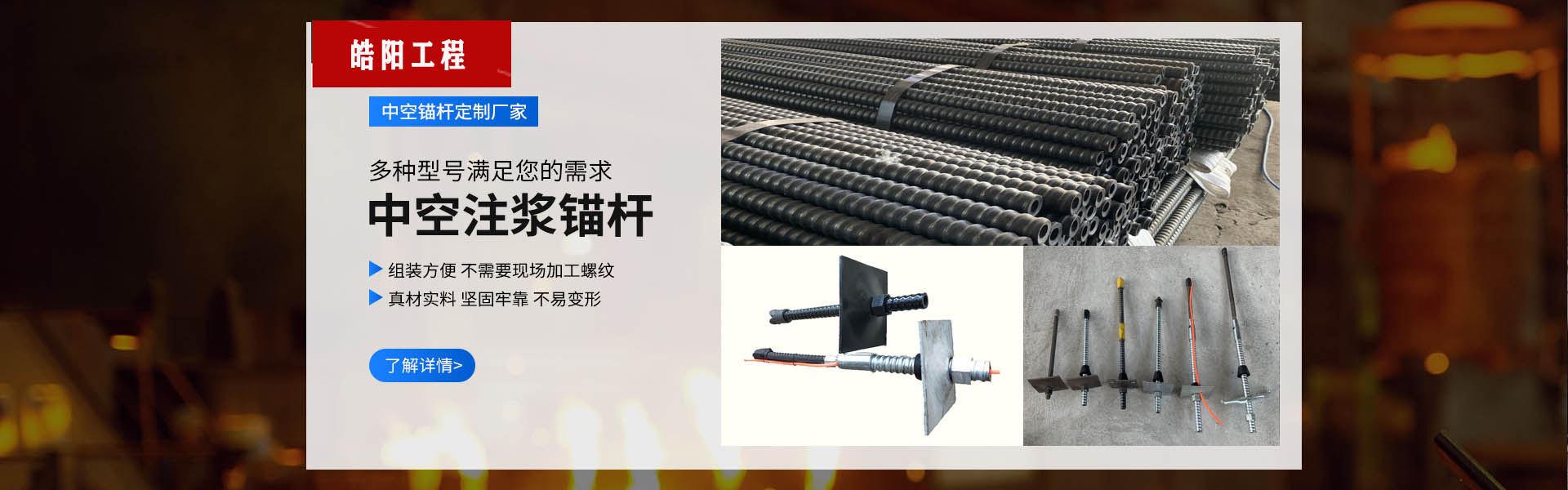
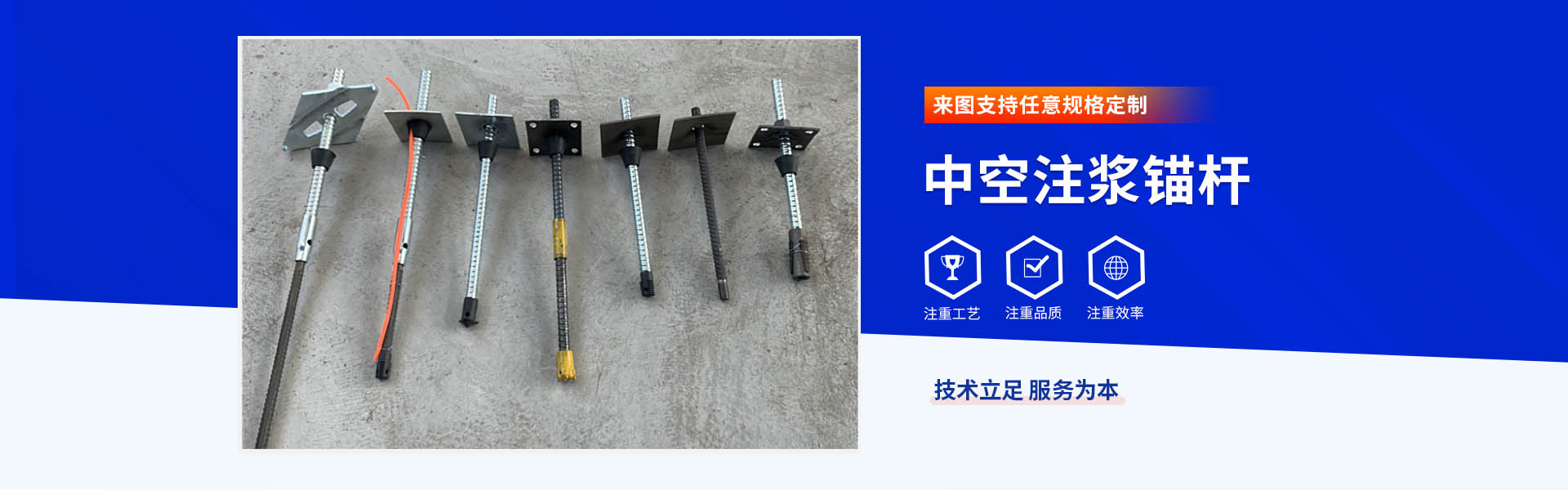
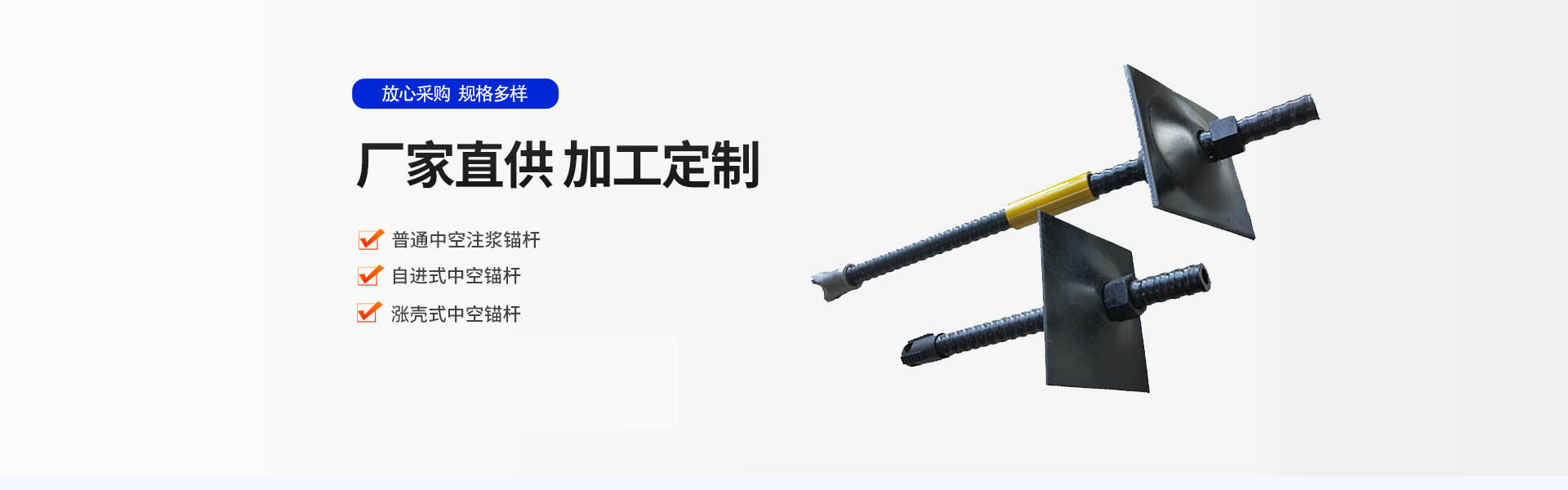

Anchor support is widely used in underground caverns, tunnel support projects, and high slope treatment projects. Anchor support typically employs cement mortar, chemical anchoring agents, or resin as the bonding agent for the anchors, or uses mechanical methods to anchor the anchors within drilled holes.
Full-Length Bonded Anchor Bolt: Anchor bolt with the entire bore filled with bonding material.
02 Prestressed Anchor Rod: Anchor rod with pre-tension applied.
Friction Anchor Rod: An anchor rod that relies on the friction between the rod body and the hole wall to achieve anchoring.
Grout Bolt: A bonded bolt anchored with cement grout or rapid-hardening cement grout.
Cement Grout Anchor Rod: A bonded anchor rod using cement grout as the anchor medium.
06 Resin Anchor Rod: A bonded anchor rod using resin as the anchoring agent.
07 Self-drilling anchor bolt: An anchor bolt that combines the function of drilling rods for creating holes, as well as grouting and anchoring, also known as self-advancing anchor bolt.
08 Sectioned pipe anchor bolt: An anchor bolt that forcibly pushes a thin-walled steel pipe with longitudinal grooves into a bore hole smaller than its outer diameter, utilizing the radial pressure of the steel pipe against the bore wall to generate resistance and provide anchoring function.
09 Grouted Anchor Rod with Steel Tube: An anchor rod that uses a steel tube with a certain number of small holes arranged along the tube wall as the rod body, inserted into the drilled hole, and then grout is injected into the anchor hole through the small holes in the rod body cavity.
10. Water Swelling Anchor Rod: An anchor rod made of a thin-walled steel pipe with a non-standard hollow bar, inserted into a borehole slightly larger than itself. It functions by injecting high-pressure water into the rod's hollow, causing it to swell and create friction against the borehole wall, thereby providing anchoring.
Long-lasting Anchor Bolts: Anchor bolts that match the service life of the main project, maintain stable performance and quality standards throughout the effective operation period of the project, or are capable of being inspected and replaced, thus continuing to function effectively.
Temporary Anchor Rods: These rods, which do not meet the same service life standards as the main engineering, are only required to be effective during the construction period or specific stages. Generally, their function is not considered under normal operating conditions of the project.
13 System Bolt: Anchors installed at a certain spacing and pattern across the entire excavation face, in accordance with the overall stability requirements of the rock mass.
Random Anchor Rods: Anchor rods installed locally to prevent rock mass collapse or sliding.
