
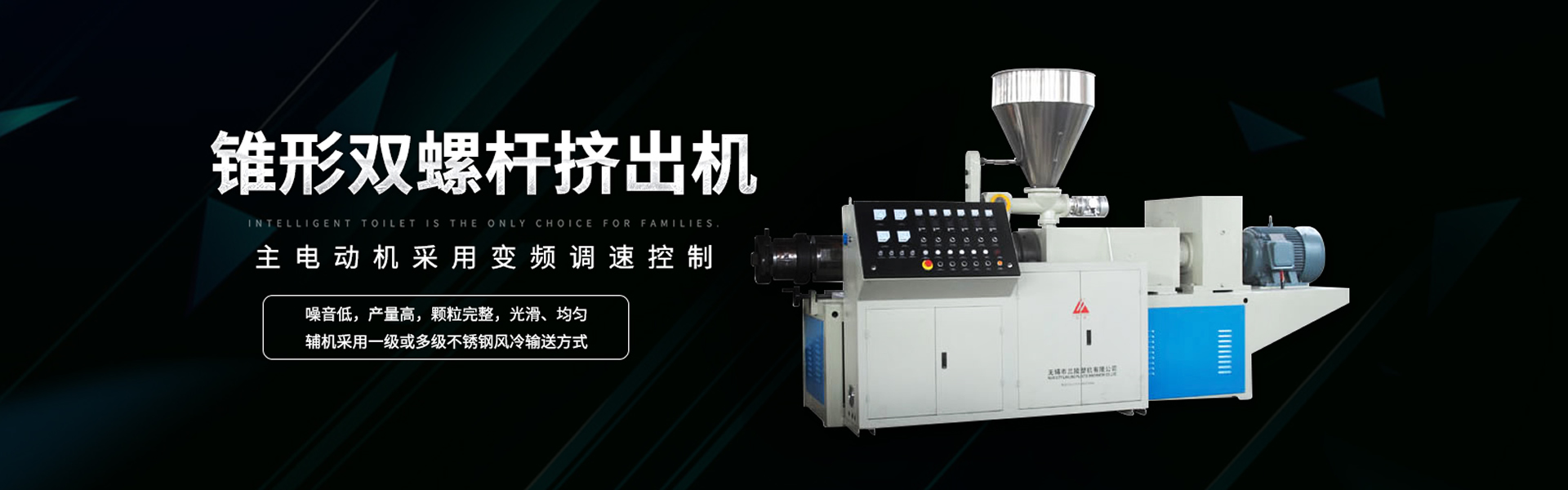
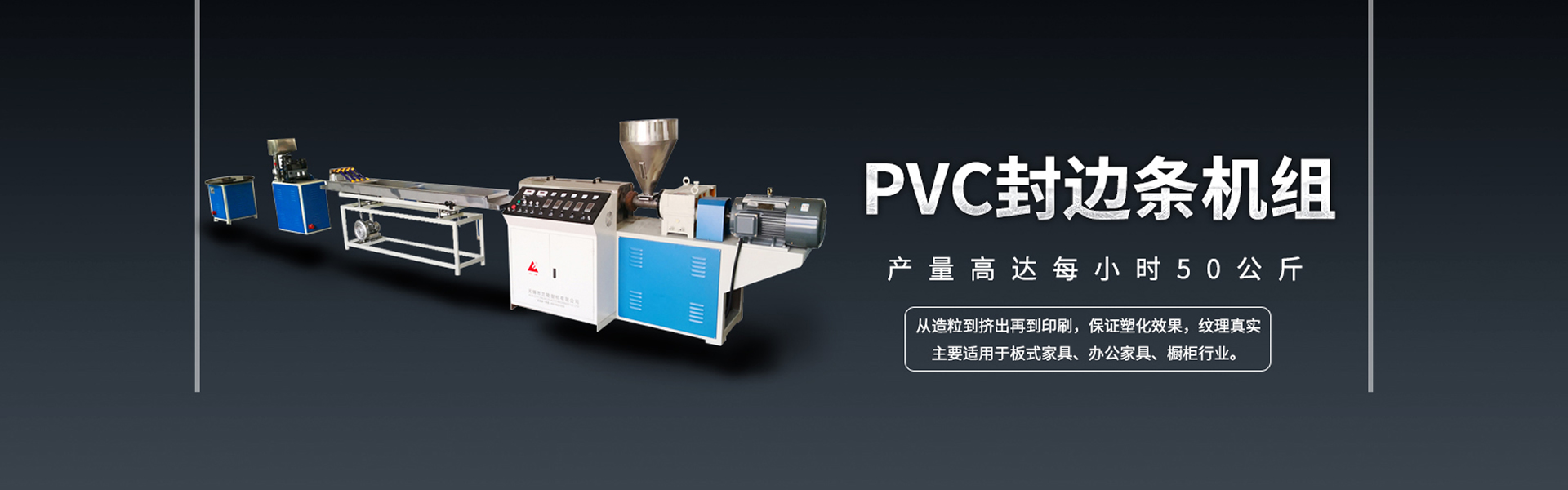

Today, I'd like to share the functions of the three main areas of an extruder.
Under normal production conditions, materials enter the feeding and compression sections. Due to the significant temperature difference between the materials just entering the extruder and the set temperature, and the shear heat effect not being prominent yet, a large amount of external heat is primarily provided by the heating rings. Therefore, the heating rings need to operate continuously, and these two sections are referred to as the heating zones. Heat is mainly supplied by external heating and the combined action of screw shearing, rolling, and friction.
The molten material enters the compression section, then the melting and metering sections, where it is essentially plasticized, even exhibiting an excess of "shear heat." The purpose of temperature control at this stage is not to provide additional heat, but rather to implement "cooling" in a timely manner when the melt "overheats," transferring the excess heat away.
The melt enters the merging core and die, as it begins to transition from a spiral variable speed motion to a straight uniform motion upon reaching the merging core, the shearing heat effect is no longer present. The melt follows the prescribed channel of the merging core and reaches the die, where it consumes some heat. To ensure the melt progresses uniformly along the dovetail-shaped channel of the die, additional heat is required. Consequently, the die is set at a slightly higher temperature, hence referred to as the "insulation zone."
Wuxi Lanling Plastic Machinery Co., Ltd. is a professional manufacturer of plastic extruders, wire wrapping machines, and wire machinery series products. With an experienced technical team and advanced design methods, our product quality continues to improve.
