
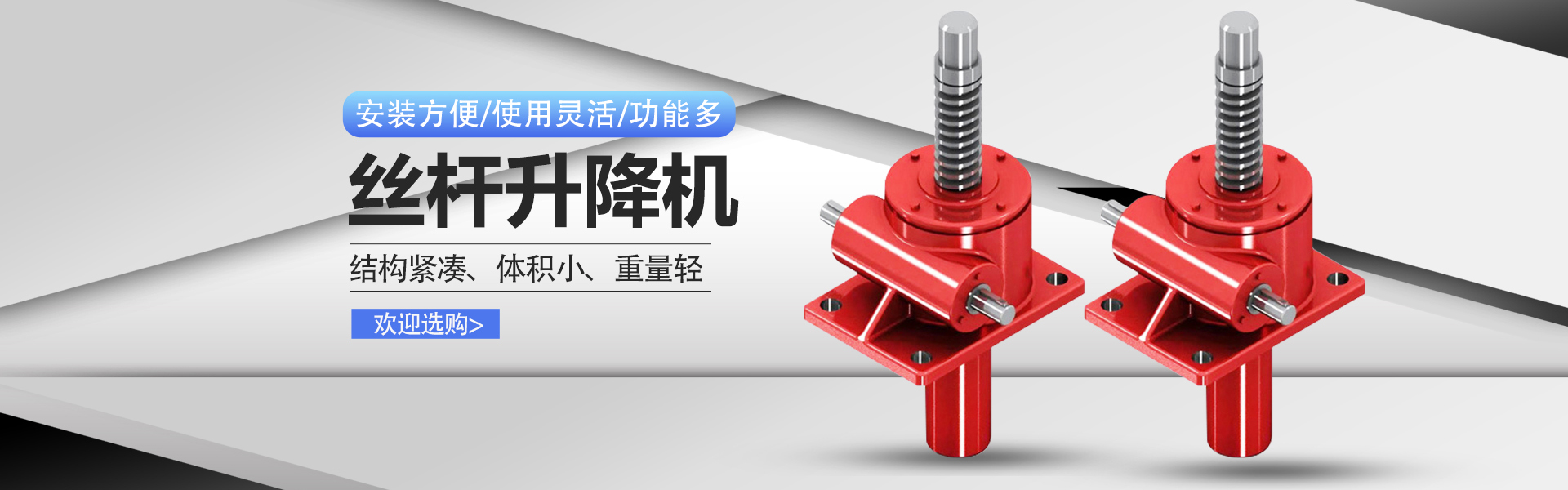
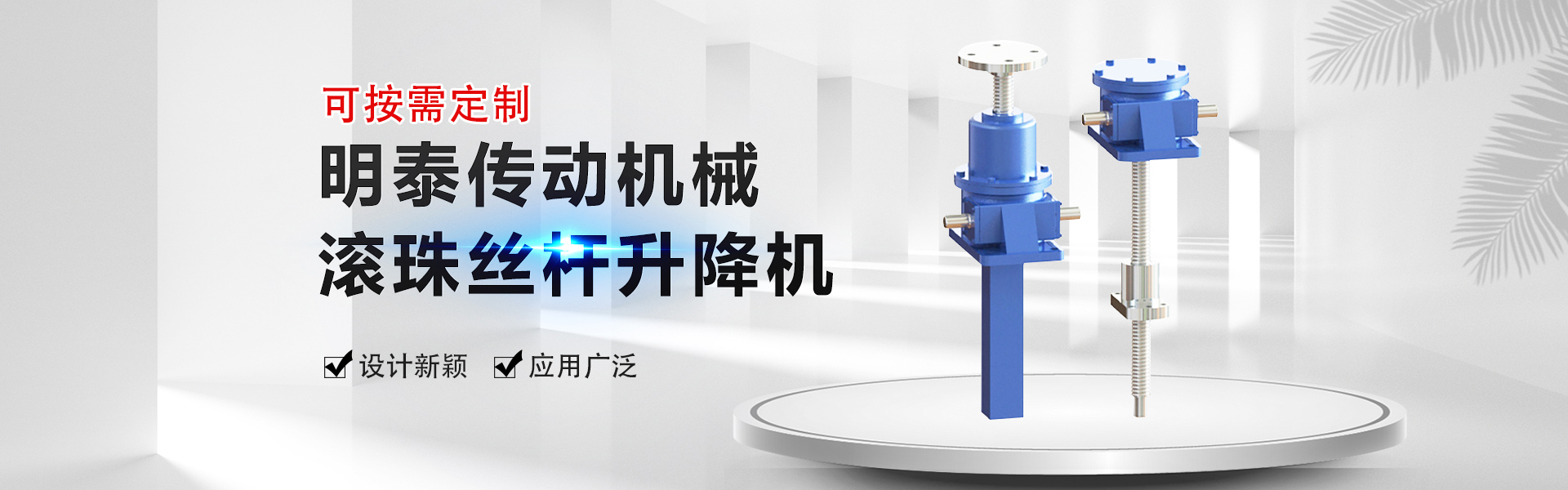

The screw jack, also known as the screw lift, is an indispensable piece of modern industrial equipment. Thanks to its rigidity, precise positioning, low noise, ease of installation, minimal maintenance time, and long service life, the screw jack has been widely used in various fields such as metallurgy, water conservancy, and mining, replacing hydraulic and pneumatic lifting devices.
Insufficient product knowledge or negligence during the installation process can cause damage to the screw jack and your own equipment. Therefore, pay attention to the following during installation:
1. If a base is required, the centerline elevation should be aligned during installation; when connecting couplings, concentricity should be calibrated. For flexible coupling connections, the amount of float should not exceed the allowable range of the coupling.
During the installation of the screw jack, ensure that the screw is perpendicular to the installation surface, and prohibit any lateral forces from being applied to the screw.
When designing and installing the elevator housing, consider the rigidity of the worm gear housing under static and impact loads, and install it reasonably.
During elevator installation, guide devices should be installed rationally based on the on-site conditions.
The elevator worm gear box is securely mounted on the equipment to prevent loosening and vibration.
Before the elevator and drive source are assembled with the equipment, check the deviation dimensions of all shaft diameters, bore diameters, keys, and keyways.
When using a hoist directly connected to an electric motor, if the motor is excessively heavy, a support device should be installed.
When installing chain wheels, gears, and other transmission components onto the shaft extension, position them as close to the bearing as possible to minimize shaft extension bending stress.
Bolts are typically made of 8.8 grade high-tensile bolts.
When installed and used properly, avoiding these oversights will maximize the efficiency of the screw jack.
During the installation of screw jack lifting machines, the rigidity of the housing under static and impact loads should be the top priority. Ensure a proper installation and avoid damaging the mounting holes. Next, the technical engineer specializing in transmission will focus on the installation of the guide device:
In many operating conditions, without a guiding device, the screw is subjected to lateral forces. It is essential to install the guide rail reasonably according to the specific conditions to ensure no lateral forces act on the screw. The direction of the guiding device should align with the movement direction of the screw or nut.
Once the guide is installed, proceed with the motor assembly. Pay close attention to the stability of the installation location, and avoid any significant motor vibration.
Installation Direction and Steering Confirmation: For screw jacks and steering gears, it is necessary to check the direction of the input and output shafts before installation to ensure synchronized lifting and lowering. Otherwise, the screw may experience both upward and downward movements.
