

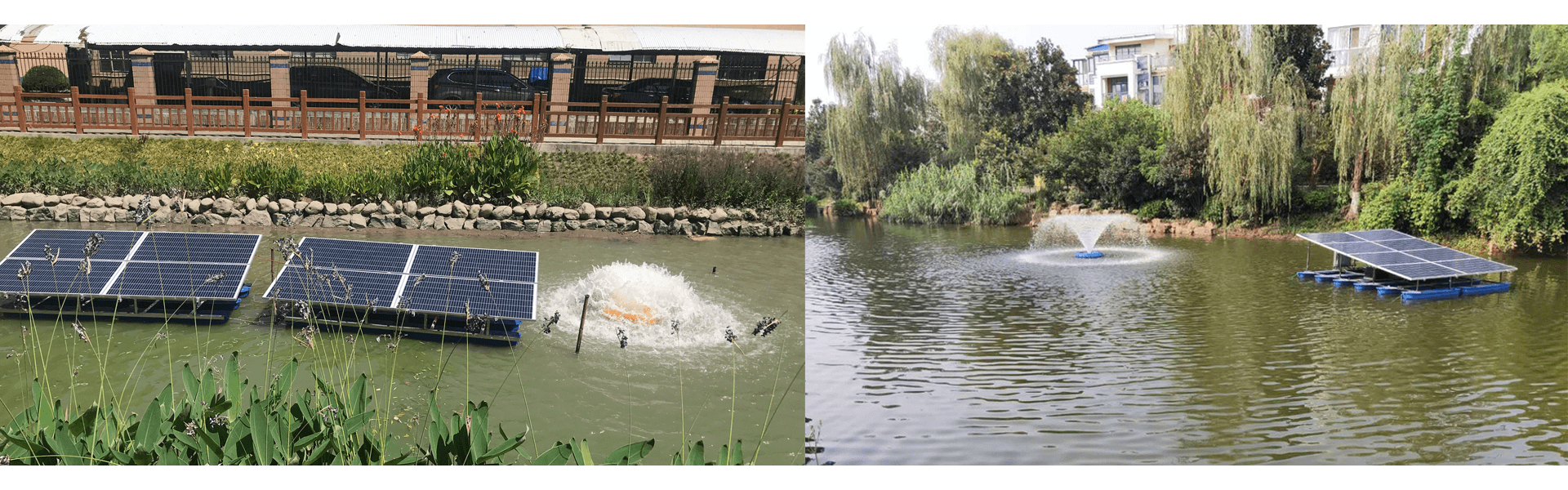


Solar-powered aeration systems can significantly enhance water purification capabilities, increasing the dissolution of bottom water, making them particularly suitable for use in large river channels. Below, our editor provides an in-depth introduction to the knowledge of "causes of faults and advantages" of solar aeration systems.
Fault Cause of Solar Aeration Pumps
1. The issue with the blow-through aeration method of solar aeration machines, which includes problems with aeration disks or aeration pipes, necessitates the installation of a dedicated blower facility. This method is characterized by a large footprint, high investment costs, and complex installation.
Our equipment must be properly changed, as it's inconvenient to maintain during malfunctions.
2. The main issues with the mechanical surface aeration method of solar aeration machines are high power consumption, low efficiency, and frequent mechanical failures.
3. The solar aerator's aeration method presents issues, including uneven bubble distribution, poor water-gas diffusion, and low oxygen transfer rates.
Advantages of Solar Aerator
All-weather solar-powered, green, eco-friendly, and energy-efficient.
2. The automatic timing switch system can be set for different running hours (auto-on and auto-off).
Battery ensures the basic operation of the equipment during continuous rainy and cloudy weather; direct power supply from the battery allows for a continuous runtime of 5-6 hours.
4. All system metal components are made of aluminum alloy and 304 stainless steel to prevent rust and ensure a long service life.
5. The solar aeration pump can be paired with a high-voltage wind power generation set, enabling 24/7 electricity generation with wind.
6. Eco-friendly, without the addition of chemical agents, and free from secondary pollution.
Here is the summary by the editor on the "causes of failure and advantages of solar aeration machines," hoping it brings assistance to all readers.
