

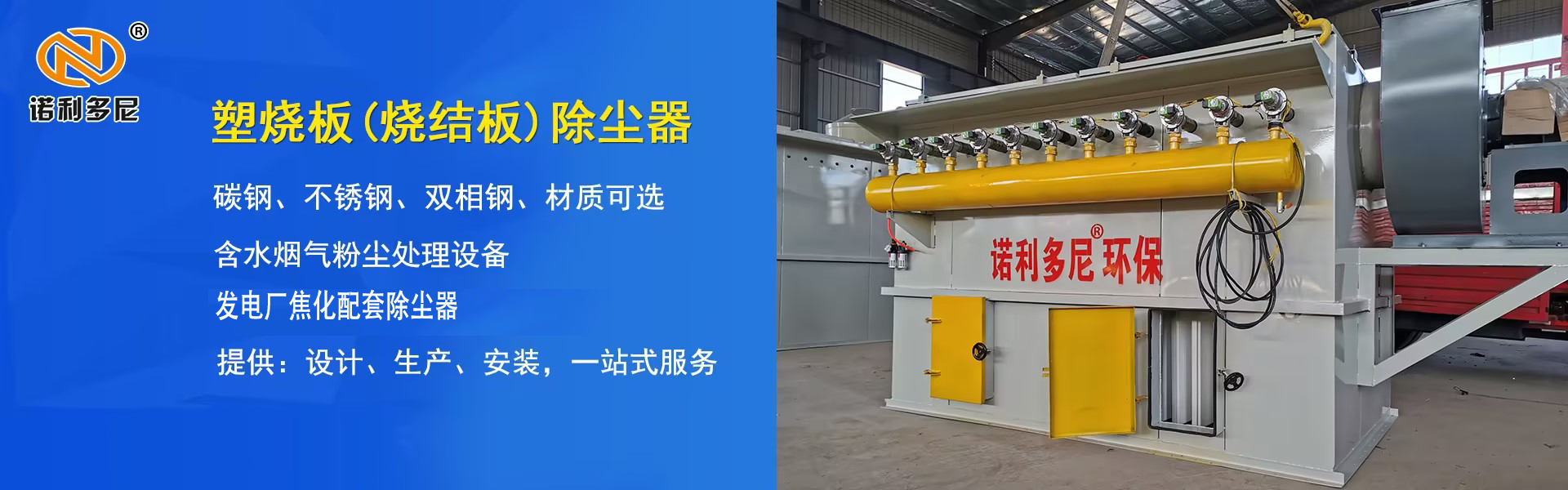
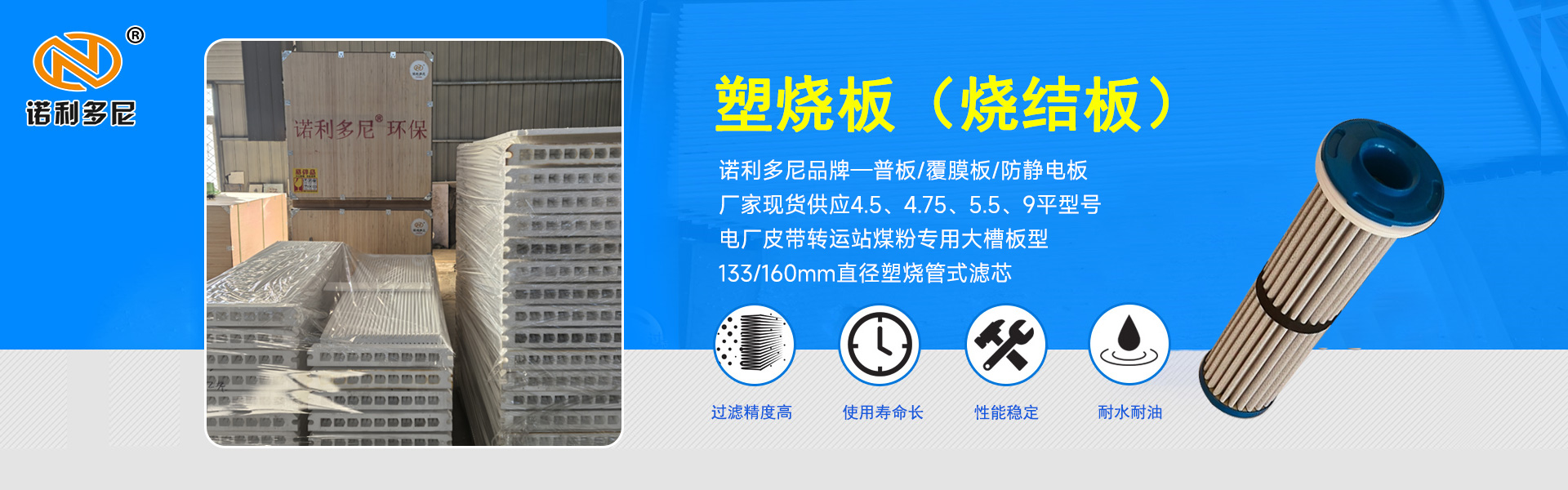

For industrial flue gas dust with high humidity, the塑烧板dust collector is an ideal choice available on the market. It boasts ultra-low emissions, high recovery rates, and its filter cores are water and oil smoke-resistant, with a service life of up to 10 years. It serves as a replacement for the traditional bag dust collector.
Difference between Sintered Plate Filter Media and Bag Filter Media:
The external shape of the molded board features a wavy design reminiscent of an accordion box. If laid flat, it equates to a threefold increase in surface area. The internal structure of the wavy filter plate is divided into 17 cavities. This design, in addition to considering the strength of the components, is primarily driven by aerodynamic requirements to ensure efficiency during pulse jet backwashing for dust removal. The dust collector assembled with this technology occupies only 1/2 to 1/3 of the space of a bag filter with the same filtration area. The overall structure is also correspondingly reduced, featuring space-saving characteristics that create conditions for user-friendly factory design and cost reduction in the total equipment cost.

Thermosetting Plate Model:
Model: NLDN-9M
Dimensions: 1550 (Length) × 1050 (Width) × 61 (Thickness), Single board filtration area: 9.0㎡
Model: NLDN-4.5M Type
Dimensions: 1500 (Length) x 565 (Width) x 80 (Thickness), single board filtration area of 4.5 square meters.
The common sintered plate has a temperature resistance of: 70℃ (room temperature)
Special Performance Sintered Plates: Acid-resistant, antistatic, explosion-proof, oil and gas-resistant, etc.
Under normal circumstances, the dust concentration at the inlet can reach 500g/m³, while the dust concentration in the exhaust can be controlled below 5mg/m³. In high-efficiency dust removal systems, the dust removal efficiency reaches 99.99%. Widely used in industries such as rolling steel, metallurgy, chemicals, flue gas, pharmaceuticals, electronics, food, plastics, welding processing, and precious metal recycling.
Structural Diagram of Sintered Plate

Characteristics of Plastic Burn Plates:
The sintered plate filter core features a rigid wavy porous structure, with a sintered plate thickness of approximately 4mm. It forms a uniform pore size of about 30μm internally, and then a PTFE coating is filled into the gaps on the substrate surface through a special spraying process, creating micro-pores with a diameter of 2~3μm.
2. The independent cavity sealing design ensures that even if there is air leakage in the plastic sintered plate filter plate, it will not result in large-scale dust emissions and environmental pollution.
3. The unique wavy design of the plastic sintered plate filter core increases the filtering area while reducing the occupied space.
High dust removal accuracy: Micron-level filter pore diameter, capable of removing 99.9% of smoke particles larger than 1um, and can largely remove particles larger than 0.1um.
5. Large Filtering Area: The corrugated design of the filtering surface provides 3 to 6 times the filtering area within the same volume compared to a filter bag.
6. Strong self-cleaning ability: The rigid structure allows the reverse blowing gas to act more directly on the powder adhered to the filter surface, without any buffering, resulting in a thorough dust removal effect.
7. Hydrophobic and Oleophobic: The sintered plate substrate is made of various high-density polymer materials sintered together. The PTFE coating penetrates deep into the pores of the sintered plate substrate, forming a super-fine pore anti-adhesive structure, which boasts hydrophobic and oleophobic properties.
8. Excellent Acid and Alkali Resistance: The special resin material can withstand long-term high-temperature corrosion from strong acids and alkalis.
The pressure is constant, and the resistance is stable; since the wave-shaped sintered plate filter core captures dust through the surface resin coating, its smooth surface makes it extremely difficult for dust to penetrate or remain. Even if some extremely fine dust particles may enter the cavity, they are immediately blown away by the pulse compressed air flow that is set. Therefore, there is no clogging phenomenon in the mother layer of the sintered plate filter core.
