
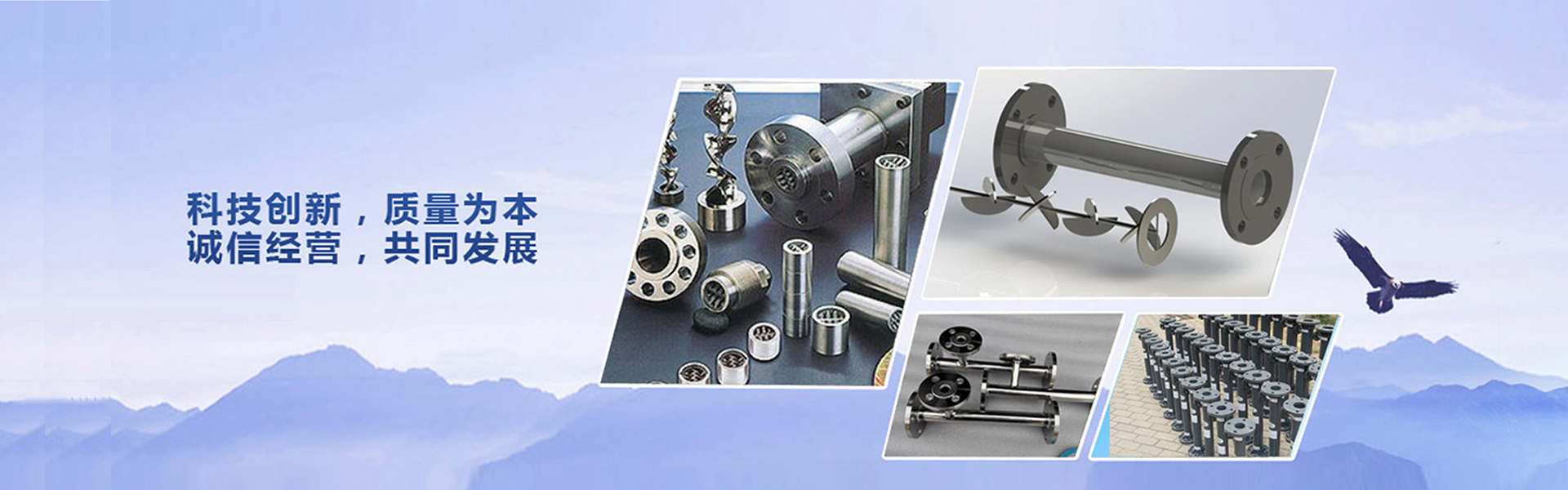






There are various types of static mixers, with tubular static mixers being a popular choice among enterprises. They offer rapid and efficient mixing, consume less energy, and achieve a short mixing time for two media, with a diffusion effect of over 90%. This meets the production requirements of material companies.
The tubular static mixer is made from various materials, such as glass fiber reinforced plastic and stainless steel, offering advantages like strength, durability, and resistance to corrosion. Additionally, its structural design is simple and occupies minimal space. Tubular mixers typically consist of three parts, each equipped with a rotating blade, which can be left-handed or right-handed. Adjacent spiral blades rotate in opposite directions, with a 90° difference.
To facilitate the installation of the spiral blades, the cylinder has been designed with two semi-circles, and the gaps between them are bonded with epoxy resin to ensure excellent sealing performance. The spiral blades of the mixer remain stationary, while the material or medium being mixed moves, thereby achieving the desired mixing effect.
Utilizing a tube-type blender requires not only understanding its working principle but also paying attention to details such as power voltage and output power. It's also crucial to ensure compatibility with the motor for normal operation and to fully utilize the blending function, meeting the company's material mixing requirements and avoiding overload. When selecting a blender, it's essential to consider these factors as well as maintenance management and after-sales service to prevent equipment damage and subsequent repair issues.
News Center Co., Ltd.