



 通过中商114认证

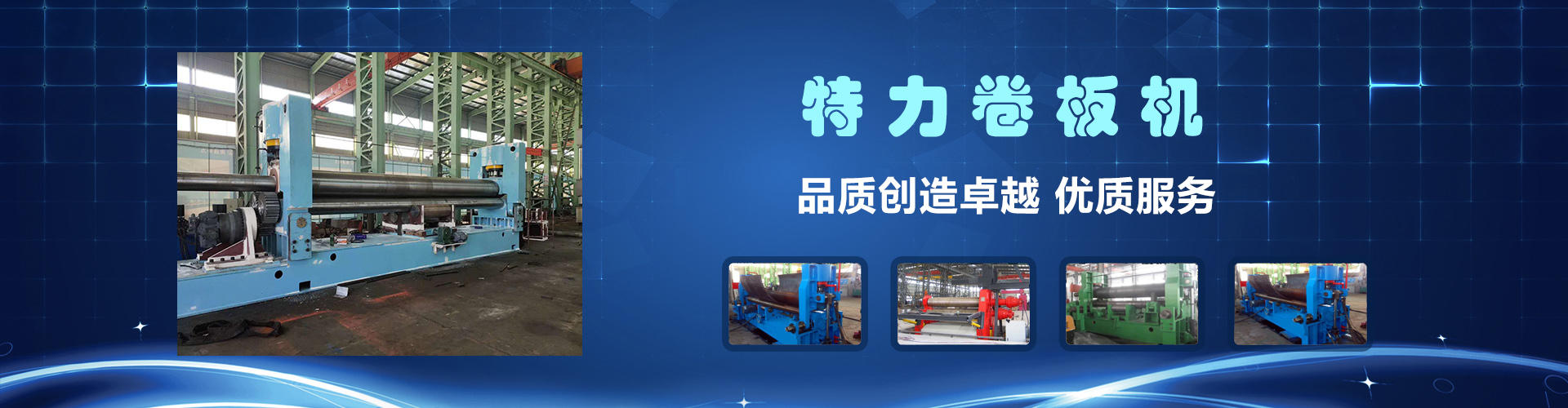
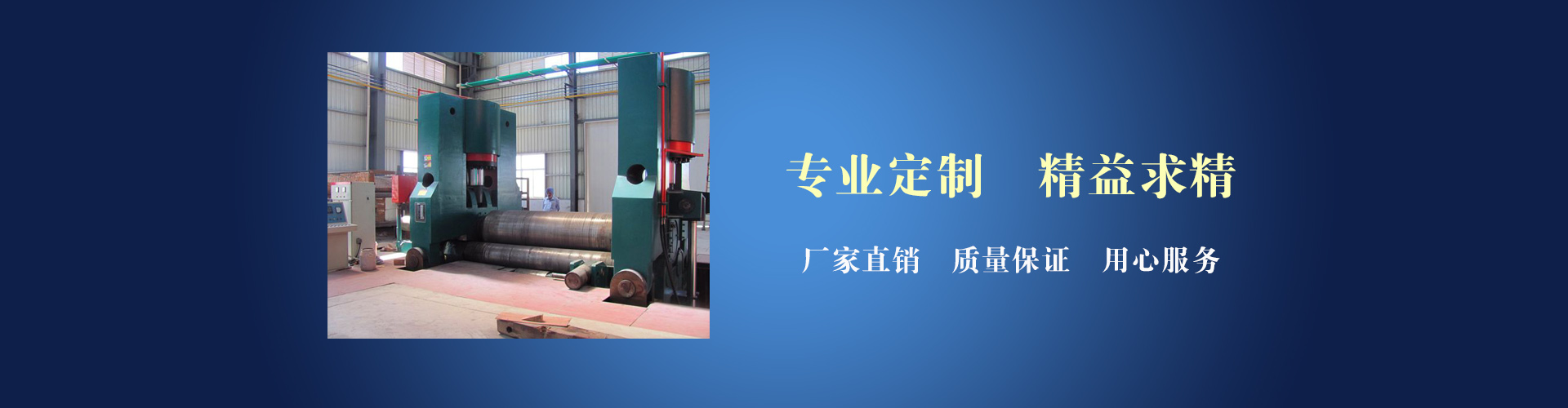
The three-roll bending machine is a shaping machine used for bending the edges of sheet materials, featuring the capability to roll various shapes such as O-shaped, U-shaped, and multi-segment R-shaped sheet materials.
The principle is as follows: The roller of the symmetrical bending machine moves vertically up and down through a hydraulic cylinder, where hydraulic oil applies force to the piston. This motion, in turn, drives the lower rollers' gears via the final stage of the main reducer, causing them to rotate and supply the necessary torque for rolling. The standard flat, plastic metal sheets pass between the three operating rollers (two lower and one upper) of the bending machine. The lower roller's downward pressure and the lower roller's rotational movement cause the metal sheet to undergo multiple successive bends (inner layers compress and deform, middle layers remain unchanged, and outer layers stretch and deform), resulting in permanent plastic deformation to form the desired cylindrical, conical, or partial shapes. The drawback of this hydraulic three-roller bending machine is that the sheet ends require pre-bending with other equipment. It is suitable for large bending machines with sheet thicknesses over 50mm. An array of fixed supporting rollers is added below the two lower rollers, reducing the span between them, thereby improving the precision of the rolling workpiece and the overall performance of the machine.
The three-roll bending machine is widely applicable in industries such as power, transportation, petroleum, chemical, boiler, shipbuilding, hydropower, and metal structures. It can bend conical, circular, and arched workpieces.
Key Features: 1. The maximum working capacity of the coil roller is determined by four main parameters: the maximum coil thickness (pre-bend thickness), the material of the coil, and the small coil diameter at a large standard size. The conversion between these four parameters during operation is the working capacity conversion relationship of the machine. This is explained in the provided manual for users to utilize the equipment more effectively.
2. The machine is capable of rolling conical workpieces. When rolling conical workpieces, due to the greater force on one end, the rolling capacity should be 60% of the equipment's capability. The cone angle typically does not exceed 30°. However, as the thickness and width of the plate decrease, the equipment load reduces, allowing for a corresponding increase in the cone angle.
3. The diameter of the two roller is large and possesses sufficient strength, thus eliminating the need for a roller support device. This subsequently reduces the failure rate of the equipment.
