

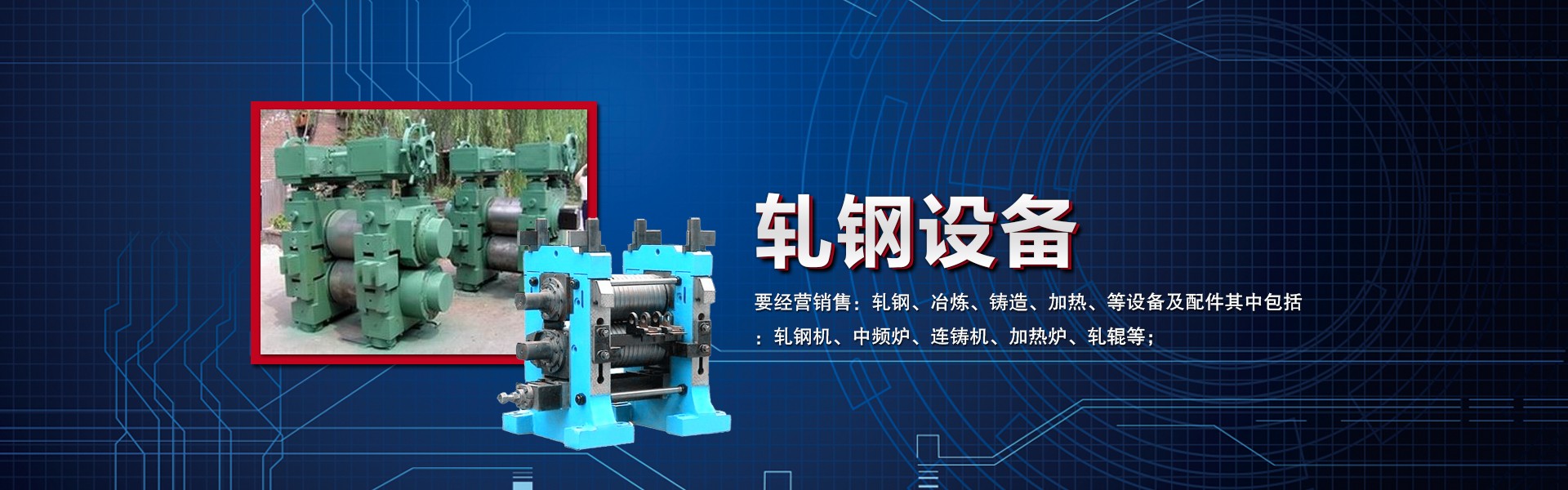


Rolls are tools for metal plastic deformation, crucial consumables that determine the efficiency of rolling mills and the quality of rolled materials. Rolls are mainly categorized into three types: cast iron rolls, cast steel rolls, and forged steel rolls. The carbon content of cast iron rolls is approximately 2.50% to 3.5%. They can be further divided into four main material categories: chilled iron rolls, chill-free chilled iron rolls, high-chromium cast iron rolls, and spheroidal graphite iron rolls. The common structures of cast iron rolls can be classified into three types: matrix, cementite, and graphite. The matrix structure primarily includes austenite, ferrite, pearlite, bainite, and martensite. Graphite in cast iron typically comes in two forms: flake-like and spherical.
Cast steel rolling mill rolls are available in two types: steel rolling rolls (carbon content of 0.4% 114%) and semi-steel rolling rolls (carbon content of 1.4% 2.40/0). Steel rolls have a low carbon content, resulting in lower hardness. Their microstructure is typically composed of ferrite and pearlite. As carbon content increases, ferrite decreases while pearlite increases. To enhance hardness, alloy elements such as chromium, nickel, manganese, molybdenum, and vanadium can be added, or special heat treatment can be conducted. Due to their high tensile strength and toughness, steel rolling rolls are suitable for primary rolling mills with high rolling temperatures or high rolling loads and can also be used as backing rolls. They can also be used as cold rolling rolls if a special heat treatment is applied to achieve hardness above HS90.
The carbon content of semi-steel rolling mill rolls is between that of cast steel and cast iron rolls, with a hardness higher than that of ordinary cast steel rolls but lower than that of cast iron rolls. The main characteristic of semi-steel rolling mill rolls is the minimal decrease in internal hardness, making them particularly suitable for manufacturing deep-hole rolling rolls. If the silicon content in the semi-steel rolling mill roll material is increased through semi-graphitization, it will exhibit higher resistance to thermal cracking and toughness. They can be used as initial rolling rolls for primary mills, rough rolling rolls for large-section steel, rolls for primary mills, continuous rolling machines for hot-rolled strip steel, and vertical rolls to achieve excellent rolling results.
Forged steel rolling mill rolls, through melting, forging, and heat treatment, achieve a working layer with high hardness, excellent wear resistance, and superior accident resistance, while ensuring the roll neck and core possess certain strength and toughness. This unique property of forged steel rolling mill rolls endows them with an irreplaceable advantage in cold rolling and non-ferrous metal rolling.
