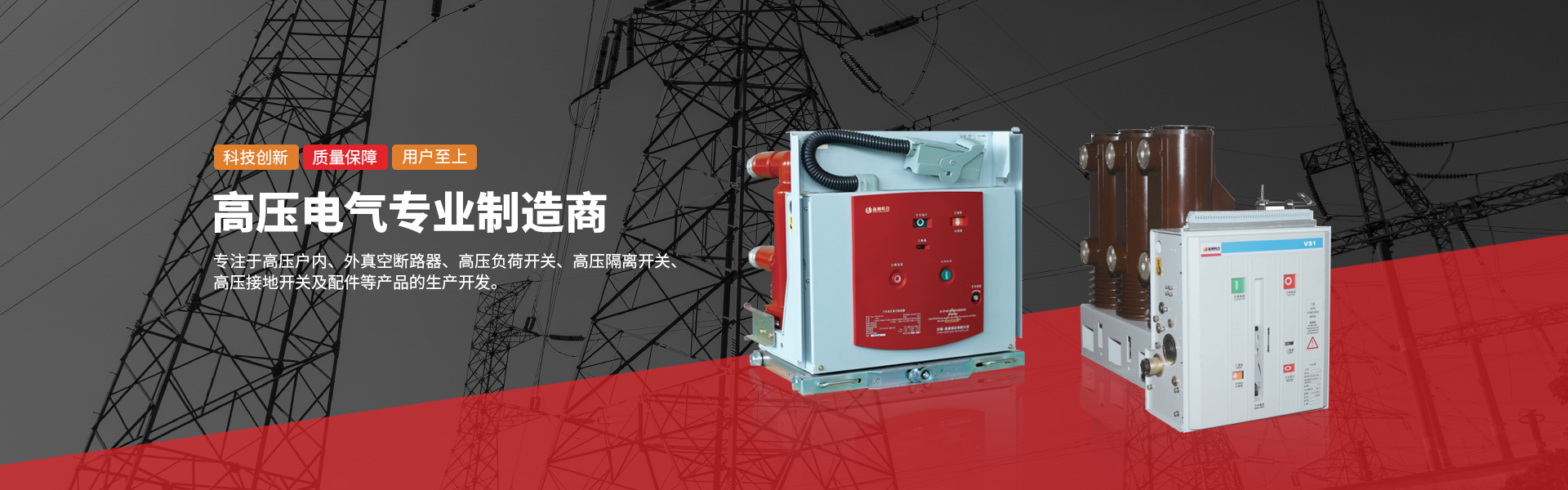
What is a high-voltage load switch?
A high-voltage load disconnect switch is an electrical device that functions between a high-voltage circuit breaker and a high-voltage disconnect switch. High-voltage load disconnect switches are often used in series with high-voltage fuses; they are employed to control power transformers. These switches feature a simple arc extinguishing device, allowing them to interrupt and reconnect certain load currents and over-load currents. However, they cannot interrupt short-circuit currents, so they are generally used in series with high-voltage fuses to provide short-circuit protection via the fuse.
General High-Voltage Load Break Switch Classification
EI Class General Load Switch: A general load switch designed for normal continuous feeding in distribution systems and does not require frequent opening and closing operations.
2. E2 Class General Load Switch: A general load switch that does not require maintenance or repair of the main circuit breaking components, and during its expected service life, other parts only require minimal maintenance.
3. E3-rated General Load Switch: A general load switch with the capability for frequent opening and closing of high currents and high-frequency short-circuit closing.
4. M1 Class General Load Switch: A general load switch with a mechanical lifespan of 100 operations.
M2-level General Load Switch: A general load switch designed for special applications with a mechanical life extended by 50 times. It features the following breaking and closing capabilities for general load switches rated at 40.5kV or below.
(1) Rated effective load-breaking current equals rated current.
(2) The rated no-load transformer breaking current is equal to 1% of the rated current; (3) The rated distribution line closed-loop breaking current is equal to the rated current.
(4) Rated cable charging breaking current and rated line charging breaking current, see the table below:
(5) Rated short-circuit closing current equals rated peak withstand current.