
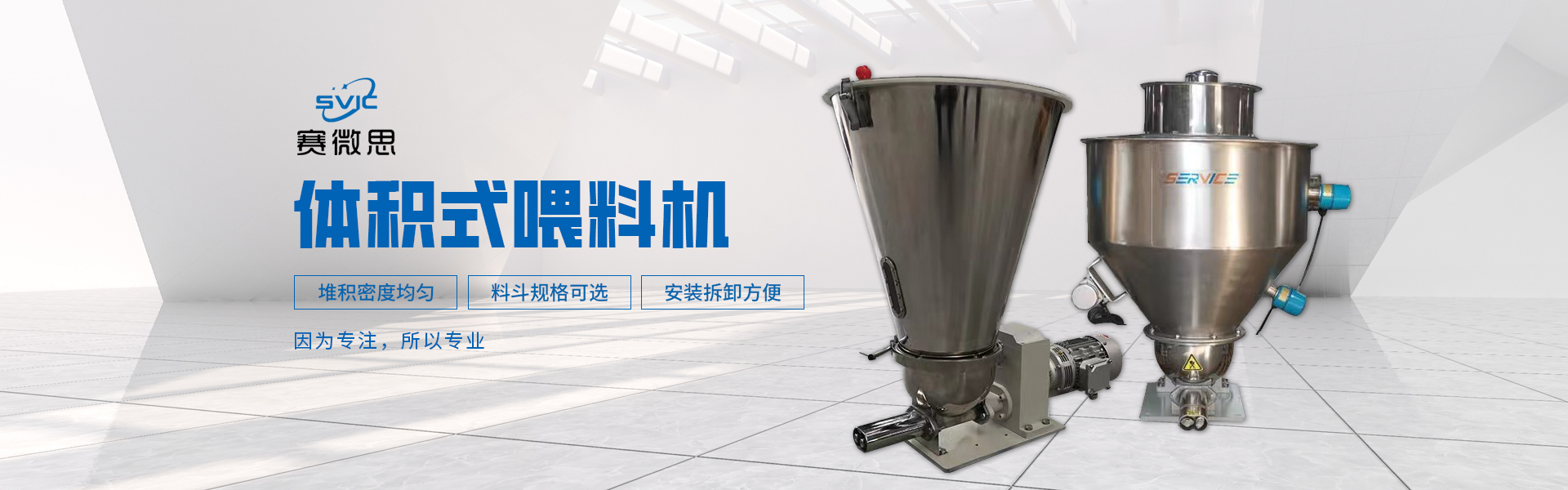




The working principle of the weightless batching system:
The Loss-in-Weight Feeding System is a continuous static weighing and batching equipment. Widely used in industries such as cement, glass, metallurgy, chemicals, grain, and feed. The Loss-in-Weight Feeding System consists of multiple scales, with a common control method being intermittent discharge, static measurement. This means that all feeding electric vibrators start working when the batching begins, while the computer performs dynamic monitoring. The feeding electric vibrator and the weighing hopper are soft-connected and gravity-separated. The discharge electric vibrator, although also soft-connected, is supported by three tension sensors along with the overall weight and the weighing hopper, connected by the material column inside. During operation, the feeding electric vibrator first supplies material to the weighing hopper. When the material reaches the predetermined upper limit weight of the storage bin, feeding stops. After a period of time, the discharge electric vibrator begins to discharge material. When it reaches the predetermined lower limit weight, discharging stops, and this process repeats. The flow rate of the material is measured by the weight of the material lost from the storage bin, hence the name "Loss-in-Weight Scale."
Section II: Features of the Weight-Reducing Scale Blending System:
1. Possesses exceptional metrological control accuracy
2. Suitable for continuous or batch feeding requirements
3. Suitable for powders, granules, and other loose materials
The entire system is sealed, ensuring no environmental pollution.
Option 5: Manual or automatic mechanical filling systems available.
6. During filling, ensure the rate of filling is sufficiently fast.
Type 7: Explosion-proof variant
8. The integrated batching control system can be connected to the master control system using multiple devices.
Improved Control Method for Weight-Reducing Scale Blending System
When the measurement of a scale reaches the feeding set value, stop the feeding. After all scales have stopped feeding, the entire feeding process ends, with a duration of T1. To enhance measurement accuracy, an extended delay is implemented to reduce this impact, but to maintain ingredient accuracy, T2 and T4 cannot be too small, and static measurements are taken on the scales. Upon completion of the measurement, the computer controls all discharge electro-vibration machines to discharge simultaneously. The discharge process is similar to the feeding process, with the computer still conducting dynamic monitoring, with a discharge duration of T3. To minimize errors, an additional delay of T is applied after discharge before conducting static measurements. With this, one batching cycle is complete, and the next batching cycle can begin. The cycle duration is: T = T1 + T2 + T3 + T4.
Considering the vibration capability of the electric vibrator, T1 is set to allow for a long feeding time, and T3 is set to allow for a long discharging time. If the feeding time of any scale exceeds T1, or the discharging time exceeds T3, an alarm will be triggered.
Due to the intermittent discharge of the loss-in-weight feeder, excessive or insufficient material feeding has occurred, leading to either overloading or underloading of the mill, thereby affecting the hourly production output of the mill. Measures to shorten the batching cycle can somewhat mitigate this impact, but since maintaining batching accuracy, T2 and T4 cannot be reduced significantly; the reductions are minimal for T1 and T3, and they also increase the vibration frequency of the electric vibration machine, resulting in a higher incidence of electric vibration machine failures.
So, our approach to improvement is to manage the multi-batch weighing process by ensuring that different scales do not add or release materials simultaneously, akin to dynamic measurement. After considering various factors, we have adopted a method where half of the scales add materials and the other half release materials within the same cycle, alternating the process. This approach not only increases the mill's output but also enhances the accuracy of material blending.
