
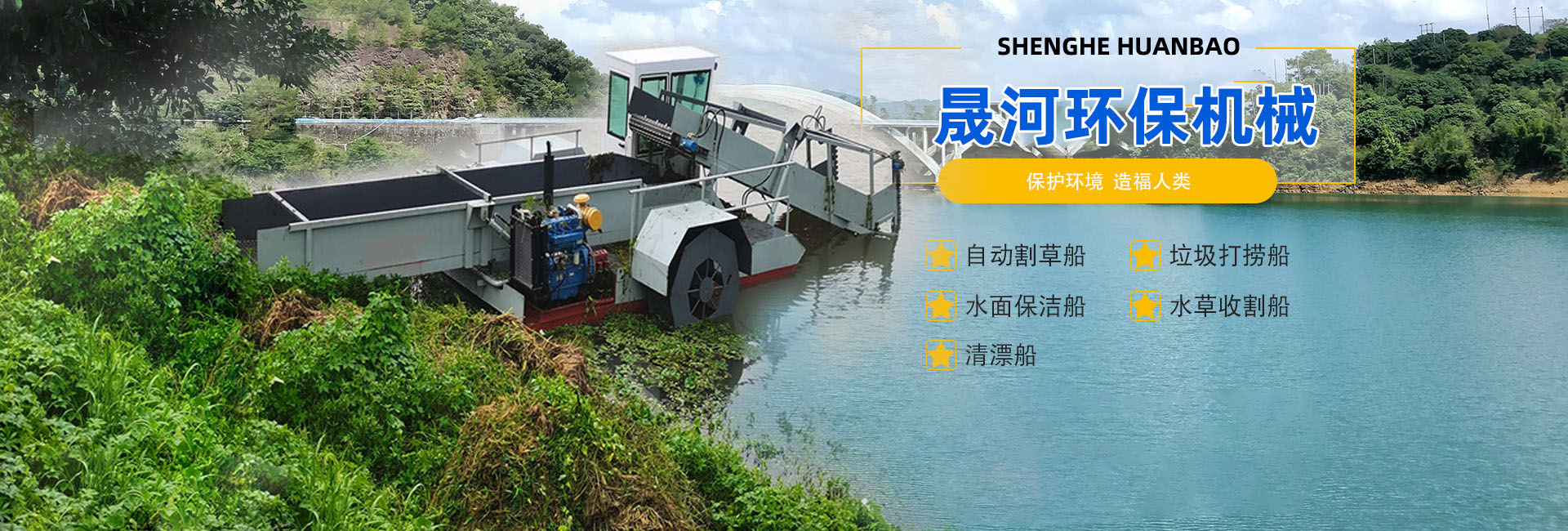

Aquatic plants are a crucial component of water ecosystem balance, producing oxygen, increasing dissolved oxygen levels, inhibiting bacterial growth, and providing food for aquatic organisms. However, if aquatic plants grow too densely and spread over large areas, resulting in excessive decay, it can severely impact water quality.
After an extended period of lush aquatic plant growth, an excessive amount of decayed plants surpasses the natural decomposition capacity, leading to bacterial proliferation and a significant decrease in dissolved oxygen levels in the water. Moreover, floating plants may clog water pumps, resulting in equipment damage. An overabundance of aquatic vegetation, such as water hyacinths, can also make it difficult for vessels to navigate.
But the removal of aquatic plants is extremely challenging. During periods of high water temperature, the plants can grow over 10 centimeters in a day. Manual removal is not only slow but also fails to keep pace with the rate of growth. Therefore, the use of aquatic plant harvesting boats offers advantages in both removal and transportation. These boats can clear deeper aquatic plants more efficiently, and it is also convenient to transfer the plants to other locations. Overall, it is more cost-effective, time-saving, and labor-saving compared to manual removal.
The Grass Boat, as the name implies, is a modern harvesting and transportation equipment designed for urban garden scenic areas such as small and medium-sized lakes, rivers, and artificial lakes.
The grass cutter ship industry in China is facing its most challenging period in over 30 years, impacted by the global economic downturn and overcapacity in ship tonnage. The industry consensus is that only through further transformation, technological advancement, and design improvements can the sector overcome its current difficulties.
Although the Chinese grass-cutting boat industry has made substantial progress in recent years, there is still much room for improvement in design, shipbuilding quality, and after-sales service. This crisis is a good opportunity for the industry to reflect and identify its shortcomings. Many supervisory ship engineering and ship design experts believe that the continued downturn in the grass-cutting boat industry and the tightening of bank financing for shipbuilding are unavoidable, leading to a new round of reshuffling. Half of the shipyards may be merged or restructured, and companies with weak research and development capabilities, slow transformation, and insufficient funds are bound to become targets for elimination. The industry's focus on the application of new technologies and the development of new ship types is the only way to reverse the declining trend in shipping.
