
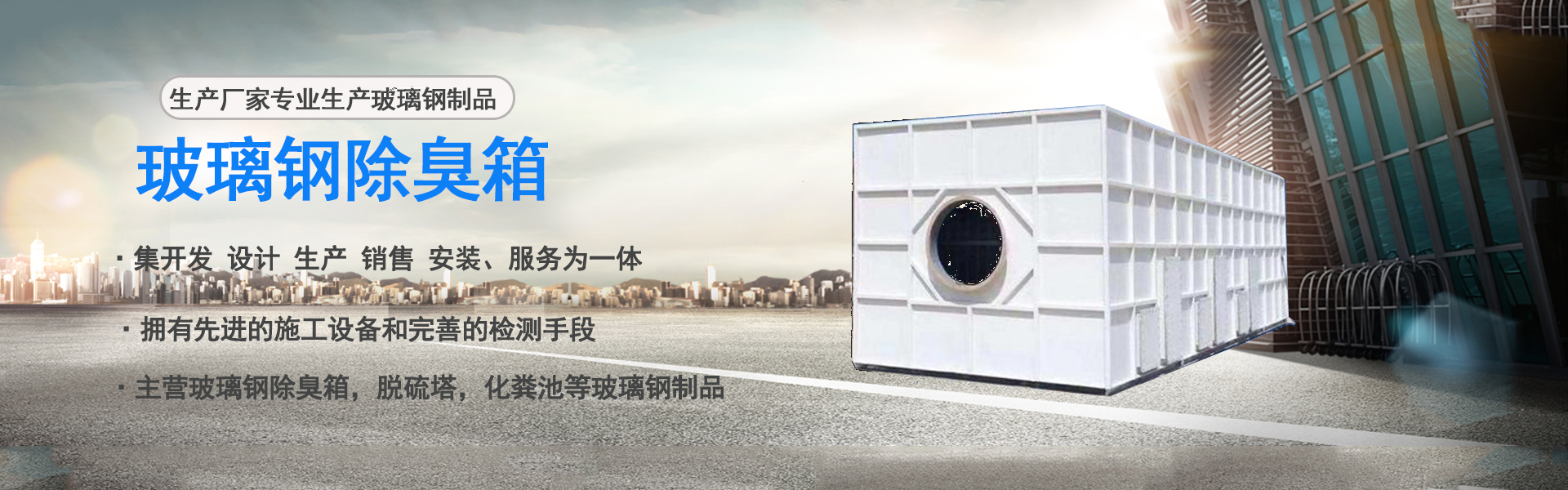
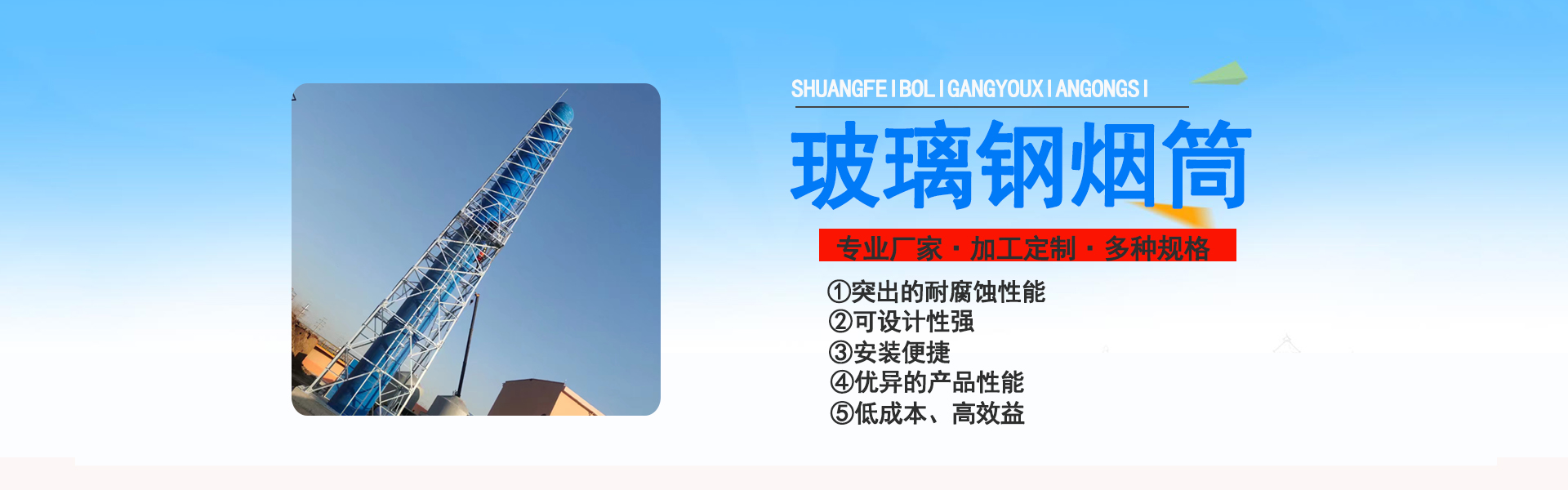

Desulfurization towers are widely used in daily industrial operations for removing sulfur dioxide, and the materials for these towers are primarily divided into three categories: stainless steel, carbon steel, and glass fiber reinforced plastic. I will focus on explaining the glass fiber reinforced plastic desulfurization towers and their main daily applications.
Glass-fiber desulfurization towers are widely used in daily enterprises. Their characteristics mainly include...
The material itself is highly resistant to corrosion and has inherent acid resistance.
The cost is low; it is one-fourth the cost of stainless steel and one-half the cost of carbon steel.
3: Cost-effective Daily Maintenance: The glass fiber material requires no maintenance costs on a daily basis and will last at least 10 years; whereas, carbon steel, regardless of the thickness of the plate, will need a full anticorrosion treatment at least once every three years conservatively; and while stainless steel doesn't require much daily maintenance, its cost is excessively high.
The lightweight and easy-to-hoist design ensures that desulfurization towers under 30 meters can be installed with a 25-ton crane. However, for carbon steel and stainless steel towers over 16 meters, the installation becomes more challenging and requires a crane over 25 tons due to their 3-6 times greater weight compared to glass fiber reinforced plastic in the same specifications.
News Center Co., Ltd.
