

Current industrial wastewater is rich in phosphorus, and employees must strictly adhere to national standards when treating it. Urban areas, to varying degrees, host heavy industrial factories, leading to significant emissions of phosphorus-containing wastewater and the gradual loss of nutrients in water quality. A common treatment method in the industry is to use phosphorus removal resins, which are favored by many factories for their affordability and practicality.
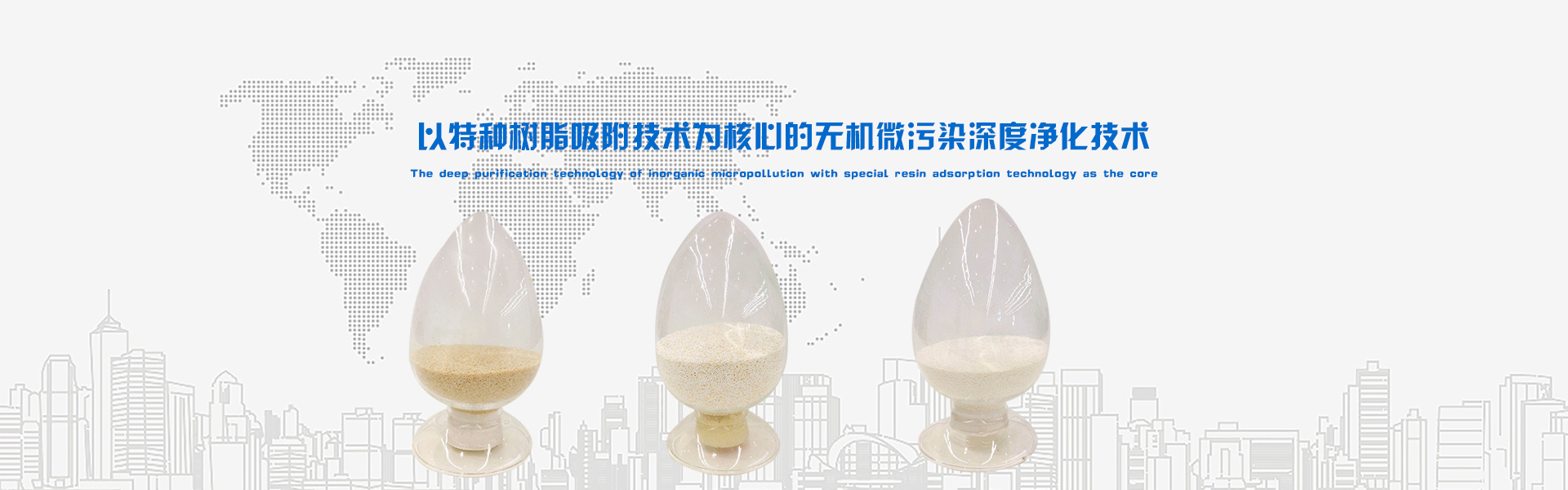
De-phosphorus resin treatment achieves high precision, achieving a phosphorus content of 0.1ppm in various wastewater after processing, which meets national standards. De-phosphorus resin removes phosphorus through chemical reactions, endowing the resin with strong alkaline anions, suitable for phosphorus removal and recovery. Chemical agents are added to the wastewater to form insoluble salts of phosphorus, which automatically separate from the water once phosphorus solidifies, thereby achieving wastewater de-phosphorization. Generally, when the pH is between 6-8, phosphorus remains in a stable state; however, the de-phosphorization effect significantly decreases below 6.5.
If phosphorus removal resins are used to treat groundwater, the water flows slowly at the bottom, which is a natural filtration process, resulting in minimal suspended solids in the water. The long-term underground flow ensures minimal temperature fluctuations, and the phosphorus removal efficiency varies with temperature; generally, effective removal is achieved between 5-30 degrees Celsius.
News Center Co., Ltd.


