







Resin is a secretion of various plants, particularly from coniferous trees, and belongs to the class of hydrocarbons. In other words, trees convert air and water into resin, which is generally used for self-protection, such as defending against insects and protecting themselves from wind, sun, and rain.
These resins share a common characteristic: where they come into contact with the tree, they bond tightly, ensuring they do not fall off the trunk.
Dragonflies can touch water, but not resin; water has surface tension, which allows it to glide over lotus leaves and grass without leaving a trace. Resin, on the other hand, has a surface attraction; wherever it goes, it sticks. If insects dare to touch it, they will be pulled in, forming amber.
So resins can be used as materials in latex paints and adhesives, etc., thus their value is highly regarded. Being a mixture of various high molecular compounds, they have different melting points.
Resins are categorized into two types: natural resins and synthetic resins. Initially, there was only natural resin. However, with the advancement of the chemical industry, many artificial polymers have been created. Some of these polymers exhibit chemical and physical properties similar to natural resins, hence they are referred to as synthetic resins.
Some trees secrete resin, which often hardens into amber. While lacquer is also considered a type of resin, it is actually a沉积物 secreted by lac insects on trees. Lacquer varnish, made from lacquer, was initially used solely as a preservative for wood, but with the invention of the motor, it became one of the earliest insulating paints. However, as the 20th century rolled in, natural products could no longer meet the needs of electrification, prompting the search for new, inexpensive substitutes.
To extract resin, it is typically necessary to make a cut in the bark and carefully carve a downward spiraling channel, known as a resin duct, to allow the resin to flow out along the duct until it drips into a collection area. If the bark is too hard, alcohol such as methanol or ethanol may be used. This softens or dissolves the fibrous tissue of the bark, enabling the collection of resin. After the resin drops, it undergoes a chemical reaction with air, gradually hardening into a solid. This property of resin's easy hardening makes it continually applied in latex paints and adhesives.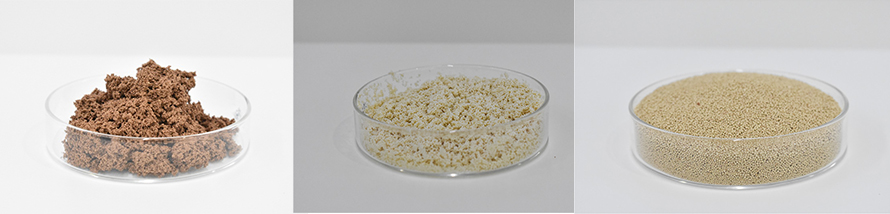
The curing of resins is slow, and curing agents are needed to accelerate the curing process to meet people's needs, such as AB glue. One component is the resin, and the other is the curing agent. Why are adhesive with strong odors usually cheaper?
Each resin composition varies, and many components within each resin require separation and purification.
As the tung oil from the tung tree, it can be applied to household items for pest and oxidation resistance; the secretion of the rubber tree can be used to make tires.