





 通过认证
通过认证 

Plastic pallet manufacturers may face product defects due to improper handling during production. Common improper usage scenarios of plastic pallets include overloading, forklift collisions caused by human error, and incorrect stacking of double-layered goods, all of which can damage the pallets and reduce their lifespan.
Reasons for the不合格 plastic pallets:
1. The issue arises from lipolysis parameters not meeting specifications or inconsistent melting points of the raw materials. Many plastic pallet manufacturers, in an effort to cut costs, purchase raw materials from small-scale factories, which often have unstable or insufficient parameters.
2. The current situation in the domestic plastic pallet industry is that some customers require high-quality plastic pallets, while others seek low-priced options. This has prompted manufacturers to continuously seek cost-saving formulas, with the addition of recycled materials being a direct and effective approach. However, not every plastic pallet company can master the right amount and ratio. Generally, large-scale plastic pallet companies have their own research labs that can formulate different recipes based on various recycled materials.
3. Improper machine parameter settings, such as clamping time, injection pressure, cooling time, and ejection time, can lead to deformation or material shortage in plastic pallet products if not properly standardized.
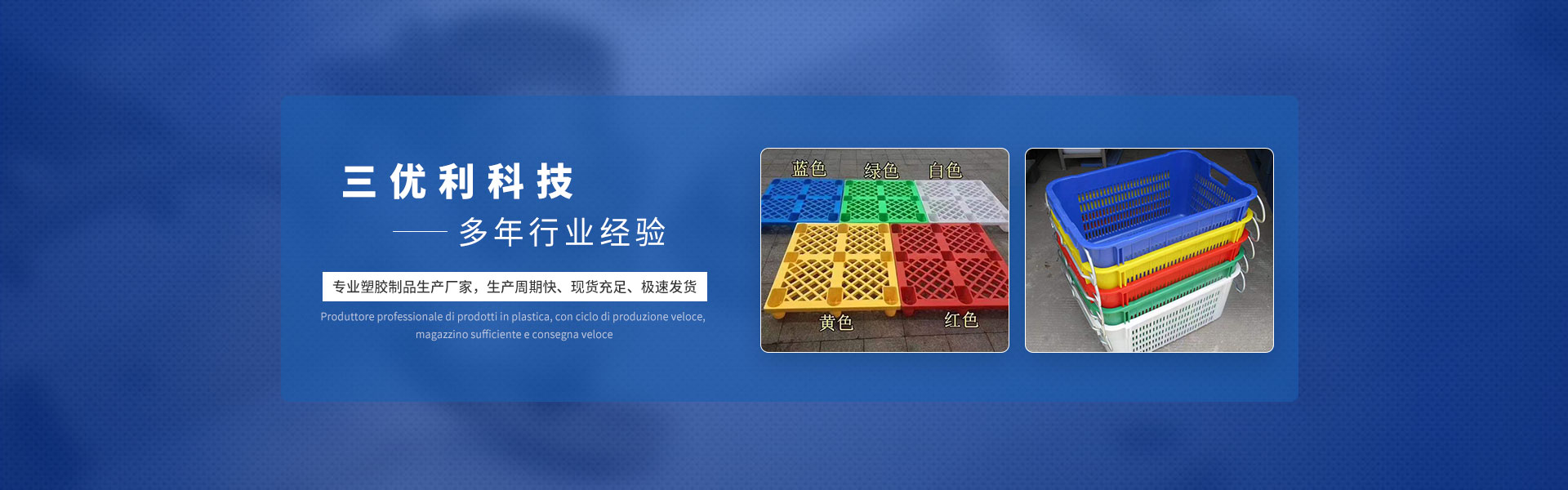
4. Improper use of color masterbatch or pigment. Generally, plastic pallets are predominantly blue or red, but clients may sometimes request special colors, which requires blending with different pigments. If the pigment ratio cannot be consistently maintained across each batch or if the mixing is uneven, color discrepancies may arise.
Plastic deck boards with a double-sided structure typically have a dynamic load capacity of 1 to 1.5 tons and a static load capacity of 4 to 6 tons. Normally, in a warehouse, when stacking double-layered deck board goods, the top layer must be picked and rotated before moving the bottom layer. In some special cases, such as forklift operators aiming to increase efficiency and quickly complete rotation tasks, they may directly pick the entire stack of deck board goods. This results in the two layers of goods being subjected to a dynamic load of 3 tons, far exceeding the board's rated load capacity. This has a direct impact on the lifespan of the deck boards.
In warehouses with poor visibility, forklift operators may cause irreparable damage to the deck by failing to properly insert the forklift's forks into the deck's slot, resulting in a direct impact on the side of the slot. During the handling process with mechanical forklifts, if both forks are not fully inserted into the deck, the unsupported part of the deck will sustain certain damage during the forklift's lifting and tilting motion.
