

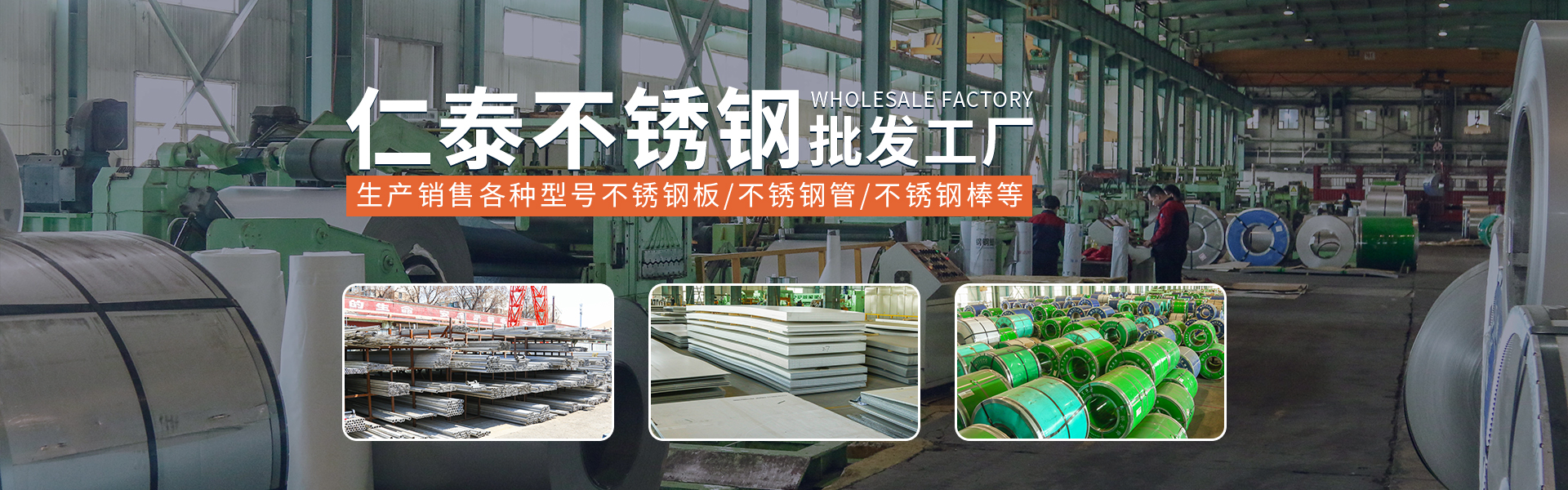

Stainless steel sheets: come in cold rolled and hot rolled varieties, featuring finishes such as glossy, matte, and frosted. Commonly known as stainless steel sheets, they include 2B and BA grades. Additional colors can be plated to customer specifications. Standard sheet sizes include 1m x 1m, 1m x 2m, 1.22m x 2.44m, 1.5m x 3m, and 1.5m x 6m. For large orders, we can cut to customer-specified dimensions. We also offer services for brushed, anti-slip, and electroplated sheets.
2: Stainless Steel Tubes: Seamless and Welded Tubes (Straight Seam Welded Tubes, Decorative Tubes, Welded Tubes, Bright Tubes). There are over 200 standard specifications for stainless steel tubes, ranging in size, with smaller tubes being more expensive, especially capillary tubes. Capillary tubes must be made from 304 material to prevent bursting. Custom non-standard tube specifications can also be made for customers. Seamless tubes are mainly used in industry, with a matte finish and not glossy. Welded tubes have a glossy surface with a very fine welding line inside, commonly known as welded tubes, mainly used for decorative materials. There are also industrial fluid tubes, with their pressure resistance determined by wall thickness. 310 and 310S are high-temperature tubes. They can be used normally below 1080 degrees Celsius, with high-temperature resistance up to 1150 degrees.
3: Stainless Steel Rods: Round Rod, Hexagonal Rod, Square Steel, Flat Steel, Hexagonal Steel, Round Steel, Solid Rod. Hexagonal Rods and Square (Flat) Steels are more expensive than Round Rods (Our company's Hexagonal Rods are mostly made of imported high-quality materials). Bright surface rods are more expensive than black-skin rods. Large-diameter rods are mostly black-skin rods. Among them, 303 is a unique material for rods, classified as a machinable material, primarily used for cutting on automatic lathes. Additionally: 304F, 303CU, and 316F are also machinable materials.
4: Stainless Steel Strip (Stainless Steel Coil): Also known as coil, strip, sheet, or coil sheet. There are many names for it, and the hardness of the strip materials varies greatly, ranging from dozens to hundreds. Customers need to determine the desired hardness before purchasing (8K mirror finish). The width of the coils is not fixed, including 30mm, 60mm, 45mm, 80mm, 100mm, 200mm, and so on. Custom strip cutting is also available upon customer request.
5: Stainless Steel Wire: Also known as stainless steel wire, coiled wire, or bar stock, but it is different from stainless steel wire rope. The main types of wire materials are spring wire and screw wire. As the names suggest, screw wire is primarily used for making screws, while spring wire is used for springs or other metal products requiring elasticity. Other types include bright wire, hydrogen annealed wire, electrolytic wire, shaft clips, and more. Tensile strength ranges from 1500 to 2000. The hardness of spring wire comes in several grades: fully soft, 1/4 hard, half hard, 3/4 hard, fully hard, and extra hard. Steel rope specifications include 7*1, 6*12, 7*7, 7*19, 17*39, etc., which are more expensive than similar materials like rods, tubes, and plates. The most expensive is the 7*7 strand. 304 stainless steel is a high-alloy steel that can resist corrosion in air or chemical corrosive media. It features an aesthetically pleasing surface and excellent corrosion resistance, eliminating the need for surface treatments like plating. It is a type of steel used in various applications due to its inherent surface properties and is commonly referred to as stainless steel. Representative grades include 13Cr steel, 18-8CrNi steel, and other high-alloy steels.
From a metallographic perspective, the presence of chromium in stainless steel forms a very thin chrome film on the surface. This film acts as a barrier, separating the oxygen that penetrates the steel, thereby providing corrosion resistance.
News Center Co., Ltd.
