

Hydraulic mold changing, perhaps not widely known, is essentially a rapid mold changing system utilizing hydraulic clamps. The principle involves the coordinated operation of mold clamping and releasing through the control of pneumatic pumps and solenoid valves. It employs air pressure to drive the pump, generating high hydraulic pressure, which is then adjusted by a pressure regulating valve to reach the desired boost and stops the drive. This system is suitable for long-term high-pressure maintenance, offering features such as energy savings, safety, economy, and convenience.
Hydraulic mold change certainly has its place in certain situations, but it falls short compared to magnetic molds--electromagnetic quick mold change. Below are a few points for your reference:
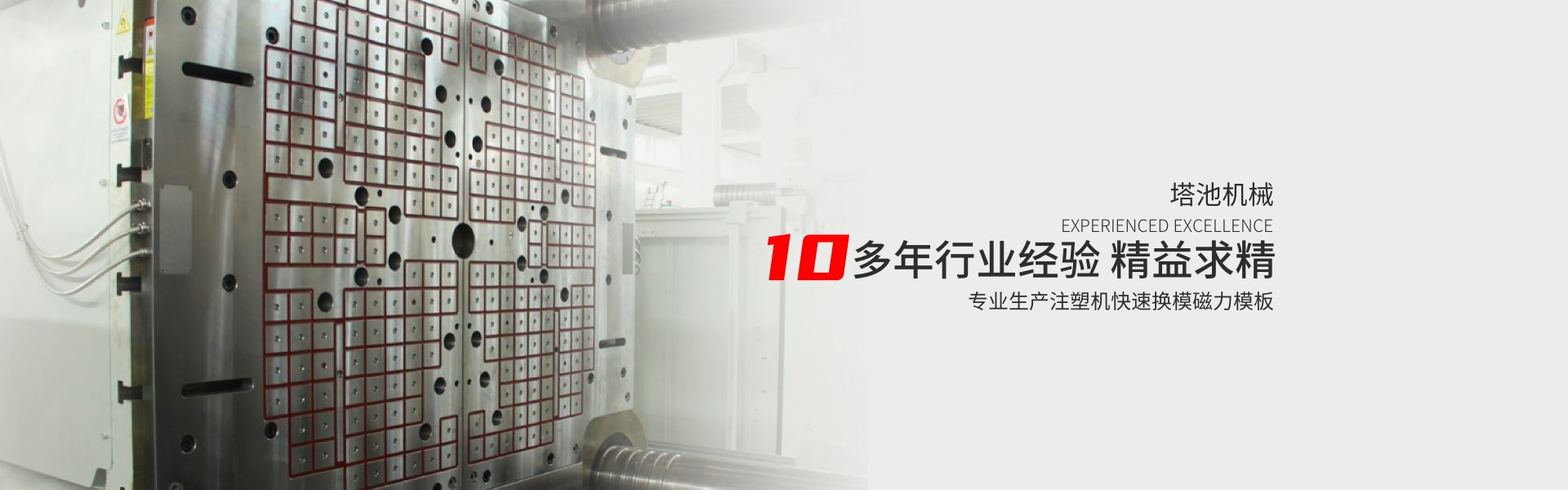
Clamping Points – The hydraulic mold change clamps only 4~6 points, with no center clamping force, whereas the magnetic mold features an even distribution of clamping force across the entire mold backplate.
2. Clamping Effect -- Inconsistent clamping force can lead to mold deformation. Magnetic template ensures uniform clamping force, preventing mold deformation.
3. Reliability – Hydraulic mold changes often require frequent maintenance and replacement, with little to no feedback signals, so there is no alarm when the mold is not working properly. Magnetic molds require almost no maintenance, provide real-time feedback signals to detect normal operation, and will also shut down and alert in advance when the machine is not functioning correctly.
4. Mold Suitability -- The mold back plate for hydraulic mold change needs to be made in the same specification size, whereas magnetic mold change is suitable for molds of any shape and size without requiring additional modifications.
5. Energy-Saving and Environmental Protection – The hydraulic mold change consumes a lot of energy, is prone to oil leakage, and the oil pump generates a lot of noise. Magnetic mold templates do not consume any energy during operation, have no leakage concerns, and produce no noise.
6. Mold Lifespan - Hydraulic mold changes are prone to deformation over long periods of clamping, which can shorten the mold's lifespan. Magnetic mold templates are less likely to deform, resulting in a longer service life.